The digital marketing landscape is evolving at an unprecedented pace, and AI is at the forefront of this transformation. If you’re still relying on 2020-era marketing strategies, AI will definitely replace you. However, marketers who leverage AI effectively will not only survive but thrive in this competitive market.
Over the past two years, we’ve witnessed massive shifts in how platforms operate. Google is no longer just a search engine, ChatGPT isn’t just a chatbot, and Meta is more than just a social media platform. AI is already deeply integrated into paid advertising, organic marketing, and virtually every digital marketing channel.
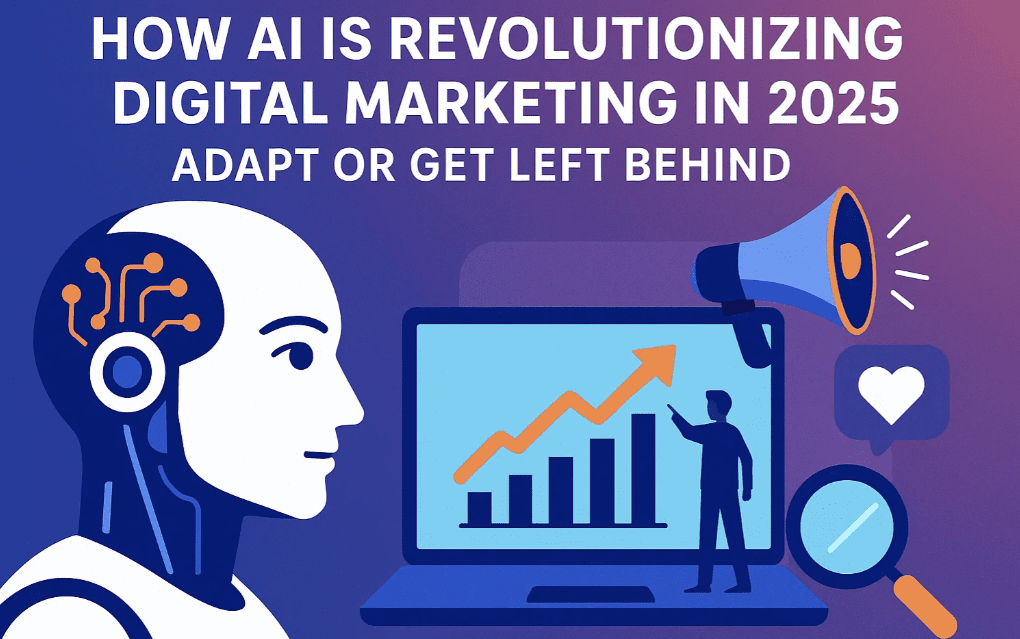
By 2025, AI will dominate 80% of marketing systems—whether it’s Google Ads’ Performance Max campaigns or Meta’s Advantage+ campaigns. The future is clear: AI will redefine digital marketing.
In this article, we’ll explore three key industries where AI is making the biggest impact and how you can adapt to stay ahead.
1. Paid Advertising: AI is Taking Over Targeting & Campaign Management
How AI is Changing Paid Ads
Traditionally, marketers targeted audiences based on demographics—interests, behavior, age, and gender. But AI has taken targeting to the next level by analyzing:
- Scrolling patterns
- Device usage
- Content engagement
- 300+ other parameters (far beyond basic demographics)
Latest AI Updates in Advertising
- Meta is integrating AI-powered tools like MidJourney and DALL·E into its Ads Manager.
- Google has launched Google AI Overviews and Shopping Overviews, allowing ads to appear in AI-generated search responses.
- ChatGPT is introducing intent-based ads, blending promotions seamlessly into conversations.
Example of ChatGPT’s AI Ads:
If a user asks, “Best phone under ₹10,000?”, ChatGPT may suggest options and add:
“By the way, Flipkart is offering 20% off on this model.”
This contextual ad feels organic, not intrusive.
What This Means for Marketers
- AI handles the technical side (targeting, optimization).
- Your role shifts to strategy & creativity—how effectively you use AI tools will define success.
- Small businesses benefit as AI reduces barriers to entry, but medium/large brands must focus on differentiation.
Key Takeaway:
If you don’t learn to use AI in ads, you’ll fall behind.
2. SEO: AI is Rewriting the Rules of Search Rankings
Old SEO vs. New AI-Driven SEO
| Traditional SEO | AI-Powered SEO |
|---|---|
| Keyword targeting | Intent-based optimization |
| Writing articles for rankings | Brand authority matters more |
| Relying on organic traffic | Multi-platform presence (social, YouTube, LinkedIn) |
Why Branding is the New SEO
Google’s AI Overviews pull answers from trusted, branded sources. If you’re still just writing keyword-focused blogs without building a brand, you’ll lose out.
What You Must Do:
✅ Strengthen E-E-A-T (Expertise, Authority, Trustworthiness)
✅ Be active on multiple platforms (YouTube, LinkedIn, social media)
✅ Focus on user experience (UI/UX) so visitors remember your brand
Key Takeaway:
SEO isn’t dead, but branding + AI-optimized content is the future.
3. Content Creation: AI is a Tool, Not a Replacement
AI Tools for Every Stage of Content Creation
- Scriptwriting: ChatGPT, Copy.ai
- Video Generation: Google’s VideoPoet, AI avatars
- Thumbnails & Graphics: MidJourney, DALL·E
- Editing: AI-powered tools for quick edits
Should You Fully Depend on AI?
- AI-generated content lacks originality—viewers engage more with human creators.
- Example: If an AI avatar presented this article, would you trust it as much?
- Successful creators (like Varun Mayya) use AI after establishing their brand.
Best Approach:
- Use AI for research & ideation (30%)
- Keep content original & authentic (70%)
Key Takeaway:
AI speeds up content creation, but creativity & strategy still win.


Final Thoughts: How to Stay Relevant
- Embrace AI tools in ads, SEO, and content.
- Focus on branding—Google and ChatGPT prioritize trusted sources.
- Balance AI & originality—don’t lose your unique voice.
The digital marketing landscape isn’t shrinking—it’s expanding with AI. Marketers who adapt will dominate; those who don’t will fade away.
Tags:
AI in Marketing, Digital Marketing 2025, Google AI, ChatGPT Ads, SEO Trends, Content Creation
Hashtags:
#AIMarketing #DigitalMarketing #SEO #ChatGPT #GoogleAds #MetaAds #ContentCreation
Disclaimer: This article reflects current AI trends as of 2025. Strategies may evolve as technology advances. Always test AI tools before full implementation.



AI is definitely transforming digital marketing in 2025! From content creation to predictive analytics and hyper-personalization, it’s clear that marketers need to adapt to stay ahead.