If you’re a creator pouring your heart and soul into your content, posting regularly, following the “hacks” and trends, but still seeing zero growth—just crickets—I’m here to talk about something that might be uncomfortable, but absolutely essential.
You’re using AI tools, you’re posting Shorts, you’re trying to go viral, yet your videos aren’t taking off. Meanwhile, we all see those other creators who seem to effortlessly get their work in front of the right people. Not millions of random views, but views from an audience that actually cares about their message. If you want to know the difference, it’s not luck, charisma, or a magic trick. It’s a deep, intentional understanding of modern Search Engine Optimization (SEO) for YouTube.
I’ve been in the trenches with YouTube for over 14 years. I spent the first eight making every mistake possible, chasing shiny objects and viral fame. But when I stopped trying to game the system and started working with it, everything changed. My first channel now boasts over 314,000 subscribers and 21+ million organic views. More importantly, that channel has powered two separate seven-figure businesses, generating millions in revenue directly from the content. I’m telling you this not to brag, but to prove that this system works. I even started this channel from absolute zero, navigating the busiest time of my life (including a newborn baby!), to climb the mountain alongside you and show you every single step.
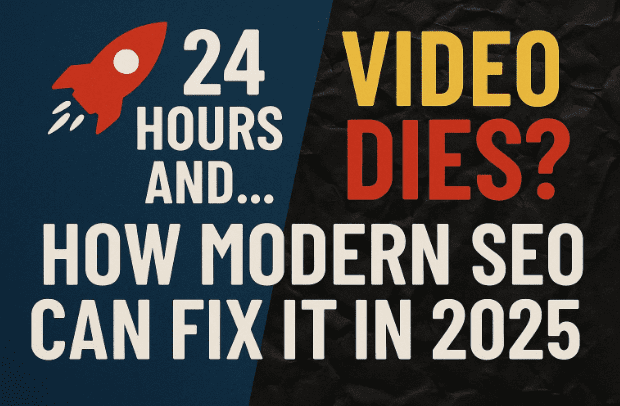
The uncomfortable truth is this: most creators fundamentally misunderstand SEO on YouTube today.
Why The Old SEO Rules Don’t Apply (And Why You Still Need Them)
A lot of creators today—and even some so-called gurus—will tell you that SEO is outdated, a technical relic that doesn’t matter anymore. They claim it’s all about Shorts, trending sounds, and luck. I can see why they think that. If you look at the biggest names—the MrBeasts, the Ryan Trans—it seems like they just post whatever they want and the views automatically roll in. They aren’t overtly optimizing for search, right?
Here’s what they aren’t telling you: They don’t need SEO anymore because their channels are already trained.
The YouTube algorithm knows exactly who their audience is. When a major creator uploads a video, YouTube doesn’t need to guess who might want to watch it; the system already has a perfect model.
You and I don’t have that luxury yet. When you upload a video without proper SEO, you are essentially throwing it into the void, hoping the algorithm figures it out. When YouTube has to guess, things go wrong:
- Low Impressions: Your video isn’t shown to many people.
- Wrong Audience: The few impressions you do get are shown to the wrong people, who click and then immediately bounce (leaving after 10 seconds).
- Burial: Your video is quickly buried, and you’re left wondering why your hard work failed.
It’s like walking up to someone for directions but refusing to tell them where you want to go. How can they help you?
Modern SEO isn’t about the “keyword stuffing garbage” of 2015. It’s about clarifying your message. It’s about giving YouTube clear, strong signals: “This is what this video is about. These are the people I want it to be shown to. Here is why they should care.” The clearer you are, the faster YouTube can connect your content with the right audience.
If you’ve fallen into the trap of thinking it’s all about luck or a flashy thumbnail, let’s rewire the way you approach optimization. Once you start doing this consistently, your channel gets “trained,” and older, previously underperforming videos can even catch momentum.




So, let’s move on to the core signals. We’ve laid the groundwork and understood the “why,” and now we’re ready to dive into the technical actions that actually move the needle in 2025.
The Seven SEO Signals That Actually Move the Needle
These seven signals are the foundations of effective, modern YouTube SEO. Some of them might surprise you with their simplicity or their depth, but all of them are crucial for success.
1. Channel Keywords (Your Channel’s DNA)
This is one of the biggest missed opportunities for new creators. Channel Keywords are not the same as video tags; they are your channel’s DNA. You get 500 characters in your channel settings to tell YouTube exactly what your brand and content are about.
How to Execute:
- Don’t Be Generic: Avoid broad, generic terms like “business tips,” “lifestyle content,” or “gaming.”
- Be Hyper-Specific: Instead of “marketing advice,” use “email and sales funnels for online coaches.” Instead of “fitness tips,” use “strength training and nutrition for busy professionals over 30.”
- The Benefit: The more specific you are here, the better YouTube can match your entire channel with the people who are genuinely searching for what you offer, creating a powerful foundation for all your content.
2. Video Titles: The Curiosity-Clarity Formula
Your title has two jobs: get the click, and tell the algorithm where to send the video.
How to Execute (The Formula):
- Avoid Pure Clickbait: Titles like “This changes everything” are too vague for the algorithm. While they might get clicks from a huge creator’s established audience, they don’t help YouTube understand who to show them to.
- Lead with Keywords, End with Intrigue: A title like “Email Marketing Mistakes That Are Costing You Sales (and How to Fix Them)” gives YouTube clear signals (“email marketing,” “sales”) while still generating curiosity (“mistakes,” “how to fix”).
- Write for Humans First: Stop stuffing keywords into your title awkwardly. YouTube’s AI is too sophisticated for that low-effort trick. The title must read naturally.
3. Thumbnail Text (The Visual Signal)
This is a newer, yet increasingly important signal. YouTube is now scanning and reading the text that appears on your thumbnail image.
How to Execute:
- Minimalism is Key: I always recommend using a minimal number of words, but whatever text you do use, make it count.
- Natural Keyword Fit: If your main keywords fit naturally and unobtrusively into the thumbnail text, use them. For example, if your video is about “Taxes,” you might put the year “2025” or the phrase “Tax Secrets” on the thumbnail.
- Prioritize Clickability: This is crucial: Clickability always wins. A thumbnail that gets clicked is better than one that is perfectly optimized but looks unprofessional or boring. The packaging is often more important than the perfect SEO score.
4. Video File Name (The Embarrassingly Simple Step)
This is a step so simple many “gurus” dismiss it as stupid, yet it costs you five seconds and provides YouTube with an early, direct signal before the upload even begins.
How to Execute:
- Rename Before Upload: Before you click the upload button, rename your video file.
- From Generic to Specific: Change the generic file name (e.g.,
VID_0001.mp4) to something keyword-rich, such asemail-marketing-mistakes-2025.mp4. - The Logic: YouTube’s systems crawl every piece of information you provide. Don’t ignore a signal that is so easy and costs you nothing.
5. Description (The Pure Gold Introduction)
The description is not just a place for links; it’s a critical text signal that tells the algorithm the depth and breadth of your video’s topic.
How to Execute:
- The First Two Sentences are Gold: Your main keywords must appear in the very first sentence, but it must read naturally. Start the description like you’re talking to a friend, not feeding data to a robot.
- Expand the Topic: After the crucial first paragraph, you can expand on the video’s topic, mention related concepts, and provide context. This doesn’t need to be overly long, but it should be comprehensive.
- Tools for Efficiency: You can use AI tools like ChatGPT or similar services to help draft robust descriptions, but always review and polish them yourself to ensure they maintain that human, conversational tone.
6. What You Actually Say (The Transcript Signal)
This is the hidden power of YouTube’s AI. A lot of people don’t realize that YouTube transcribes every single word you say and uses that text to determine the content of your video for SEO purposes. This happens during the “processing” stage after you upload.
How to Execute:
- Mention Keywords Early: Naturally mention your main keywords within the first 30 seconds of your video. This is a powerful signal.
- Sprinkle Throughout: If you use a script or outline, weave your target language throughout the video. This doesn’t mean sounding like a robot reading from a page! Incorporate the key concepts naturally into your dialogue.
- The Algorithm Sees All: YouTube not only transcribes your words but also scans everything visible in your video, including objects and environments, for deeper context. Optimizing your spoken words is a direct way to feed the system.
7. Tags (The Topic Clusters)
While tags aren’t as powerful as they used to be, they are still worth doing to ensure complete optimization. Think of them as helping the algorithm categorize your content.
How to Execute:
- Start with Main Keywords: Use your video’s main topic as the first few tags.
- Use Variations: Add variations of those keywords.
- Create Topic Clusters: Instead of isolated, generic words (like “marketing”), think in clusters. If your video is about email marketing, your tags should include things like:
email marketing,email campaigns,email automation,digital marketing tips,online business. - Use Tools: Tools like ChatGPT or other specialized SEO platforms can help you brainstorm comprehensive tag clusters quickly.
If you stopped here, you would already be better than 80% of creators on the platform. But if you truly want to separate yourself from the pack and build a powerful, long-term asset, we need to move on to the advanced strategies.
Moving to the Next Level: Four Advanced SEO Strategies the Pros Use
We’ve mastered the fundamentals, which is a fantastic achievement. Now, let’s talk about four advanced, but equally critical, strategies that will turn your video content into a machine for evergreen traffic and growth.
1. Multi-Language Subtitles: Globalizing Your SEO Footprint
This is one of the biggest, yet least-discussed, game-changers in modern YouTube SEO. Every single language you add to your video as a subtitle multiplies your SEO signals.
The Benefit:
- Global Discoverability: The same video can now be discovered through search in Spanish, French, German, Portuguese, and dozens of other languages. This immediately opens up massive non-English speaking markets.
- Ease of Implementation: YouTube makes this simple. You can upload custom subtitle files or, even easier, use their auto-translation feature to quickly generate subtitles in dozens of languages based on your original transcript.
- More Keywords: All of the keywords you used in your title and description are now available in different languages for search engines to crawl.
2. Strategic Chapters: Indexing Your Video on Google Search
Most creators use chapters as an afterthought, often just relying on the auto-generated chapters that YouTube provides. Please uncheck the auto-generate button!
How to Execute (The Power of Indexing):
- Chapter Headings as Mini-Headlines: Each chapter is another opportunity to be discovered within Google Search. If you’ve ever searched Google for a question (“how to change a flat tire”) and the search result took you directly to a specific timestamp (e.g., 3:00) within a YouTube video, that means the chapter title was indexed by Google.
- Write for Search: Instead of generic chapter names like “Introduction” or “Tip 1,” write chapter titles that function as their own searchable mini-headlines:
- Instead of “Introduction,” use “Why Most Email Marketing Fails.”
- Instead of “Tip 2,” use “The Subject Line Formula That Doubles Open Rates.”
- The Result: Your video becomes discoverable for many different keywords and phrases, dramatically increasing its chances of appearing in both YouTube and Google search results.
3. Weaponized Playlists: Building Traffic Engines
Treat your playlists like independent traffic engines, not just a dumping ground for your videos. They are powerful assets that YouTube actively promotes.
How to Execute:
- Keyword-Rich Titles: Give your playlists titles that people actually search for. A title like “Email Marketing Masterclass: Complete Step-by-Step System” will perform infinitely better than “Marketing Stuff.”
- Playlist Descriptions: Playlists have a dedicated description box—use it! Write a keyword-rich description for the playlist that explains the collective value of the videos inside, reinforcing your main topics.
- The Benefit: A well-optimized playlist can rank in search results just like a regular video, capturing an audience that wants a deep dive on a specific topic.
4. Strategically Pinned Comments: Reinforcing Keywords and Engagement
The pinned comment at the top of your video is another piece of text that gets crawled by the YouTube algorithm. It’s a valuable piece of real estate you shouldn’t waste.
How to Execute:
- Reinforce Keywords: Use the pinned comment to reinforce your main keywords and topic.
- Drive Engagement: Use it to ask an engaging, relevant question that encourages people to respond. This boosts the video’s engagement metrics.
- Example: Instead of “Thanks for watching,” try “What’s your biggest email marketing challenge right now? Let me know, and I’ll make a video about it!“
- The Logic: Higher comments and engagement signals to YouTube that the content is valuable and should be shown to more people—a dynamic that boosts retention.
Q&A: Addressing Common YouTube Growth Questions
Q: Why do popular YouTubers get views with bad SEO, but I can’t?
A: It comes down to channel authority and audience training. When a massive channel uploads a video, YouTube’s system already knows exactly who to recommend it to based on historical data. They have millions of subscribers and millions of watch hours that have “trained” the algorithm. You and I, when starting out, need to use SEO to provide those clear signals manually until our channel builds its own authority and the algorithm knows where to place us.
Q: Does optimizing an old video actually help, or should I only focus on new content?
A: Yes, it absolutely helps! A properly optimized old video can be a major source of evergreen traffic. When you optimize the title, description, and tags now, you give YouTube the signals it needs to reintroduce that older content into search and suggested feeds. Optimization is about creating long-term assets, not just short-term content.
Q: Is it true that Shorts are the only way to grow a channel now?
A: Shorts are a fantastic tool for discovery and getting quick subscriber numbers, but they often struggle to generate the long-form watch time and high-quality traffic needed to build a real business. Long-form videos optimized with SEO are the way to build an asset. The best strategy is to use Shorts for quick exposure while building your foundation with properly optimized long-form content.
Conclusion: Playing the Long Game
Most creators are playing the short game, chasing the next viral moment, the next trend, or the latest hack. They see a video that doesn’t get massive views in the first three days as a failure.
The creators who build real businesses and multi-million dollar assets are playing the long game. They are creating evergreen assets, not just ephemeral content.
When you optimize a video using the strategies outlined in this article, it doesn’t just perform well for a few days and then die. It can bring you views, leads, and sales for months, or even years. I still have content from years ago on my other channel that generates client inquiries and sponsorship opportunities weekly. This is the difference between chasing attention and building assets.
I know that all of this can feel overwhelming at first. It took me eight years of trial and error—doing YouTube for attention instead of with intention—to figure it out. There are a lot of moving pieces, but you don’t have to implement everything at once. Start with the basics: fix your channel keywords, write better titles, and optimize your descriptions. Then, gradually layer in the advanced strategies.
YouTube isn’t about chasing the algorithm; it’s about serving your audience so incredibly well that the algorithm has no choice but to reward you by connecting you with the right people.
If this guide gave you the perspective and tactical steps you need to attack your channel’s growth, consider clicking that subscribe button to join our community. I’ll be rolling out many more strategies to help you turn your channel into a real business asset.
What is your biggest YouTube challenge right now? I read every single comment, and I’d love to know what we should cover next.
Disclaimer
This article provides detailed SEO strategies based on the author’s 14+ years of experience and observations on the YouTube platform. While these methods have been proven to drive organic growth, results are not guaranteed and depend entirely on the quality of your content, market demand, and consistent application of these techniques. Success requires dedication and perseverance.
Tags
YouTube SEO, Channel Growth, Video Optimization, YouTube Strategy, Evergreen Content, Content Creation, Digital Marketing, YouTube Tips, Creator Economy, SEO Signals
Hashtags
#YouTubeSEO #ChannelGrowth #VideoMarketing #CreatorTips #YouTubeStrategy #ContentCreation #DigitalAssets #SEO2025