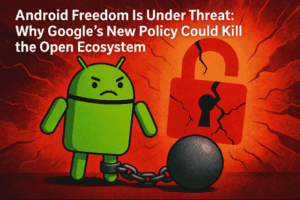
Sideloading—installing apps on Android from outside the Google Play Store—has long been one of the defining features of the Android ecosystem. Unlike iOS, which heavily restricts app installations to its App Store, Android has always marketed itself as the platform of choice for openness and flexibility.
But recent announcements from Google about a new Developer Identity Verification Program have raised questions:
- Is sideloading under threat?
- Will developers who refuse to register with Google lose the ability to distribute apps?
- Does this centralize too much power in Google’s hands?
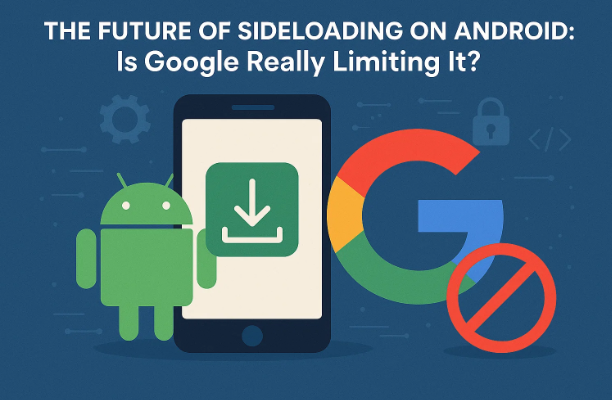
In this article, we’ll break down Google’s statements, analyze the real-world implications, explore the criticism from industry observers, and help you understand what this means for both developers and everyday Android users.
📥 What Is Sideloading on Android?
Before diving into the controversy, let’s make sure we’re on the same page.
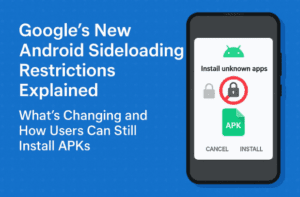
Sideloading means installing an app outside of official app stores like Google Play. This can be done by:
- Downloading APK (Android Package) files directly from a website.
- Installing apps through third-party stores such as F-Droid, Amazon Appstore, or Samsung Galaxy Store.
- Using tools like ADB (Android Debug Bridge) to install applications manually.
Sideloading has always been possible because Android is built on open principles, unlike Apple’s iOS, which restricts all installations to the App Store unless jailbroken.
🌐 Why Sideloading Matters
Sideloading isn’t just a tech enthusiast’s toy—it’s fundamental for several reasons:
- Choice & Freedom: Users can install apps that aren’t on Google Play, including region-locked apps.
- Open Ecosystem: Developers can distribute apps independently without paying Play Store commissions.
- Innovation: Experimental or niche apps often reach users via sideloading before official store release.
- Resilience: In countries where censorship affects app stores, sideloading is often the only option.
Without sideloading, Android would lose much of the openness that sets it apart.
🔒 Google’s New Developer Identity Policy
Google recently announced that developers must register in a Developer Identification Program. The goal, according to Google, is to make sure:
- Every app is traceable to a verified developer.
- Users can trust that apps are truly from the developers they claim to be.
- Bad actors distributing malware via APKs are reduced.
While this sounds like a reasonable step for improving safety, critics argue that the implications go much deeper.
📢 Google’s Official Statement – “Sideloading Isn’t Going Away”
Google directly addressed public concerns in a developer FAQ. The company stated:



“Absolutely not. Sideloading is fundamental to Android, and it’s not going away. Our new developer identity requirements are designed to protect you and developers from bad actors, not to limit choice. Verified developers will have the same freedom to distribute their apps directly to users through sideloading or through any app store they prefer.”
In other words, Google claims the change is about safety, not restriction.
So why are people worried?
⚠️ The Concerns Raised by Critics
Websites like Android Police and advocacy groups such as F-Droid have raised serious concerns.
- The new rules may force developers to register with Google even if they want to distribute apps outside of the Play Store.
- This could mean independent developers who refuse (or cannot afford) to verify through Google will lose their ability to distribute apps.
- Google hasn’t clearly addressed edge cases—like free, open-source apps distributed by hobbyists.
This raises the fear that while sideloading technically “remains,” it may only apply to developers pre-approved by Google.
🏢 Why This Change Centralizes Power
Historically, Android prided itself on decentralized app distribution. Anyone could write an app, publish it on their website, and users could install it with a few taps.
But with this identity requirement:
- Google becomes the central authority for developer verification.
- Even third-party stores like F-Droid may be forced to rely on Google’s system.
- This creates a single choke point—something regulators often warn against.
This centralization risks making Android more like iOS, where one company decides who can and cannot distribute apps.
👩💻 Impact on Developers
For developers, this change could mean:
- Extra costs and bureaucracy – registering, verifying, and maintaining compliance.
- Barriers for independent creators – hobbyist or student developers may be discouraged.
- Risk of rejection – Google could deny identity verification, effectively blocking a developer from distribution.
For large companies, this isn’t a problem. For small developers, it could be devastating.
🙋 Impact on Users
For users, the risks are more subtle but still significant:
- Reduced app diversity – fewer indie apps, more reliance on big corporations.
- Loss of privacy-conscious apps – tools that avoid Google’s ecosystem may disappear.
- Illusion of choice – sideloading “exists,” but only for apps Google approves.
In essence, users could find themselves locked into a narrower, more corporate-driven Android ecosystem.
9. ⚖️ The Role of Regulators
Groups like F-Droid have already urged regulators to scrutinize Google’s move. Their concern is that this policy might be a backdoor way to:
- Limit competition.
- Consolidate app distribution under Google’s control.
- Undermine the very openness Android was built on.
Given the increasing global scrutiny of big tech monopolies, this issue may attract government investigations in both the US and EU.
🛒 Alternatives to Google Play
Even with these changes, there are still alternatives worth exploring:
- F-Droid – Open-source app store with strict privacy standards.
- Amazon Appstore – A commercial alternative often preloaded on Amazon devices.
- Samsung Galaxy Store – Integrated into Samsung devices, though still reliant on Google frameworks.
- Direct APK downloads – Many developers still publish APKs directly on their websites.
The question is whether these alternatives can remain independent if Google enforces strict verification rules.
❓ Frequently Asked Questions (FAQ)
Q1. Will sideloading disappear completely?
No, according to Google, sideloading will remain. But access may be limited to apps from verified developers.
Q2. Why is Google making this change?
Google says the change is to protect users from malware and to prevent impersonation of developers.
Q3. What about open-source apps?
This is unclear. Many worry open-source apps distributed outside the Play Store could be negatively affected.
Q4. Can I still install APKs manually?
Yes—for now, users can still download APK files and install them. The real issue is whether unverified developers will be able to continue publishing them.
Q5. How does this compare to Apple’s App Store?
Apple does not allow sideloading at all. If Google’s policy tightens too much, Android risks moving closer to Apple’s locked ecosystem.
✅ Conclusion – Is Sideloading Safe or at Risk?
On paper, sideloading isn’t going anywhere. Google has stated clearly that it remains “fundamental to Android.”
However, in practice, the new Developer Identity Verification Program could give Google unprecedented control over app distribution. This may create barriers for independent developers and reduce the diversity of apps available outside the Play Store.
For users, the result could be a quieter, less open Android ecosystem—one where sideloading exists, but only under Google’s watchful eye.
The coming months will be critical. Developers, users, and regulators alike must pay attention. If Android loses its openness, it risks losing the very identity that set it apart from Apple’s walled garden.
⚠️ Disclaimer
This article is based on currently available information from Google and independent reports. Policies may change, and interpretations vary. Always verify directly from official Google developer documentation before making decisions related to app development or distribution.
Tags
Android sideloading, Google Play policies, Developer Identity Verification, F-Droid, Android ecosystem, sideloading apps, APK installation
Hashtags
#Android #Sideloading #GooglePlay #BigTech #OpenSource #AppDevelopment #FOSS