The YouTube algorithm has completely changed over the years. Gone are the days when you could stuff your video description with keywords and tags to reach millions of views. In 2025, YouTube focuses primarily on viewer behavior, watch satisfaction, and personalized recommendations — not just metadata or SEO.
In this article, we’ll break down exactly how the YouTube algorithm now works, what metrics actually matter (like CTR and AVD), and what creators should focus on to grow fast this year. If you want your videos to appear in the recommended section or go viral, this guide covers everything you need to know.
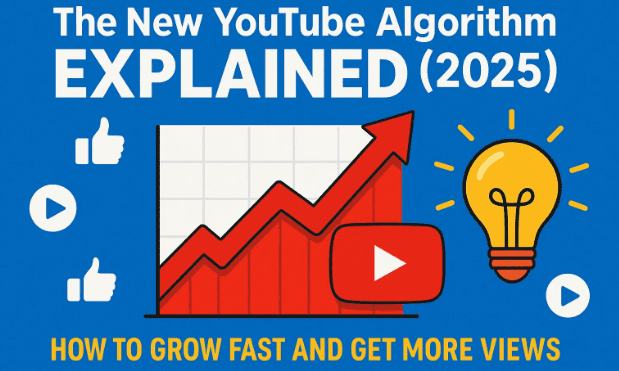
🧭 1. How the YouTube Algorithm Has Changed
There was a time when creators could easily rank videos just by adding the right keywords in the title, description, and tags. Search-based traffic dominated YouTube, and metadata optimization was the primary focus.
But things are very different now. YouTube no longer shares its exact algorithm publicly, yet from years of experience and observation, we know that the algorithm now prioritizes viewer engagement and satisfaction.
YouTube wants users to spend more time on its platform — watching, clicking, and returning. That means the algorithm gives more importance to how users behave rather than what creators write.
Let’s move forward and understand how YouTube’s recommendation system actually works today.
👀 2. Why Viewer Preference Is Now the Key Factor
Today, YouTube focuses on what each individual viewer likes rather than what creators want to promote.
For example, if you recently watched two or three videos about traveling to Vietnam, you’ll soon notice that YouTube starts recommending even more videos related to Vietnam — not just from big creators, but also from small, unknown channels you’ve never subscribed to.
This proves one thing:
The algorithm now personalizes recommendations based on what viewers are actively interested in, not on a channel’s subscriber count or age.
The logic behind this change is simple. People no longer consume videos on YouTube alone — they also watch content on Facebook, Instagram, and TikTok. To retain viewers, YouTube needs to keep feeding them exactly what they want to watch next.






And this “viewer-first” approach brings us to the most crucial metric — CTR.
🎯 3. Step 1: Understand CTR (Click-Through Rate)
CTR stands for Click-Through Rate — it’s the percentage of people who clicked your video after seeing its thumbnail.
Let’s say YouTube shows your video to 1,000 people on their home feed.
- If 80 people click on it, your CTR is 8%.
- If 100 people click, that’s 10%.
CTR directly reflects how appealing your title and thumbnail are. These two elements determine whether someone will click or scroll away.
Why CTR Matters So Much
YouTube measures how interesting your video appears to potential viewers. If many people are clicking on it, YouTube interprets it as “high interest” and pushes it to a wider audience.
However, if only a few click, it assumes the topic or presentation isn’t compelling enough.
So far, we’ve done a good job understanding why CTR matters. Now let’s explore how much CTR is considered good.
📊 What’s a Good CTR in 2025?
It depends on where your views come from:
| Source Type | Ideal CTR Range | Notes |
|---|---|---|
| Search Results | 4% – 6% | Typical for educational or tutorial videos that rank on keywords. |
| Browse/Recommendations | 8% – 10% | Needed for quick early traction in 24–48 hours. |
| Viral Topics / Trending | 10% – 15% | Very rare but possible if your topic is hot and timely. |
Pro Tip:
A CTR of 8–10% is excellent for most creators. If you consistently get more than 10%, your thumbnails and topics are performing extremely well.
But CTR alone isn’t enough. YouTube doesn’t just want people to click — it wants them to keep watching.
⏱️ 4. Step 2: Focus on Average View Duration (AVD)
The next major metric is Average View Duration (AVD) — how long viewers actually watch your video.
Even if your CTR is high, if people leave after 30 seconds, YouTube stops recommending your content. It considers watch time as a key measure of viewer satisfaction.
How AVD Works
Suppose your video is 5 minutes long. If viewers watch 2.5 minutes on average, that’s a 50% view duration. That’s excellent.
But if your video is 10 minutes long and people only watch 2 minutes, that’s just 20%. YouTube sees that as a sign that the content wasn’t engaging enough.
Let’s look at ideal AVD benchmarks depending on video length.
| Video Length | Ideal Average View Duration (AVD) | Rating |
|---|---|---|
| 2–3 minutes | 50–60% | Excellent |
| 4–6 minutes | 40–45% | Good |
| 10–15 minutes | 30–35% | Acceptable |
| 20+ minutes | 25–30% | Decent for long-form |
When both CTR and AVD are strong, your video has the highest chance of going viral.
🧠 5. Step 3: Craft a Strong Topic, Title, and Thumbnail Combo
Once you’ve understood the numbers, the next step is content positioning — choosing the right topic and presenting it attractively.
Let’s move to this step carefully because this is where most creators either grow or stagnate.
🗂️ Step-by-Step Breakdown
- Choose the right topic:
Always start with what people are searching for right now. Use tools like Google Trends and YouTube’s “Explore” tab to see what’s hot in your niche. - Write an emotional, curiosity-driven title:
Don’t just describe — promise value. For example:- ❌ “How to edit a video”
- ✅ “Edit Videos Like a Pro: The Hidden YouTube Feature You’re Missing!”
- Design a thumbnail that stands out:
Keep it simple, high-contrast, and emotional. Avoid cluttered text. Your goal is to make users feel something before they click. - Match title and content:
Never clickbait. If your title overpromises and the video underdelivers, your retention drops — and the algorithm penalizes you.
When your topic, title, and thumbnail work in harmony, your CTR naturally climbs.
🏷️ 6. Step 4: What About Tags and Hashtags?
Many creators still believe that adding dozens of tags helps with ranking. That used to be true years ago — but not anymore.
In 2025, tags play only a minimal role. YouTube’s system now automatically understands your video through captions, transcripts, and viewer behavior rather than tags.
So should you still use them?
Yes, but strategically:
- Add a few relevant tags that describe your content (3–6 is enough).
- Use hashtags only if they help users discover a series (like #YouTubeTips or #TechEducation).
Remember, tags are now more for categorization than for ranking.
🚀 7. Step 5: Real Strategies to Grow on YouTube in 2025
Now that we’ve decoded how the algorithm works, let’s discuss practical strategies you can apply immediately.
💡 1. Optimize for Recommendations, Not Search
Search-based growth is slower now. Focus on browse and home feed — where YouTube recommends videos to users. Your titles and thumbnails should trigger curiosity and emotion.
💬 2. Engage Early Viewers
The first 24–48 hours are crucial. Reply to comments, pin engaging questions, and update thumbnails if CTR is low. The algorithm watches how the early audience reacts.
⏩ 3. Mix Short and Long Content
Use YouTube Shorts to reach new viewers and long videos to convert them into loyal subscribers. The algorithm now cross-connects both forms of content.
🧩 4. Study Analytics Weekly
Go to YouTube Studio → Analytics → Content → Reach & Engagement and track your CTR and AVD. Identify what’s working and replicate it.
🔄 5. Post Consistently
Frequency signals reliability. YouTube rewards channels that upload regularly because they keep the platform active.
⚙️ 6. Focus on Retention Segments
Watch your audience retention graph. If there’s a sharp drop at a certain point, analyze why — maybe your intro is too long or your voice tone dips.
🧠 7. Think Like a Viewer
Before uploading, ask yourself:
“Would I watch this till the end?”
“Is there real value or surprise for the audience?”
This mindset shift alone separates good creators from great ones.
❓ 8. Frequently Asked Questions (FAQs)
Q1. How often should I upload to grow faster?
A: Upload at least once a week. Consistency matters more than frequency. A well-optimized weekly video performs better than daily low-quality uploads.
Q2. Do shorts help the main channel grow?
A: Yes. YouTube now cross-links Shorts viewers to long videos if the niche overlaps. It’s a great entry point for new audiences.
Q3. Should I target trending topics or evergreen content?
A: Both. Trending videos give quick boosts, but evergreen topics sustain your views long-term.
Q4. Does watch time matter more than CTR?
A: Both are important. CTR helps you get clicks, and AVD helps you retain them. You need a balance for long-term growth.
Q5. Can I still rank videos using keywords and SEO?
A: SEO helps discovery, but YouTube’s recommendation system drives the majority of views now. Focus on retention and engagement more than tags.
🏁 9. Conclusion
The 2025 YouTube algorithm revolves around viewer satisfaction. If your videos make people click, watch, and stay engaged, you’ll naturally grow — regardless of subscriber count.
Focus less on keyword stuffing and more on human connection, curiosity, and consistency. Combine data (CTR, AVD) with creativity (topic, emotion, delivery), and YouTube’s system will reward your effort.
Remember, the algorithm doesn’t push creators — it pushes videos that people love to watch.
Disclaimer:
This article is based on observed YouTube behavior, personal experience, and community analytics. YouTube doesn’t disclose its full algorithm publicly, and updates may continue throughout 2025. Always test and adapt your strategy based on your own audience data.
Tags: YouTube Algorithm 2025, YouTube Growth, CTR, AVD, YouTube SEO, YouTube Tips, Content Strategy, Video Marketing, Creator Growth
Hashtags: #YouTube2025 #YouTubeAlgorithm #ContentCreators #YouTubeGrowth #VideoStrategy #CTR #AVD #dtptips #CreatorTips