The world of YouTube is full of advice. Some of it is valuable, but a lot of it is misleading, outdated, or simply wrong. Many creators, especially beginners, fall into traps that can slow down their growth or make them focus on the wrong things.
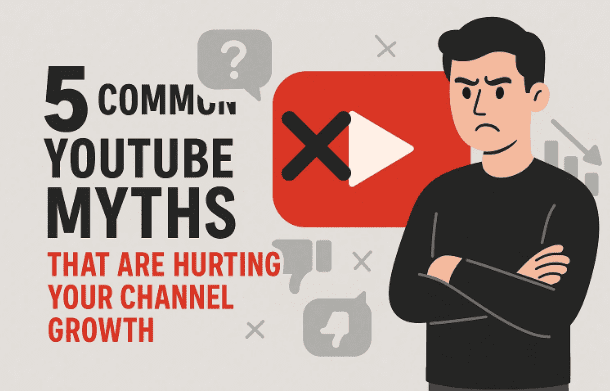
In this article, we’ll explore five of the most common YouTube myths that creators often believe. We’ll also break down what actually matters, why these myths are so widespread, and what you should be doing instead.
If you’ve ever wondered why your channel isn’t growing despite your hard work, there’s a good chance one of these misconceptions is playing a role. Let’s go step by step and clear things up.
Myth #1: Uploading More Videos Always Equals Faster Growth
One of the most common assumptions on YouTube is that simply uploading more videos will automatically grow your channel faster. At first glance, this idea makes sense: more content means more opportunities to be discovered. But the truth is far more nuanced.
Why This Myth Persists
When creators see large channels uploading daily, they assume quantity is the key. What they often miss is that those creators already have:
- A loyal audience base.
- A clear content style that resonates with viewers.
- Experience in making videos engaging from start to finish.
Without these, publishing more often just means pushing out videos that may not perform well.
The Reality
If viewers aren’t clicking, watching, or engaging with your videos, uploading more won’t solve the problem. In fact, you’ll just end up with hundreds of videos that nobody watches. YouTube’s algorithm isn’t counting your uploads—it’s tracking how people respond to them.
What You Should Do Instead
- Focus on quality over quantity. Learn from each video and make the next one better.
- Analyze your analytics. Look at audience retention, CTR (click-through rate), and watch time.
- Be intentional. Each upload should teach you something new about your audience.
👉 It’s better to publish one great video a week than five forgettable ones.
Myth #2: Letting Videos Sit Before Publishing Boosts Views
Another widespread belief is that if you upload a video and leave it unpublished for a day or two, YouTube rewards you with more views once you finally publish it.
Where This Comes From
This idea likely spread from misinterpretations of how YouTube processes videos. Creators noticed that uploaded videos show as “processing,” and some assumed the system was analyzing them for algorithmic advantage.
The Reality
When you upload a video, YouTube processes it right away. As soon as that’s done, your video is fully ready for discovery. Leaving it sitting unpublished does not give you any boost in the algorithm.










Why Scheduling Helps Anyway
While this doesn’t affect the algorithm, scheduling uploads can help you as a creator:
- Reduces stress because you’re not rushing to publish at the last minute.
- Gives time to refine titles, descriptions, and thumbnails.
- Allows you to build a consistent upload routine.
So yes—schedule in advance for peace of mind, but don’t expect hidden algorithm magic.
Myth #3: Keywords in File Names Help with Rankings
This one has been around since YouTube’s earliest days: “If you put keywords in your video or thumbnail file name, YouTube ranks you higher.”
Why People Believe It
SEO practices outside YouTube, such as image SEO on websites, often involve naming files with keywords. That habit made its way to video platforms.
The Reality
YouTube does not use your file names for ranking. The algorithm doesn’t care if your video is called funny-cat-video.mp4 or random123.mp4.
What actually matters is viewer response:
- Are people clicking on your thumbnail and title?
- Are they watching long enough?
- Are they engaging by liking, commenting, or sharing?
Where Keywords Do Matter
While file names don’t help, keywords still play a role when:
- Used strategically in titles.
- Included naturally in descriptions.
- Appearing in tags (to a lesser extent).
- Matched with actual search demand (targeting terms people actively look for).
👉 If adding keywords to file names helps you stay organized, do it—but don’t expect it to help rankings.
Myth #4: Changing Titles or Thumbnails Re-Ranks Videos
Another common misunderstanding is that if you change a title or thumbnail, YouTube’s algorithm “resets” the video and re-ranks it.
The Reality
Nothing in YouTube’s system resets when you change titles or thumbnails. What changes is viewer behavior.
- If your new thumbnail/title is more appealing, more people will click.
- If the new title sets better expectations, people may watch longer.
- If it mismatches the video’s content, viewers may click away faster.
The algorithm reacts to how people respond after you make the change, not the act of changing itself.
Best Practices
- Always A/B test thumbnails and titles where possible.
- Make sure new designs are consistent with video content.
- Track results over time instead of expecting immediate jumps.
Myth #5: Shorts Hurt Long-Form Channel Performance
When YouTube Shorts were first introduced, some creators noticed strange analytics shifts. This led to a widespread belief that uploading Shorts on your channel damages the performance of your long-form videos.
The Reality
YouTube has since clarified and fixed early issues. Shorts do not harm your channel. You can safely upload:
- Shorts
- Long-form videos
- Livestreams
All on the same channel.
The Key Factor
The only time Shorts may cause problems is when they don’t align with your channel’s audience. For example:
- If your long-form content is about cooking tutorials, but your Shorts are random comedy skits, your audience may ignore one type of content.
- If your Shorts reinforce your niche (quick cooking tips), they support your channel.
👉 Consistency matters more than format.
Bonus: Why Intros Matter More Than You Think
A final mistake many YouTubers make is underestimating the importance of how they start their videos.
The first 30 seconds are critical:
- Viewers decide whether to keep watching.
- Watch time and retention directly affect performance.
- A weak intro can undo all your effort in making the rest of the video.
Tips for stronger intros:
- Hook viewers immediately (ask a question, make a bold statement, or preview value).
- Avoid long, generic greetings.
- Match the promise of your title and thumbnail right away.
Frequently Asked Questions (FAQs)
Q1. Should I upload daily to grow faster?
Not unless you can maintain quality. One great video beats five mediocre ones.
Q2. Does uploading in advance help with SEO?
No. It only helps you stay organized and stress-free.
Q3. Do tags still matter on YouTube?
A little, but not nearly as much as titles, thumbnails, and audience retention.
Q4. Can Shorts and long-form content coexist on the same channel?
Yes, as long as both types of content are relevant to your audience.
Q5. If I change my thumbnail and CTR drops, should I change back?
Yes. Always monitor results, and if a change hurts performance, revert quickly.
Final Thoughts
YouTube is full of myths that distract creators from what truly matters: making content people enjoy. Uploading more videos, renaming files, or tweaking titles won’t magically fool the algorithm. Instead, focus on fundamentals:
- Create content that solves problems, entertains, or inspires.
- Design thumbnails and titles that spark curiosity while being honest.
- Keep intros sharp and deliver on your promises.
- Stay consistent with your niche and audience expectations.
By avoiding these five misconceptions, you’ll save time, reduce frustration, and put your energy where it really counts—into making videos that people love to watch.
Tags
YouTube myths, YouTube algorithm misconceptions, YouTube Shorts growth, YouTube thumbnails, YouTube channel tips, YouTube upload strategy, YouTube analytics
Hashtags
#YouTubeTips #YouTubeGrowth #ContentCreation #YouTubeAlgorithm #YouTubeMyths
⚠️ Disclaimer: The insights shared here are based on YouTube’s current systems and community experience. YouTube updates its platform frequently, so always check YouTube Help for the most up-to-date official guidelines.