The landscape of content creation on YouTube has shifted drastically in the past year. What once felt like a thriving space for creators to share knowledge, express creativity, or grow a personal brand has now turned into a highly regulated ecosystem where even experienced YouTubers are facing channel deletions overnight.
In this in-depth case study, we’ll explore why YouTube is deleting millions of videos and channels, the role of AI in content moderation, the shortcomings in the manual review process, and—most importantly—what you, as a creator, should and should not do to survive and thrive in 2025.
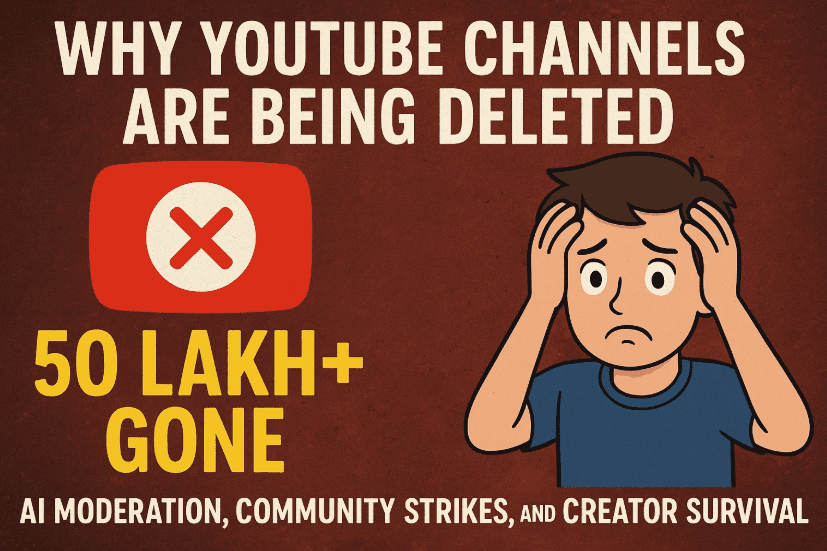
📈 The Reality: 95 Lakh+ Videos and 48 Lakh+ Channels Deleted
Let’s start with some jaw-dropping data:
- Over 9.5 million (95 lakh) videos have been removed by YouTube recently.
- 4.8 million channels have been terminated.
This isn’t speculation—this is officially published data by YouTube.
Channels face permanent deletion when they receive three strikes, and many creators are now under pressure after receiving their first or second one. A single video—like one showing how to apply for a job at Reliance Jio—can now trigger a strike if YouTube’s AI finds something off, even if the content is purely educational.
🤖 Why Is YouTube Doing This?
Let’s be fair. YouTube has a reasonable motive: to keep the platform safe, clean, and free of misleading, dangerous, or harmful content. The platform has grown to a point where manual moderation is impossible at scale, which is why AI and machine learning algorithms are now responsible for initial reviews and takedowns.
However, this automation comes at a cost: false positives.
A creator explaining real job opportunities at Reliance Jio had their video taken down within 3–4 hours of upload. No clickbait, no scam—just information. But the AI detected terms like “₹30,000 salary” and “direct Jio job” and assumed it was a misleading or get-rich-quick scheme.
🌐 The Problem with AI Moderation
AI is fast and scalable, but it’s not human.
YouTube’s algorithm typically checks:
- Title
- Description
- Thumbnail
It’s unclear whether the AI watches the full video or understands the context. It simply flags what it thinks might be harmful.





This is dangerous, especially for creators who work in regional languages like Hindi. Even if you appeal a takedown, the manual review might be conducted by someone who doesn’t understand the language, relying on faulty translation tools that miss nuance.
💡 What Needs to Change in the Manual Review Process
YouTube does offer a manual review after each strike, but this process needs transparency.
Here’s what should be improved:
- Reviewers must understand the content language.
- Detailed rejection reasons should be shared.
- Clear guidelines on what was violated must be given.
Currently, creators often get a generic email stating that their video “violated community guidelines”—but without telling them how.
This leaves creators guessing what went wrong and increases the chances of future strikes.
🚀 What Creators Should NOT Do (2025 Guidelines)
Now, let’s discuss the types of content that you must avoid if you want your channel to survive the algorithmic scrutiny:
1. Spammy or Repetitive Content
- Don’t upload the same video multiple times.
- Avoid keyword stuffing or misleading metadata.
2. AI-Generated, Low-Effort Content
- Don’t mass-produce videos using ChatGPT scripts, stock footage, and robotic voiceovers.
- YouTube is actively flagging these channels.
3. Clickbait Titles and Thumbnails
- Be honest with your content representation.
- Avoid overpromising or misleading users.
4. Misleading or Fake Information
- Avoid financial scams or exaggerated job opportunities.
- Cross-check your data before publishing.
5. Foreign Political Manipulation / Propaganda
- Avoid excessive promotion or bashing of any political party.
- YouTube has taken down over 34,000 such channels recently.
6. Violent or Unsafe Content
- No blood, fights, or dangerous behavior—even in news or prank formats.
7. Child-Endangering or Unsafe Kids’ Content
- Don’t show unsafe behavior with toys or stunts targeting children.
8. Copyright Violations
- Don’t use copyrighted music, footage, or re-upload others’ videos.
- Lawsuits and channel strikes are getting more frequent.
9. Sexual or Explicit Content
- Avoid nudity or sexually suggestive visuals. Even borderline content can lead to removal.
🚜 Real-Life Impact: Why Diversifying Income is Crucial
One of the best pieces of advice for creators today is: don’t rely solely on YouTube AdSense.
Here’s what you should do instead:
- Build an affiliate income stream
- Sell digital products
- Invest in real estate or other offline businesses
- Use YouTube for marketing, not your only monetization channel
This way, even if one channel is deleted or demonetized, your financial stability isn’t shattered.
🔧 YouTube is a Tool, Not a Guarantee
YouTube is a phenomenal platform. It has changed millions of lives, including mine. I’ve run 6–7 YouTube channels for years and built a 4 million+ following. But even now, one wrong AI strike and a channel can vanish.
Use YouTube as a marketing tool for your own products, services, and personal brand. Don’t wait for sponsors or rely entirely on platform-based income. That’s a dangerous gamble in 2025.
📆 Final Words for Creators
YouTube isn’t evil—it’s just evolving. The company is managing at scale, and sometimes good creators get caught in the automation wave. Instead of blaming the platform, focus on what you can control:
- Your content quality
- Your diversification strategy
- Your long-term brand
And most importantly, stay informed. This case study was meant to shed light on real problems happening in our community—and to help you prepare better.
Tags: youtube strikes, channel deletion, ai moderation, youtube policy 2025, content guidelines, creator income, youtube community guidelines, youtube monetization, digital creator tips
Hashtags:
#YouTubeStrikes #ChannelDeletion #CreatorTips #AIModeration #CommunityGuidelines #YouTubePolicy #ContentWarning #DigitalCreators #YouTube2025