YouTube once positioned its channel membership program as a powerful way for creators to earn directly from their loyal fans. Viewers could “join” a channel for a small monthly fee and get access to exclusive content, badges, and perks — all while supporting their favorite creators. For years, this seemed like a healthy alternative to external platforms like Patreon or Floatplane.
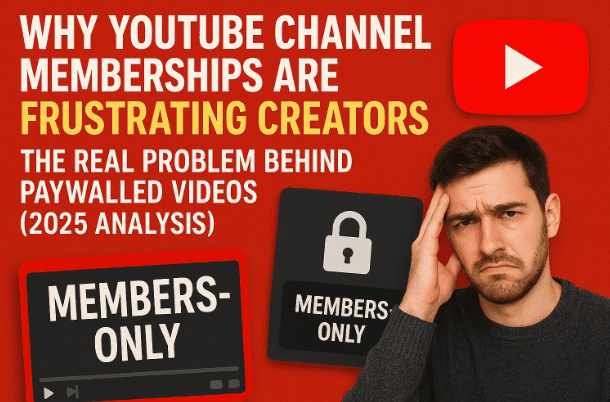
But as of 2025, that relationship has taken a turn for the worse. A growing number of creators and viewers are expressing frustration over how YouTube’s algorithm and design changes are handling members-only videos. Instead of rewarding loyalty, the system now feels intrusive, confusing, and — for many — outright manipulative.
This article explores what went wrong, how YouTube’s design decisions impacted creators, and what’s being done about it.
1. What YouTube Channel Memberships Were Originally Meant For
When YouTube introduced Channel Memberships over six years ago, it was marketed as a win-win.
- Viewers could support creators they loved by contributing a small amount — often equivalent to buying a cup of coffee each month.
- Creators could offer exclusive perks: early access videos, behind-the-scenes updates, members-only polls, or unique community posts.
It was simple, transparent, and familiar — very similar to Patreon but built directly into YouTube.
At first, this was a breath of fresh air. Instead of redirecting audiences to external platforms, creators could keep everything under one roof. And for YouTube, it meant retaining both user attention and transaction revenue.
Everything seemed fine… for a while.
2. How Channel Memberships Worked in the Early Years
Originally, members-only videos were kept in their own space. Viewers could find them under a dedicated “Membership” tab on a channel’s homepage.
This system worked well because:
- Regular viewers were not bombarded by locked thumbnails.
- Members knew exactly where to find their exclusive videos.
- Creators had full control over how often or how visibly those videos were promoted.
Different creators handled it differently:
- Some integrated it gently with small “join” reminders.
- Others created special playlists or pinned community posts.
- Larger teams often used YouTube memberships as a secondary channel beside external sites like Patreon or Floatplane.
For example, creators who already ran their own platforms (such as Floatplane for early-access content) treated YouTube memberships as a convenience option — an easier way for fans to support them without leaving the YouTube ecosystem.


It wasn’t a huge moneymaker, but it was stable and unobtrusive. Creators could focus on content instead of worrying about confusing their audience.
But then came the redesign that changed everything.
3. The Algorithmic Shift: What Changed in 2024–2025
Somewhere between late 2024 and early 2025, YouTube quietly changed how it handled members-only videos.
Instead of isolating them within the membership tab, the platform started pushing these paywalled videos across the entire site — including:
- Channel homepages
- Recommended feeds
- Search results
- And even the general “Up Next” section
This means that non-paying viewers began seeing thumbnails for videos they could not access, often without clear labeling.
At first glance, this might look like a small UI tweak — but its consequences were massive.
Suddenly, a viewer scrolling through their favorite creator’s page could encounter multiple “unavailable” videos, each marked by a small green badge. Clicking one would open a membership prompt instead of the actual video.
In short, what used to be a choice — “join if you want” — turned into aggressive upselling.
4. Why Viewers Are Suddenly Angry
The backlash from viewers has been loud and justified. Here’s why:
- Cluttered Experience – Channels once known for a clean video grid now look messy. Locked thumbnails break the flow and confuse viewers.
- Misleading Recommendations – YouTube’s algorithm still recommends these paywalled videos even though many users can’t watch them.
- FOMO Manipulation – The green membership icon creates a sense of “you’re missing out,” triggering frustration.
- Interruptive Pop-ups – Clicking on such videos triggers a giant membership ad, breaking immersion.
- Loss of Trust – Viewers feel like their loyalty is being used to push paid content instead of genuine connection.
As one creator described it, “It’s like YouTube is trying to sell my fans something they didn’t ask for.”
Many long-time fans who supported creators through other means (like buying merch or external subscriptions) now feel alienated, as if the platform itself is prioritizing monetization over community.
5. How the Change Affects Creators Financially and Emotionally
From a creator’s perspective, this new setup is both a business and ethical dilemma.
Let’s look at both sides:
Financially
YouTube takes a 30% cut from all membership revenue. This has always been the case, but now with YouTube aggressively promoting memberships, the pressure to convert free viewers into paying members has increased.
However, this doesn’t mean creators are earning more profit. In many cases, the backlash has reduced overall engagement, hurting ad revenue and watch time.
Creators have reported:
- Declining view counts because viewers get annoyed seeing “locked” content.
- Negative feedback loops where frustrated users stop visiting altogether.
- Algorithmic drops since YouTube’s system interprets viewer exits as disinterest.
In essence, YouTube’s attempt to promote memberships may actually be hurting creators’ overall visibility.
Emotionally
For many creators, this change feels like a betrayal.
They signed up for memberships under one set of rules — where they controlled how exclusive content appeared — only for YouTube to flip the switch later and push it platform-wide.
It’s not about the money anymore; it’s about autonomy and audience trust.
6. The Real Problem: YouTube’s Promotion System
At the heart of the controversy lies YouTube’s lack of control and customization for creators.
There’s no way to:
- Turn off membership promotions in search or recommendations.
- Exempt Premium users from seeing membership ads.
- Adjust how aggressively members-only content appears in feeds.
This one-size-fits-all approach punishes both sides:
- Viewers feel spammed.
- Creators feel powerless.
What’s worse, YouTube doesn’t appear to be addressing it. The assumption seems to be that the additional revenue outweighs the frustration.
Creators speculate that YouTube’s internal data shows membership engagement hasn’t hurt total viewership enough to justify reverting the change — even if it damages community goodwill.
7. How Some Creators Are Responding
Frustrated by the situation, several large creators have started disabling members-only videos altogether.
The process usually goes like this:
- Hide or remove all paywalled videos from public listings.
- Refund the prorated membership amounts to affected members.
- Retain non-video perks like badges or emojis for lower tiers.
This allows them to honor existing supporters without continuing to clutter their feeds with restricted content.
Creators are also encouraging fans to move to external platforms (like Patreon or Floatplane), where they have more control over pricing, visibility, and communication.
It’s not that creators dislike YouTube memberships — they simply dislike how YouTube is forcing them into a bad experience they never agreed to.
One creator summed it up well:
“We didn’t enable this system. YouTube did — and they won’t let us turn it off.”
8. Can YouTube Fix This? What Needs to Happen Next
Fixing this issue isn’t complicated from a technical standpoint — it’s about giving creators control back.
Here are a few logical steps YouTube could take:
- Allow opt-out of automatic promotion for members-only content.
- Add clear filters in recommendations and search results to hide inaccessible videos.
- Offer customization tools for how creators present membership tiers.
- Exempt Premium users from seeing “Join” prompts, since they’re already paying subscribers.
- Separate analytics for paywalled vs. public content to understand real viewer sentiment.
These are not radical suggestions — they’re quality-of-life improvements that align with YouTube’s own principle of supporting creators.
If YouTube wants memberships to thrive, they must stop forcing exposure and start restoring choice.
9. FAQs: Common Questions About YouTube Memberships
Q1: What are YouTube Channel Memberships?
They are a built-in monetization feature allowing viewers to support channels with a monthly fee in exchange for exclusive perks — similar to Patreon.
Q2: Why are viewers seeing “Members Only” videos they can’t access?
Because of YouTube’s 2024–2025 update, paywalled videos are now shown in search and recommendations to non-members as part of YouTube’s algorithmic promotion.
Q3: Can creators disable this behavior?
Currently, no. There is no setting to hide members-only videos from public view unless creators manually remove them.
Q4: Does YouTube take a cut from memberships?
Yes. YouTube takes 30% of all membership revenue. The remaining 70% goes to the creator.
Q5: What happens when a creator disables members-only videos?
YouTube refunds any prorated membership amounts based on the time left in a subscriber’s cycle. Non-video perks (like badges) may still remain active.
Q6: Why isn’t YouTube changing it back?
Likely because the overall revenue gain outweighs the backlash — at least from YouTube’s perspective. Many smaller creators benefit financially even if user experience suffers.
Q7: Should creators still use YouTube Memberships?
It depends. For smaller channels that can’t manage multiple platforms, it can still be a viable income source. Larger creators may prefer external platforms for flexibility and independence.
10. Conclusion: A Platform at a Crossroads
YouTube memberships started with good intentions — to empower creators and strengthen community bonds. But over time, the implementation has drifted toward something more self-serving for the platform.
The recent algorithmic changes expose a deeper tension between creator control and corporate monetization.
Creators are now forced to choose between earning short-term revenue through memberships or maintaining long-term trust with their audiences. Viewers, on the other hand, are left navigating an increasingly cluttered and confusing experience.
If YouTube truly wants to remain the home for creators, it must listen to the very people who built its success. Transparency, control, and trust — not forced promotion — are what will sustain the platform in the years to come.
Disclaimer
This article is based on public creator feedback and firsthand creator experiences across multiple YouTube channels. It does not represent YouTube’s official position. All trademarks and platform names belong to their respective owners.
Tags
YouTube memberships, paywalled content, creator monetization, YouTube algorithm, viewer experience, online video platforms, Patreon alternatives
Hashtags
#YouTube #ContentCreators #Monetization #ChannelMemberships #Algorithm #YouTubeNews #DigitalMedia