We use the internet every single day—on our phones, tablets, laptops, and smart devices—often without giving much thought to what’s happening behind the scenes. For years, there was a quiet assumption that if you downloaded an app from the official Google Play Store, you were reasonably safe. Google’s security checks, app reviews, and payment protections acted as a kind of safety net.
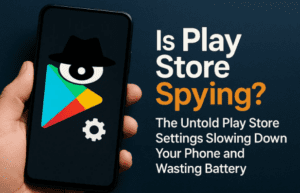
However, after October 29, 2025, that safety net started to loosen.
This change didn’t happen because users suddenly became careless. It happened because Google Play introduced a major policy shift in the United States, and that shift has ripple effects for Android users everywhere. To understand why the internet now feels riskier—and what you can realistically do to protect yourself—we need to slow down and look at what actually changed.
Let’s walk through it step by step.
🔄 What Changed in Google Play Policy After October 29, 2025
Before this policy update, most Android apps were tightly controlled in how they handled payments, subscriptions, and updates. If an app wanted you to pay, it usually had to go through Google Play’s own payment system. If it needed an update, it came from Google Play.
That has now changed.
What apps are allowed to do now
Under the new policy, apps are allowed to:
- Redirect users to external websites
- Use third-party payment methods
- Promote those external payment or update options inside the app itself
At first glance, this may sound like more freedom or flexibility. But when you look deeper, it introduces serious security gaps—especially for regular users who assume that “Play Store app = safe.”
⚠️ Where the Real Risk Begins for Android Users
Let’s look at a very common situation.
You download an app from the official Google Play Store. Everything seems normal. Then one day, the app shows you a message like:
- “To continue your subscription, please pay on our website.”
- “To update this app, visit our official website.”
At this point, you are no longer protected by Google Play’s security checks.
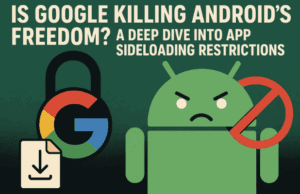




Once you leave the Play Store environment:
- Google’s payment protection no longer applies
- Google cannot verify the website you are redirected to
- Google cannot monitor what happens to your data
This is where phishing, fake websites, and data theft start becoming real threats—even during simple actions like paying for a subscription or logging into an account.
And unfortunately, most users won’t realize anything is wrong until it’s too late.
🎯 Why This Makes Phishing and Data Theft Easier Than Ever
Phishing attacks used to rely heavily on fake emails or suspicious links. Now, attackers can hide behind legitimate-looking apps downloaded from trusted platforms.
Because users trust Play Store apps, they are far more likely to:
- Enter payment details on redirected websites
- Log in using real credentials
- Ignore warning signs
This makes phishing attacks more convincing and more dangerous than before.
And this problem becomes even worse when combined with another growing issue: fake VPN apps.
🚨 The Rising Danger of Fake VPN Apps
VPNs are often recommended as a way to stay safe online. They promise privacy, encryption, and protection—especially on public Wi-Fi or unsafe networks.
But here’s the uncomfortable truth:
Not all VPNs protect you. Some do the opposite.
Google itself has issued official warnings about fake VPN services that:
- Collect personal data
- Monitor browsing activity
- Sell user information
- Act as spyware instead of security tools
With the new Play Store policy allowing apps to redirect users externally, it has become even easier for these fake VPN apps to deceive people.
Instead of protecting your privacy, they quietly become another threat.
🛡️ Why a Proper VPN Still Matters (When Chosen Carefully)
Despite the risks of fake VPNs, a reliable VPN can still play an important role in protecting users—especially now.
A genuine VPN helps by:
- Hiding your real IP address
- Encrypting your internet traffic
- Protecting your data on public Wi-Fi
- Reducing tracking by websites and apps
This becomes especially important when apps redirect you outside the Play Store ecosystem.
The key point is simple:
👉 The VPN must be trustworthy and transparent.
🔍 What Makes a VPN Trustworthy
Before we talk about setup or usage, it’s important to understand what separates a reliable VPN from a risky one.
A trustworthy VPN generally has:
- A long operational history (not brand new or unknown)
- Clear privacy policies, especially about no-logs
- Modern security protocols
- A wide and stable server network
- Availability across multiple devices
One example frequently mentioned in discussions around VPN reliability is XVPN, which has been operating since 2017 and is used by millions worldwide.
Official website:
https://www.xvpn.io/
(No promotions here—this is simply referenced as part of the original script and discussion.)
🌍 Privacy Considerations: Location and Logging
Privacy-focused users often worry about where a VPN company is based and whether it keeps activity logs.
Key points often highlighted include:
- Jurisdiction matters: some regions are not part of surveillance alliances like Five Eyes or Fourteen Eyes
- A no-logs policy means your online activity is not recorded or stored
These factors help ensure that even if someone requests user data, there’s little or nothing to hand over.
📡 Servers, Speed, and Security Protocols Explained Simply
A VPN isn’t just about privacy—it also needs to be practical.
Important technical aspects include:
- Server availability: More servers in more countries usually means better speed and reliability
- Security protocols:
- OpenVPN for trusted encryption
- WireGuard for modern speed and efficiency
- Mobile stability: Some protocols are designed to stay connected even when switching networks
For users in restrictive or unstable network environments, specialized protocols can help maintain reliable connections.
📱 Making Your Android Internet More Secure — Step by Step
Most users reading this are likely using Android phones, so let’s walk through the process carefully and clearly.
Step 1: Download the VPN App
You have two safe options:
- Download directly from the official website:
https://www.xvpn.io/ - Or search for XVPN in the Google Play Store and download it from there
Step 2: Open the App and Skip Paid Prompts
When you open the app for the first time, you may see information about premium features.
You can safely close this and continue with the free version.
Step 3: No Registration Required (Free Version)
One useful point for beginners:
- You don’t need to create an account
- You don’t need to register
- There is no immediate data limit mentioned
This makes it easy to start without sharing personal information.
Step 4: Choose a Free Server Location
In the free version:
- You can choose from multiple locations across several countries
- Simply tap Free Servers
- Select a country or city (for example, Germany)
Step 5: Connect and Secure Your Internet
After selecting a server:
- Wait a few seconds for the connection to complete
- Once connected, your traffic is encrypted
- Your real IP address is hidden
At this point, your internet connection is significantly more secure.
🔎 Checking Whether Your IP Address Is Hidden
To confirm that your VPN is working correctly:
- Open your browser
- Type “What is my IP address”
- Open any reliable IP-check website
If the VPN is active, you should see:
- A different IP address
- A different location than your real one
This confirms that websites can no longer see your actual IP.
🌐 Extra Benefits Beyond Basic Security
Once your connection appears to be coming from another country, some additional effects may occur:
- Different pricing for flights or hotels
- Access to region-specific services
- Websites showing localized content
These are side effects of location masking—not the main purpose, but often useful.
🔐 Additional Security Features Worth Understanding
Some security features are available even in free versions, while others are reserved for paid plans.
Features often available for free
- Stable connection options to reduce drops
- Kill switch, which blocks internet access if the VPN disconnects unexpectedly
The kill switch is especially important because it prevents your real data from being exposed even for a second.
Advanced features (usually paid)
- Split tunneling to choose which apps use the VPN
- Static IP for consistent connections
- Fast connect to automatically select the best server
- Double VPN, routing traffic through two servers for extra protection
⚖️ Free vs Paid VPN — How to Decide
For many users, the free version is enough for:
- Basic privacy
- Safer browsing
- Protection on public Wi-Fi
Paid versions typically add:
- Faster speeds
- Access to all server locations
- Ad blocking
- Dark web monitoring alerts
- Multi-device support
Whether you upgrade or not depends entirely on your usage needs.
⚠️ Important Disclaimer
A VPN improves privacy and security, but it does not make you invincible online. You should still:
- Avoid suspicious links
- Double-check websites before entering payment details
- Be cautious of apps asking you to leave trusted platforms
Think of a VPN as a seatbelt, not an excuse to drive recklessly.
🧠 Final Thoughts: Awareness Is Your Best Defense
The internet didn’t suddenly become dangerous overnight—but policy changes have shifted responsibility more toward users. When apps can redirect you away from trusted platforms, awareness matters more than ever.
By understanding what changed, choosing tools carefully, and staying cautious during payments and updates, you can significantly reduce your risk.
Staying safe online is no longer automatic—it’s a habit.
#InternetSafety #AndroidUsers #OnlinePrivacy #GooglePlay #CyberSecurity #VPNAwareness #DataProtection