There are days when using a computer feels like an argument you didn’t sign up for. You click delete, Windows argues. You open Settings, Windows quietly reverts something behind your back. And then there are moments when you genuinely wonder whether your system has a mind of its own.
For me, that moment came after spending three hours trying — and failing — to delete one stubborn Windows 11 file. Every time I removed it, a mysterious system process resurrected it like some unkillable digital zombie. Meanwhile, a friend of mine who switched to Linux months ago finished his work, chilled with a game of Elden Ring, and had already moved on to watching a show — all in the time I wasted arguing with a file.
That’s when curiosity kicked in.
What exactly are Linux users experiencing that we’re not?
And once you dig into the details, the difference becomes… uncomfortable.
The Telemetry Problem: Windows Is Watching More Than You Think
Before diving into dramatic comparisons, it helps to pause and look at the bigger picture — the one most Windows users avoid because it’s overwhelming. Over the past months, I’ve explored the hidden layers behind Windows 11: the activity cache files that keep reappearing, the endless diagnostic logs, the services that restart even after you disable them.
And somewhere between those late-night experiments and community discussions, a truth became impossible to ignore:
Windows 11 Home simply does not allow you to disable all telemetry.
Not partially. Not “to some extent.”
Completely disabling telemetry is not allowed.
The system is designed to maintain certain data collection pathways, no matter how many toggles you disable or how many menus you dive into. And Microsoft hides these controls across a maze of locations:
- Privacy > Diagnostics & Feedback
- Privacy > Activity History
- Accounts > Settings Sync
- Windows Update > Advanced Options
- Optional Features and Background Services
You can spend an entire evening turning everything off, feeling like a warrior protecting your privacy — only to wake up to a fresh Windows Update where half those settings automatically turned themselves back on.
It starts to feel less like using your computer and more like playing whack-a-mole with your own operating system.
Recall: The Feature That Crossed a Line for Many Users
Let’s talk about the feature that made privacy-conscious users reach for their stress balls: Recall.
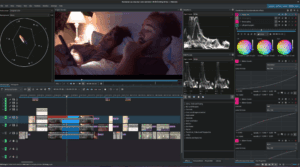
This AI-powered system takes screenshots of your screen every few seconds to “help you find things later.”



And Microsoft promised that:
- screenshots stay on your device,
- the data is encrypted,
- your privacy is respected.
Except… researchers quickly demonstrated Recall capturing credit card numbers, passwords, personal chats, private documents — the very things it claimed it was trained to avoid.
Windows users panicked.
Reddit ignited.
Guides appeared overnight on how to disable Recall as quickly as possible.
Linux users?
They simply laughed. Because this problem doesn’t exist in their world. There is no hidden screenshot recorder, no silent AI assistant capturing everything you do, no mystery data pipelines humming quietly in the background.
A Tale of Two Systems: Deleting Activity Logs
Here’s the moment that truly shocked me.
I compared how both operating systems handle a simple task: deleting your own activity logs.
Windows 11
Open Command Prompt as admin.
Try a net stop command.
Receive an error.
Try searching the error.
Try Task Manager.
Still locked.
Try PowerShell.
Still locked.
Return to Reddit forums.
Find complicated workarounds.
Try again.
Maybe it works — maybe it doesn’t.
Time spent: 10 to 30 minutes (or 3 hours if you’re unlucky).
Linux
Open Terminal.
Type:rm -rf .cache
Hit Enter.
Done.
Time spent: 3 seconds.
And here’s the important part:
When Linux deletes something, it stays deleted.
There is no ghost service resurrecting files.
No hidden watchdog process re-creating logs.
No system telling you “you don’t have permission” on your own device.
This level of simplicity is not magic — it’s design. Open-source design.
Telemetry, Bloatware, and Who Really Owns Your Computer
The more you compare Windows and Linux, the more one uncomfortable question emerges:
Who is actually in control?
Windows
You can’t fully uninstall Edge.
You can’t remove Copilot.
OneDrive keeps reinstalling itself.
Settings silently re-enable themselves.
And forced reboots interrupt your work at the worst possible times.
Meanwhile, background services phone home constantly — to servers you’ll never see and for purposes you’ll never fully understand.
Linux
Don’t want Firefox anymore?
Delete it — it’s gone forever.
Want zero telemetry?
You have it, because the system simply doesn’t collect any unless you intentionally install something that does.
And if any company dared to sneak tracking into a major Linux distribution, the community would fork the project within hours — a polite way of saying “We’ll make the same OS without your nonsense.”
That’s the power of open-source.
Nothing is hidden.
Nothing is off-limits.
You own your computer.
Gaming, Software, and the Fear That Keeps People From Switching
A lot of users hesitate to move to Linux because of gaming.
Fair concern — ten years ago.
Not anymore.
Gaming on Linux Today
The Steam Deck — one of the most loved gaming devices in the world — runs pure Linux. The compatibility layer called Proton allows thousands of Windows games to run perfectly on Linux, including major AAA titles.
Many games even perform better because Linux isn’t drowning in background telemetry, AI indexing, and forced system processes.
But Linux is too complicated
This was true once — not today.
Installing Linux Mint takes:
- Click Install
- Click Continue
- Choose your name
- Choose a password
- Click Install
Ten minutes, no drama.
Most people spend more time fighting Windows updates than installing an entire Linux operating system.
But I need Microsoft Office
LibreOffice opens all your documents.
Office 365 works perfectly in any browser.
Google Docs works perfectly.
Dropbox, OneDrive, and all major cloud services work in the browser.
Almost nothing is lost — and sanity is regained.
Freedom You Can Feel: What Using Linux Actually Feels Like
At some point, this stops being a technical argument.
It becomes something personal.
On Windows 11, you regularly find yourself asking:
- Why is this setting turned back on?
- Why can’t I delete my own files?
- Why is Edge reinstalling itself?
- Why am I being forced into an account I didn’t want?
- What data is my computer sending right now?
- Why did my PC restart during a meeting?
You spend half your computing life playing defense.
On Linux, that mental noise disappears.
You simply use your computer — quietly, peacefully, without a corporation watching over your shoulder.
Your system does what you tell it.
It never re-enables settings.
It never forces updates.
It never monitors activity.
It never hides what it’s doing.
For many users, this difference is life-changing.
Trying Linux Without Risking Anything
Here’s the part most Windows users don’t know:
You can try Linux without installing it.
Linux Mint can run directly from a USB stick.
No changes to your computer.
No danger to your Windows files.
No commitment.
Just:
- download
- plug in
- boot
- explore
Twenty minutes is enough to understand why millions of people walked away from Windows headache-free.
And with Windows 10 support officially ending in October 2025, many users will be forced to choose between buying new hardware or taking control with Linux.
A Simple Challenge
Try Linux Mint once.
Just once.
Not forever.
Not as a replacement.
Just as an experiment.
Because once you feel what it’s like to use a computer that respects you — genuinely respects you — something changes. Your expectations shift. Your tolerance drops. And suddenly, the frustrations you’ve been accepting for years no longer feel normal.
Maybe it’s time to stop fighting Windows
… and start choosing peace.
Disclaimer
Linux distributions vary in features and compatibility. While most modern hardware works flawlessly, specialized applications or corporate tools may require additional setup. Always back up your data before installing any operating system.
#Windows11 #LinuxMint #LinuxVsWindows #OpenSource #Privacy #TechExplained #dtptips