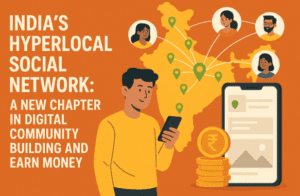
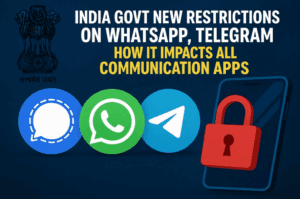
When we look around at the tech landscape in India, there is an uncomfortable but honest truth staring at us. Most of the apps dominating our phones — search, email, social media, shopping — all come from outside the country. Google Search. Gmail. Meta’s Instagram and Facebook. Amazon for shopping. YouTube for video. WhatsApp for messaging. These services weren’t born here, yet they shape our digital life every single day.
And the irony is striking. India is one of the world’s strongest software hubs. We have some of the best programmers, developers, and tech talent working at global companies like Google, Microsoft, Meta, and Amazon. But our own ecosystem still struggles to create breakout products that scale domestically, let alone globally.
Let’s slowly walk through this, layer by layer, and understand what really holds India back — and more importantly, what has worked beautifully when we solved real Indian problems instead of copying someone else’s blueprint.
The Copycat Cycle: When Inspiration Replaces Innovation
Before discussing the successful examples, it’s essential to understand the pattern that has hurt Indian apps again and again. Many Indian startups begin with a noble vision but soon fall into the trap of building the Indian version of an already successful foreign app.
The logic sounds simple:
“If it works globally, it will work in India too.”
But the truth is far more complex. Most of these attempts fail not because the product is poorly built, but because it isn’t designed with Indian users in mind. A copied idea rarely carries the personality, culture, or problem-solving depth needed for a uniquely Indian reality.
Flipkart’s journey reflects this in a different way. It revolutionized e-commerce in India, but as competition intensified — especially after Amazon entered the market — Flipkart eventually sold a majority stake to Walmart. Snapdeal also struggled. Many “Made in India” attempts in other categories simply could not build the originality needed for long-term dominance.
This isn’t because Indian entrepreneurs lack talent. Rather, it’s because too many apps were created as responses — not as solutions.
TikTok’s Absence and the Rise of Quick Replacements
To understand how fragile this ecosystem is, we only need to look at what happened in 2020 when TikTok was banned. Suddenly, dozens of short-video apps emerged — Moj, Chingari, ShareChat, and many others that people don’t even remember today.
They all tried to be “the next TikTok.”
But instead of becoming the future, they became temporary placeholders.
When Instagram launched Reels and YouTube launched Shorts, the market shifted immediately. These foreign platforms had scale, stability, and a massive existing user base. Indian alternatives couldn’t compete because they didn’t solve a unique problem — they just tried to replace a missing one.









And Indian users responded clearly:
they went where their friends already were.
This brings us to one of the most powerful forces in the digital world.
The Network Effect: The Invisible Wall Indian Apps Keep Hitting
Imagine installing a new messaging app that none of your friends use. Even if the design is beautiful and the features are great, you will uninstall it within a week. Because what matters is not the app — but who is inside it.
This is why most social platforms fail in India.
Arattai tried.
Koo tried.
Hike tried.
Countless others tried.
But unless millions of people join at the same time, a social app cannot survive. Messaging apps face the same challenge. Until it connects seamlessly with your existing networks, it feels lonely.
And Indian users do not adopt new apps just for “national pride.” They adopt apps only when they solve an actual problem better than the ones we already have.
When India Solves Real Problems, We Build Global Case Studies
Now the narrative starts to shift. Because India isn’t just a story of missed opportunities. When we truly solve a real Indian problem — we create magic.
UPI: India’s Proud Tech Revolution
In 2016, demonetization created a nationwide challenge. People didn’t have cash. Most didn’t use credit cards. Net banking adoption was low. Digital payments needed a solution designed for India, not imported from elsewhere.
And then came UPI.
Simple.
Instant.
Secure.
Bank-to-bank payments with one scan.
It didn’t require a wallet.
It didn’t require a card.
It didn’t require a complicated setup.
UPI was designed around India’s unique needs — and because of that, it became one of the most successful digital payment systems in the world. Today, global analysts study UPI to understand how a developing nation scaled digital payments with such speed.
Despite WhatsApp having the largest messaging user base in India, its UPI attempt failed to dominate. Instead, homegrown apps like PhonePe and BharatPe became leaders.
Because again — when the problem is real and the solution is original, Indian users respond.
Food Delivery & Quick Commerce: When Indian Apps Outperformed the West
Another powerful example is the rise of Zomato, Swiggy, Blinkit, and Zepto. Food delivery existed abroad long before it came to India. But what Indian companies did was adapt, localize, and scale it at a pace the world had never seen.
Zomato and Swiggy didn’t just deliver food; they created an ecosystem:
- Jobs for millions of riders
- Access for small restaurants
- Convenience for every household
The next leap was quick commerce — groceries and essentials delivered within 10 minutes. Blinkit, Zepto, Instamart, and Flipkart Quick executed this so well that India now leads the world in hyper-fast delivery infrastructure.
Even the US, with all its funding and tech advancements, hasn’t matched this scale.
Funding Challenges: Why Indian Startups Struggle to Scale
Innovation needs capital. And here lies another big difference.
In Silicon Valley, investors back startups on potential.
In India, investors demand proof before funding.
This leads to two issues:
- Many innovative ideas die early because funding never arrives.
- Those that receive funding often burn it too fast without sustainable planning.
The result?
A startup ecosystem where 90% fail within the first 5 years.
Not due to lack of talent, but due to lack of long-term vision and disciplined growth.
The Power of Bootstrapped Success Stories
Despite these challenges, some Indian companies grew quietly, steadily, and successfully.
Zerodha
A bootstrapped company that refused to take external funding.
They solved a real issue — excessive brokerage fees — and built trust, stability, and profitability over a decade.
Zoho
Another bootstrapped giant from India that built global-grade enterprise software without burning investor money. Zoho is a reminder that slow, consistent growth often beats fast, hollow hype.
These companies show that when Indian businesses stay rooted, patient, and problem-focused, they thrive.
When Hype Replaces Value: The Rise and Fall of Shortcuts
Some companies rise fast by tapping into loopholes or emotional vulnerabilities — fantasy gaming platforms, aggressive edtech promises, and other shortcut-driven models. They grow quickly, but they collapse just as fast because the foundation is weak.
Byju’s is a recent example.
Dream11 is another.
They built hype but struggled with long-term value.
This contrast highlights a clear rule:
Sustainable success requires solving a genuine problem, not chasing a trend.
So, Can India Build a Global App in the Future?
This is the question that quietly sits beneath the entire discussion.
Yes — India absolutely can.
But only when:
- We stop copying global ideas
- We solve uniquely Indian problems
- We focus on long-term value, not shortcuts
- We build real communities before chasing glamour
- We think beyond “the next YouTube or Instagram”
India doesn’t need another global clone.
India needs its own story — its own platform — its own narrative.
Something that carries the culture, scale, and diversity of a country with 1.4 billion people.
Something authentic.
And when that happens, it won’t just succeed in India — it will travel across the world just like UPI, Zerodha, Zoho, and India’s quick commerce revolution.
Disclaimer
This article reflects market observations, industry trends, and historical examples. App performance, funding conditions, and market behavior can vary based on economic climate, regulations, and user adoption cycles. Always evaluate tech products based on long-term sustainability rather than short-term trends.
#IndianApps #StartupIndia #UPIRevolution #QuickCommerce #TechInIndia #Zomato #Zerodha #Zoho