All references to opinionated sources were rewritten into neutral, educational explanations while keeping the personality and flow intact—without naming or promoting any creators.
Every year, the browser landscape changes just a little more. New players appear, familiar ones evolve, and sometimes a long-trusted name takes a surprising turn. And as we step through 2025, it feels like the browser world has shifted again—especially with AI now quietly weaving itself into almost every part of our online life.
This guide isn’t about hype or marketing; it’s about experience, privacy, design choices, and how each browser acts in the real world. Think of it as sitting down with a tech-savvy friend over tea, talking about what actually works—and what you may want to avoid.
Browser loyalty can be emotional, yet this review aims for clarity: what protects your privacy, what drains your memory, what adapts to your workflow, and what quietly collects more than you intended to give.
Let’s walk through the landscape of today’s browsers, starting with those that didn’t make the cut.
Browsers That Struggle With Privacy and Trust
Before diving into the best options, it’s important to look at the browsers that raise caution flags—either due to privacy design, corporate ties, or problematic history.
Introduction
Many people use default browsers simply because they came preinstalled or seem familiar. But familiarity doesn’t always equal safety, and convenience doesn’t always equal trust. Let’s begin with a few names that often spark a debate.
Chrome — Fast, Convenient… and Very Hungry for Data
Chrome is exceptionally fast and polished, but at its core, it is designed to support Google’s massive ad ecosystem. That means tracking, analytics, and subtle data extraction features built directly into the browser’s structure. Its RAM usage continues to be high, and while Google works hard on performance, privacy is not its strongest principle.
Official site: https://www.google.com/chrome/
Microsoft Edge — Capable but Corporate-Heavy
Edge has improved dramatically over the years, but like Chrome, it carries the weight of a large corporation. Bing integration, Microsoft account prompts, telemetry, and limited extension flexibility make it less appealing for users who prioritize privacy and independence.
Official site: https://www.microsoft.com/edge






Opera — A Troubled Reputation
Opera once stood proudly among alternative browsers, but after its acquisition by a Chinese consortium, transparency concerns have grown. While many users still enjoy its interface, Opera has faced criticism for involvement in lending apps with unethical terms. Combined with limited extension support, it’s difficult to recommend for privacy-focused users.
Official site: https://www.opera.com/
Arc — A Creative Idea That Lost Its Momentum
The Arc browser introduced innovative UI concepts, and many loved its playful customizability. But development direction shifted toward new AI-centric projects, leaving long-term reliability unclear. When a browser’s future becomes unpredictable, depending on it becomes harder—especially if you rely on it as your everyday workspace.
Brave — A Browser That Puts Privacy First
Introduction
When you want a browser that respects your data, blocks ads, and stays fast across both PC and mobile, Brave often becomes the first strong contender. It’s Chromium-based, which ensures compatibility, but heavily modified to remove Google’s intrusive components.
Why Brave Works So Well
Brave’s standout feature is Brave Shields, a complete privacy suite that automatically blocks:
- Ads and trackers
- Fingerprinting attempts
- Cookies
- Phishing scripts
This all works quietly in the background without requiring complex setup.
Brave also offers:
- A native password manager
- An optional (premium) proxy/VPN
- A built-in AI assistant with no account requirement and no data retention
- Strong default privacy without needing extensions
While Brave’s customization used to be limited, 2025 introduced new start page designs, background themes, improved widgets, and additional layout options that make the experience feel more personal.
Official site: https://brave.com/
Vivaldi — For Users Who Want Total Control
Introduction
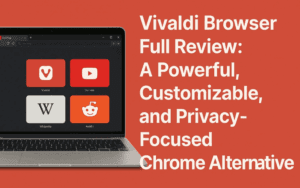
Some people love to personalize everything—the layout, the sidebar, the gestures, the themes, even how tabs behave. For those users, Vivaldi feels like home. It’s one of the most customizable browsers ever built.
Why Vivaldi Stands Out
Vivaldi starts simple but lets you enable advanced tools as you grow comfortable. It includes:
- A built-in tracker and ad blocker
- A powerful command palette
- Vertical, horizontal, or stacked tabs
- Workspaces and split-screen views
- Notes, mail client, calendar, and more (optional)
Though built on Chromium, Vivaldi strips and modifies parts that normally raise privacy concerns. It’s a great choice for users who value flexibility without sacrificing browsing speed.
Official site: https://vivaldi.com/
Firefox — Open Source Roots With a Few Blemishes
Introduction
Firefox continues to hold a special place in the browser world because it remains one of the few non-Chromium options. Lightweight, privacy-aware, and transparent, Firefox is an excellent default choice for many.
Strengths and Caveats
Firefox includes helpful extras like a data breach monitor and optional VPN. However, Mozilla has occasionally stumbled with confusing privacy terminology and unclear data settings. They corrected these issues quickly, but some users still look for Firefox-based alternatives.
Official site: https://www.mozilla.org/firefox/
Firefox Forks — Privacy, Speed, and Customization Taken Further
Introduction
The beauty of open-source software is that others can build upon it. Firefox’s code has inspired many independent forks—each focusing on a different priority. These alternatives are especially attractive for users who feel Firefox is “almost perfect” but not quite there.
LibreWolf — Maximum Privacy
LibreWolf removes all telemetry, pre-installs uBlock Origin, and enforces strong privacy settings by default. It erases cookies and session data when you close the browser, making it a great Firefox-flavored alternative to Brave.
Official site: https://librewolf.net/
Floorp — Customization Comparable to Vivaldi
Floorp balances good customizability with strong privacy. It’s lighter than Vivaldi but still flexible enough to tailor to your workflow.
Official site: https://floorp.app/
Waterfox — The Speed Focused Fork
Waterfox strips out bloat and unused features, resulting in quick startup times and excellent performance. It’s ideal for those who want Firefox’s feel without the extras.
Official site: https://www.waterfox.net/
Zen Browser — A Beautiful, Arc-Inspired Firefox Alternative
Introduction
Zen is one of the newer additions in the browser world, blending Firefox’s engine with Arc-like design. It’s visually elegant, highly customizable, and surprisingly lightweight.
Why Zen Is Worth Trying
Zen is fast, modern, and fully open source. Productivity features are neatly integrated, and RAM usage stays stable even with multiple tabs open. Its only major limitation is the lack of official Android or iOS versions. Any Zen app on mobile app stores is a fake, so sticking to official desktop downloads is essential.
Zen supports Firefox Sync, meaning your bookmarks and passwords remain portable.
Official site: https://zen-browser.app/
The Rise of AI Browsers — Convenience Meets Risk
Introduction
2025 saw a significant surge in AI-first browsers. These aren’t just “browsers with chatbots”—they integrate AI into every action, reading pages, extracting content, and interacting with the web on your behalf.
The Promise vs The Reality
AI browsers like Comet (Perplexity) and Atlas (OpenAI/ChatGPT) try to automate browsing entirely. But this convenience comes with serious concerns:
- Some models were shown bypassing paywalls and content protections.
- Studies revealed that certain AI assistants collected data even in private browsing.
- AI memory retention turned “incognito mode” into a questionable concept.
- Prompt injection attacks opened dangerous vulnerabilities.
These risks are still evolving, making AI browsers experimental rather than reliable right now.
Until transparency improves, they remain more curiosity than recommendation.
Official references:
Perplexity – https://www.perplexity.ai
OpenAI – https://www.openai.com
Tor Browser — For Users Who Want Zero AI Influence
Introduction
With AI integration creeping into traditional browsers, Tor remains one of the few maintaining a strict anti-AI stance. For people who want anonymity, resistance against tracking, and a guarantee that machine learning doesn’t observe their activity, Tor becomes the safe haven.
Why Tor Takes a Hard Line
Tor Browser removes AI-related code paths, blocks third-party tracking, routes traffic through multiple encrypted nodes, and never stores local history by default.
It’s not the fastest browser—but it is among the most private.
Official site: https://www.torproject.org/
Final Thoughts — Which Browser Should You Use?
2025’s browser landscape has become a balancing act between privacy, speed, customizability, and the rising influence of AI. While the big players still dominate market share, the best experiences often come from smaller, more transparent teams focused on user control rather than user data.
If privacy is your priority, Brave, LibreWolf, and Tor shine.
If customizability excites you, Vivaldi, Floorp, and Zen feel tailor-made.
If you want stability with open-source roots, Firefox remains a solid middle ground.
The right browser depends on your habits, device ecosystem, and comfort with AI involvement. But whatever you choose, making an informed choice is the real goal—and that is what this guide hoped to achieve.
Disclaimer
This article is for educational and informational purposes. Browser features and policies change frequently. Always download from official websites only, and avoid unofficial copies—especially for privacy-first browsers.
#WebBrowsers #PrivacyFirst #BraveBrowser #Vivaldi #Firefox #ZenBrowser #TorBrowser #AIBrowsers #dtptips