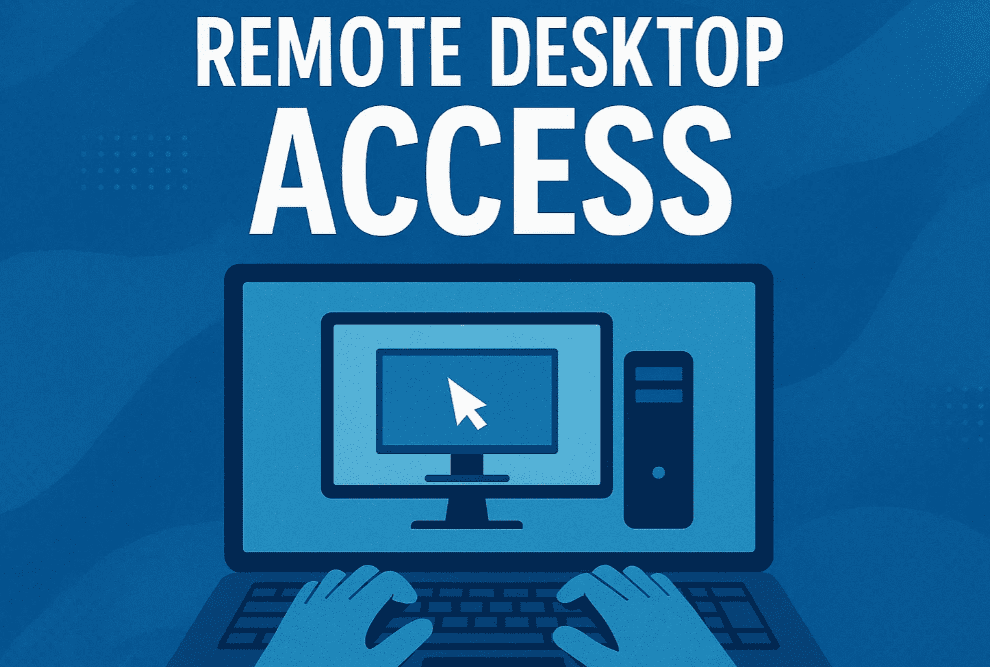
Remote desktop access is essential for IT professionals, remote workers, and anyone who needs to control another computer from afar. Whether you’re managing multiple machines, assisting family members with tech issues, or working from home, having a reliable remote desktop solution is a game-changer.
The Problem with Traditional Remote Desktop Solutions
Windows Remote Desktop (RDP) Limitations
Microsoft’s built-in Remote Desktop Protocol (RDP) is powerful—but with major restrictions:
- Only works on Windows Pro/Enterprise editions (Home users are locked out).
- Requires devices to be on the same network (unless using complex VPN setups).
- No native Mac-to-Windows or Linux-to-Windows support.
VNC: A Partial Solution
Virtual Network Computing (VNC) is cross-platform but has drawbacks:
- Complex setup, especially on Linux.
- Performance issues (lag, poor GPU acceleration).
- Limited clipboard & file transfer functionality.
TeamViewer & AnyDesk: Convenient but Restrictive
- Free for personal use but naggy (constant reminders to upgrade).
- Cloud-hosted servers (you don’t control the connection).
- Privacy concerns (third-party servers handle your data).
Introducing RustDesk: The Best Free, Open-Source Alternative
Why RustDesk?
✅ Free & Open-Source – No hidden costs or licensing restrictions.
✅ Self-Hostable – Run your own server for full control.
✅ Cross-Platform – Windows, Mac, Linux, Android, and iOS support.
✅ High Performance – GPU acceleration for smooth remote sessions.
✅ Direct & Relay Connections – Works even behind firewalls.
How to Set Up RustDesk
Option 1: Local Network Access (No Server Required)
- Download & Install RustDesk (Official Website) on both computers.
- Enable Direct IP Access:
- Open RustDesk → Click the three dots → Security → Enable Direct IP Access.
- Set a permanent password for unattended access.
- Connect via Local IP:
- Enter the remote computer’s IP address in RustDesk.
- Authenticate with the password.
Option 2: Self-Hosted RustDesk Server (For Remote Access)
For secure access outside your local network, host your own RustDesk relay server.
Step 1: Set Up a Cloud Server
- Use a cloud provider (Linode, AWS, DigitalOcean, etc.).
- A $5/month instance (Ubuntu 22.04/24.04) is sufficient.
Step 2: Install Docker
sudo apt update && sudo apt install docker.io -yStep 3: Deploy RustDesk Server via Docker
mkdir rustdesk-docker && cd rustdesk-docker
nano docker-compose.yml
Paste the official Docker Compose config and save.
Start the server:
docker compose up -d Step 4: Configure RustDesk Clients
- Open RustDesk → Settings → Network.
- Enter your server’s IP and public key (found in
./data/id_ed25519.pub).
Now, you can connect using RustDesk IDs (even outside your network).
Bonus: Secure Remote Access with Tailscale (Alternative to Twingate)
For an extra layer of security, use Tailscale (a zero-config VPN):
- Install Tailscale on both devices.
- Connect via RustDesk using Tailscale’s private IPs.
Performance & Features
- Near-native speed (great for video editing & gaming).
- File transfer & clipboard sync.
- Multi-monitor support.
- Headless Linux mode (beta).
Final Thoughts
RustDesk is the best free, open-source remote desktop tool available today. Whether you need:
- Local network access
- Cloud-hosted remote support
- Cross-platform compatibility
It’s flexible, fast, and doesn’t rely on third-party servers.










Tags
Remote Desktop , RustDesk , OpenSource , SelfHosted , ITPros , Tech Support , Cross Platform , Linux , Windows , Mac
Hashtags
#TechTips #SysAdmin #DevOps #HomeLab #Privacy #FreeSoftware
Try RustDesk today: https://rustdesk.com/
Disclaimer: This article is not sponsored. RustDesk is a community-driven project, and self-hosting requires basic server knowledge. Always secure remote access with strong passwords and firewalls.
What’s your favorite remote desktop tool? Let me know in the comments! 🚀