In 2013, Adobe made a bold move to change how software was delivered and protected. The company transitioned from one-time software purchases to a cloud-based subscription model called Creative Cloud, backed by what it claimed was uncrackable security. Millions of dollars were invested in high-end encryption, digital rights management (DRM), and cloud verification systems designed to stop piracy in its tracks.
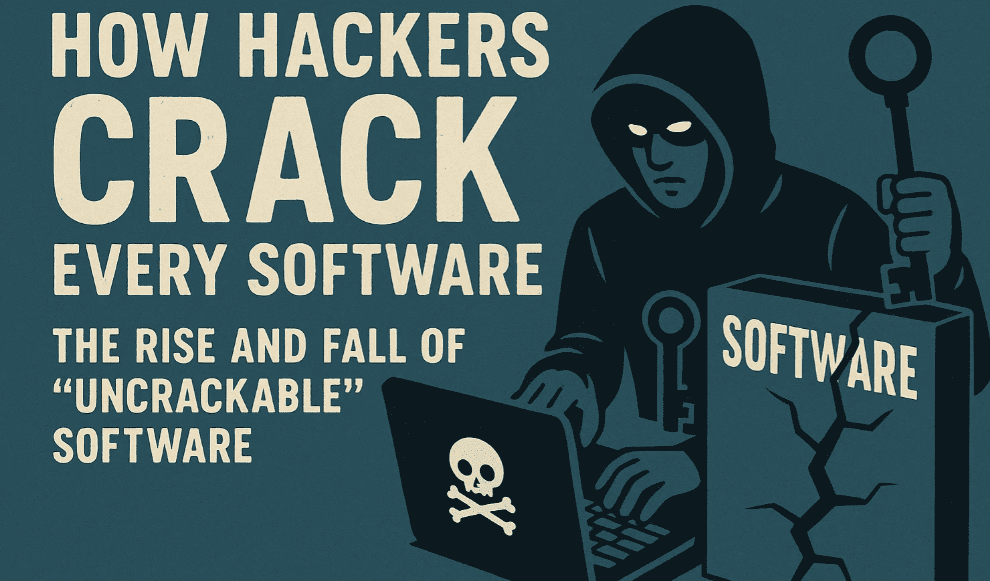
But within just two days, cracked versions of the software surfaced online.
So how did this happen? How could a multi-billion-dollar company’s best efforts in security be undone so quickly? To understand that, we need to dive deep into the world of software cracking, from serial key exploits to memory injection, and finally to cloud-based defenses.
🔐 The “Uncrackable” Dream: Adobe Creative Cloud
Before 2013, Adobe sold its software like Photoshop, Premiere Pro, and Illustrator through boxed versions or digital installers with license keys. These could be shared, reused, and cracked relatively easily.
With Creative Cloud, Adobe introduced:
- Monthly/yearly subscriptions
- Online account verification
- Device fingerprinting and DRM
- Cloud-only features like Neural Filters
They believed this model would:
- Discourage piracy due to regular server checks.
- Make local cracks impossible since key features ran only on Adobe’s servers.
Unfortunately for Adobe, this dream didn’t last.
🔓 How Software Cracking Really Works
Let’s simplify cracking. Imagine a locked door. The original buyer gets a key (a serial number). Crackers either:
- Steal or generate the key,
- Replace the lock mechanism (code) to skip the key check,
- Or create a fake key that fools the system.
In software terms, this involves:
- Bypassing license validation,
- Emulating license servers,
- Injecting code during runtime to disable verification routines.
🛡️ 1998–2010: The Rise of Anti-Piracy Fortresses
Companies like Adobe, Microsoft, and game publishers began investing in anti-piracy tech:
1. SafeDisc
Used on physical discs, SafeDisc encrypted data on CDs and DVDs to prevent copying.






2. SecuROM
Developed by Sony, it used encrypted .exe files, install limits, and online validation to stop unauthorized use.
3. Dongles
Hardware USB keys (dongles) had to be plugged in for the software to work. No dongle, no run.
These tools were heavily marketed as unbreakable. But hackers cracked SafeDisc and SecuROM within a week of release. Dongles were bypassed using software emulators that pretended to be the physical key.
🕵️ License Hacking: Enter Tools like IDA Pro
When Adobe introduced DRM into Creative Cloud, it included features like:
- System Scans: Checking CPU, RAM, motherboard, OS version.
- Unique Device Fingerprint: Tied to your login and license.
- Always-On Verification: Regularly checked Adobe servers for validation.
But hackers weren’t fazed. They used IDA Pro, a powerful disassembler, to freeze the program at the exact point where Photoshop checks for a license. In this frozen state, they could:
- Read variable values,
- Find license check logic,
- Alter conditional statements (e.g., change
if license == validto always returntrue), - Disable Adobe server communication.
🌐 Fake Servers and Loader Magic
Fake Adobe Servers
Some crackers went a step further and built spoofed Adobe servers. Photoshop, thinking it was communicating with Adobe, would get a fake but valid response like:
“Yes, this license is verified.”
Since it couldn’t tell the difference, Photoshop would launch as normal.
The Loader Technique
Crackers developed “loaders” — small programs that:
- Intercept Photoshop while it’s launching,
- Patch memory in real-time,
- Change responses to license checks on the fly,
- Avoid changing any files on disk (making them stealthy).
Because loaders operate in RAM, antivirus software often can’t detect them. Many cracked versions require you to run this loader tool every time you launch the app.
☁️ Adobe’s Counterattack: The Cloud Move
Adobe’s next strategy was to remove sensitive operations from the local machine and push them to the cloud.
For example:
- Neural Filters in Photoshop don’t run locally.
- Your image is uploaded to Adobe’s servers, processed using AI models, and the result is sent back.
- The logic, algorithms, and code stay on the server — not crackable on your PC.
This means:
- Cracking these tools would require breaching Adobe’s cloud infrastructure (a major cybercrime).
- Even a perfect crack can’t access cloud-only features.
🧑💻 Inside Hacker Groups: Reloaded, CORE, CPY
Cracking isn’t done by one person in a hoodie. It’s an underground industry with structure and ethics.
Popular groups like RELOADED, CORE, and CPY:
- Have teams specializing in reverse engineering, patch development, and testing.
- Maintain internal quality checks across devices and OS versions.
- Avoid cracking financial software, medical systems, or spyware.
To them, cracking software like Photoshop isn’t about theft — it’s about proving that no digital lock is unbreakable.
💡 Frequently Asked Questions (FAQ)
Q1: Is it legal to use cracked software?
A: No. Using cracked software is a violation of copyright laws and licensing agreements. It also poses serious security risks.
Q2: Why does antivirus software miss these cracks?
A: Tools like loaders operate only in memory and avoid file changes. Some cracks also disable antivirus detection or come with exceptions pre-configured.
Q3: Why do hackers do this?
A: Some do it for fame, some for challenge, others to provide access to users in countries where software costs are prohibitive. For major groups, it’s often about “the art of breaking the unbreakable.”
Q4: Can Creative Cloud be fully cracked today?
A: Core applications like Photoshop and Premiere Pro are often cracked for offline use. However, cloud-based features, online collaboration tools, and newer AI functionalities remain mostly secure due to server-side operations.
🔚 Final Thoughts
Adobe’s journey from simple license keys to cloud-based DRM highlights a cat-and-mouse game between software developers and hackers. Despite multi-layered encryption, server checks, and memory protection, cracks still find their way into the wild.
While it’s fascinating to explore how these systems are broken, it’s also a reminder of the complexity of software security — and the importance of supporting developers by using legitimate versions.
🏷️ Tags:
adobe creative cloud, software cracking, photoshop drm, cyber security, reverse engineering, software piracy history, cracked software, IDA Pro, cloud-based software protection, loaders, fake license servers
#Hashtags:
#AdobeCreativeCloud #SoftwareCracking #DigitalPiracy #PhotoshopHack #IDAPro #CyberSecurity #CrackHistory #DRM #ReverseEngineering #FakeServers
⚠️ Disclaimer:
This article is intended for educational and informational purposes only. We do not support or encourage the use or distribution of pirated software. Cracking software is illegal and unethical. It may also expose users to malware, spyware, and legal consequences. Always use genuine software to ensure safety, compliance, and support for developers.