In the ever-evolving world of SEO, it’s easy to get distracted by the latest shiny tactics, trending hacks, or overhyped AI tools. But as of 2025, one thing remains clear: the foundational principles of SEO still matter—and overlooking them can hurt more than you think.
This comprehensive guide unpacks what truly works in SEO right now, which outdated techniques are still being used mistakenly, and how newcomers can find real opportunities in the search landscape. Whether you’re managing a blog, running an e-commerce site, or optimizing for local businesses, this article covers it all.
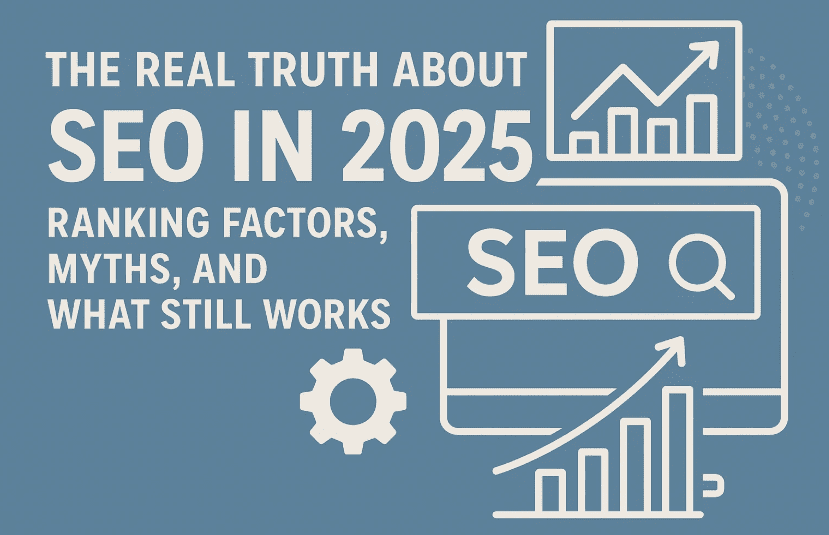
✅ The Most Underrated Yet Powerful SEO Principle in 2025
Let’s start with a concept that surprises many people:
The strongest ranking factor today is the absence of one.
In simpler terms, if search engines look for 10 key elements on a page (e.g., title tags, H1, keyword density, URL structure, etc.), and your page nails 8 of them but misses 2, those missing factors can hurt your rank far more than you think.
Completeness across known SEO factors matters more than perfecting a few while ignoring others.
🔑 Core On-Page Factors That Still Dominate
Many SEOs overcomplicate things. Yet, the most reliable SEO signals haven’t changed in over a decade. Before diving into any advanced strategies, here are the basics every page should include:
✅ Essential On-Page Elements:
- Title Tag (what search engines see)
- H1 Tag (what users see on the page)
- URL Structure (include target keywords)
- Main Paragraph Text (with proper keyword usage)
- Image Alt Tags (where relevant)
If you place your main keyword properly in these locations, you’re already completing 60% of SEO. Most people fail simply because they skip these steps in favor of flashier tactics.
🧠 Are AI Tools and Semantic SEO the Future?
AI content tools and semantic SEO concepts like semantic triples or topical authority graphs are helpful, but they’re not the foundation. These strategies work best after you’ve nailed the basics.
Before investing time into tools that analyze “entity relationships” or calculate “semantic coverage,” ensure your page is:
- Structured correctly
- Targeting the right keywords
- Providing readable and useful content
Remember: SEO success is 80% consistency and execution, 20% innovation.
🎯 How to Compete with Bigger Sites
Many new website owners feel intimidated by large competitors with high authority and massive content libraries. But here’s a powerful insight:
Big sites usually ignore long-tail keywords and low-volume topics.
Instead of trying to outrank Amazon or Wikipedia for “best laptops,” focus on micro-niches like “best gaming laptop under $500 for students in India.” These lower-competition spaces are where smaller sites can shine.
This is especially useful for:
- Niche bloggers
- Affiliate marketers
- Local service providers
🚫 SEO Tactics That Are Still Misunderstood (or Completely Wrong)
Let’s address some outdated or misunderstood tactics that continue to confuse both beginners and intermediate SEOs.
❌ Myth: Grammar Affects Rankings
Search engines do not penalize pages for minor grammatical errors. What’s more important is clear intent and relevance.
Why? Because many creators are non-native speakers. Penalizing grammar would unfairly downgrade globally relevant content. Instead, Google focuses on whether users understand and benefit from the content.
❌ Myth: AI-Written Content Gets Penalized
It’s not the AI-generated nature that gets penalized—it’s the lack of clarity, context, and structure. When Google can’t semantically understand what your content is saying (due to poor prompt crafting or lazy output), it simply ignores it.
If you’re generating hundreds of pages without ensuring proper headings, semantic terms, and internal linking, you’re setting your site up for devaluation—even if your content was created using the most advanced AI.
🌐 Do Exact Match and Aged Domains Still Work?
Short answer: Yes, they absolutely do—when used correctly.
🔍 Exact Match Domains (EMDs)
If your domain is a direct match for your target keyword (e.g., bestbudgetlaptops.com), it can still provide ranking advantages. These advantages are even more powerful when paired with niche TLDs like .agency, .lawyer, or .shop.
🕰 Aged Domains
Older domains with an established backlink profile and historical relevance are seeing a resurgence. However, the key is relevance.
Don’t buy an old domain about plumbing and use it for a fitness blog.
Before reusing an aged domain, use tools like Wayback Machine to check its historical content and rebuild relevant pages that align with its past structure. This is where the real SEO value comes from.
🔍 Common Mistakes with Aged Domains
Here are some classic errors people make when trying to capitalize on aged domains:
- Buying irrelevant domains with unrelated history
- Ignoring prior content or URL structures
- Not rebuilding past ranking pages
- Skipping due diligence
To avoid these issues, always:
- Check historical content via archive.org
- Rebuild or redirect old URLs intelligently
- Ensure topical relevance before repurposing the site
📉 Obsolete Metrics People Still Use
Metrics like Domain Authority, Domain Rating, and similar scores from SEO tools aren’t inherently bad—but they’re often misused.
The problem is when people:
- Compare data across different tools inconsistently
- Use them as a definitive ranking signal
- Chase arbitrary scores instead of user intent
👉 Use one tool consistently and benchmark your competition accordingly—but don’t let “DA 80” fool you into thinking a site is unbeatable. Real SEO is about actual rankings and traffic, not vanity scores.
📊 The Truth About E-A-T (Experience, Expertise, Authoritativeness, Trust)
While E-A-T (now part of Google’s broader quality guidelines) is often seen as a mystical formula, it’s actually rooted in real-world legitimacy.
Sites that:
- Clearly display who wrote the content
- Include company details and author bios
- Link to trustworthy third-party profiles (e.g., LinkedIn, About Us)
- Are listed in business directories or citation platforms
…tend to do better in Google’s trust assessment.
If you’re hiding your identity or pretending to be something you’re not—expect trouble.
🚨 The Real Reason Sites Drop After Using AI
Many people blame AI when their traffic tanks after publishing large volumes of machine-generated content. But in most cases, it’s because the content:
- Lacks semantic clarity
- Misses contextual keywords
- Has poor internal linking
- Doesn’t match user intent
The AI isn’t the problem—it’s the strategy behind the content.
✍️ Fix This By:
- Using on-page optimization tools like Page Optimizer Pro or Surfer SEO
- Benchmarking against top-ranking pages
- Analyzing term frequency and contextual alignment
👩💻 The #1 SEO Skill to Master in the AI Era
As AI accelerates content production, one skill becomes more important than ever:
Understanding the “why” behind SEO.
Anyone can generate 400 blog posts in a week. But without understanding why pages rank—and how to make AI outputs align with ranking factors—you’ll just do bad SEO faster.
Learn:
- What works and why
- How to structure content logically
- Where and how to place keywords
- How to validate results using data, not guesswork
🧑🎓 Final Advice for Beginners Starting SEO in 2025
Here’s a step-by-step path to get started:
- Start with fundamentals: Title tags, H1s, paragraph content, and internal links.
- Practice keyword research: Focus on long-tail queries with low competition.
- Use tools wisely: Leverage free or affordable on-page SEO tools for benchmarks.
- Validate, test, and iterate: Use analytics and ranking reports to refine.
- Stay consistent: SEO takes time, and consistency beats complexity.
❓Frequently Asked Questions (FAQs)
Q: Is keyword stuffing still effective?
No. Overusing keywords can harm your readability and get flagged. Focus on natural usage and topical depth.
Q: Should I avoid AI content completely?
No. But you must structure it well, add human editing, and include SEO-relevant signals.
Q: Is backlink building still relevant?
Yes, but relevance and context matter more than quantity. One strong niche link beats 100 random ones.
Q: Can small websites outrank big ones?
Absolutely—by targeting low-competition niches and building content with intent and structure.
🧷 Disclaimer
This article is for informational purposes only and reflects SEO best practices as of 2025. Google’s algorithm continues to evolve, and strategies should be validated through testing, monitoring, and ethical implementation. Always do your own due diligence before purchasing domains or relying on third-party tools.
🔖 Tags & Hashtags
Tags: SEO 2025, Google ranking factors, on-page SEO, aged domains, exact match domains, AI content, EAT SEO, ChatGPT SEO, beginner SEO tips, content strategy
Hashtags: #SEO2025 #RankingFactors #GoogleSearch #SEOMyths #AIContent #OnPageSEO #DigitalMarketing #AgedDomains #ExactMatchDomains #EATSEO