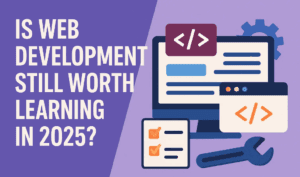
Web development is one of the most versatile and in-demand skills in the tech industry. Whether you’re a college student, a career switcher, or someone looking to build a portfolio, freelance, or contribute to open-source projects, learning web development opens countless opportunities.
In this guide, we’ll break down the step-by-step roadmap to becoming a web developer, covering:
✅ Frontend vs. Backend vs. Databases
✅ Essential Technologies to Learn
✅ Project Ideas for Practice
✅ Salary Expectations & Career Growth
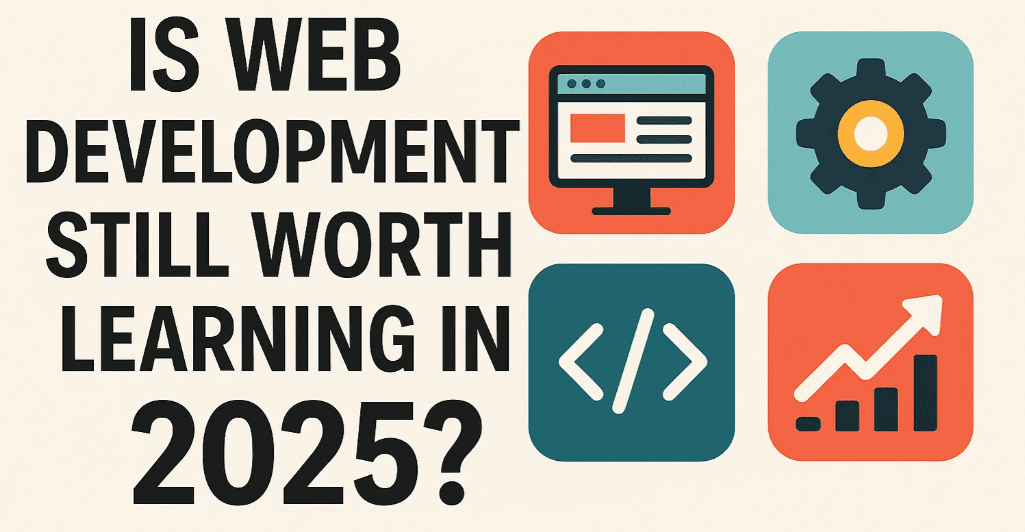
1. Understanding the Basics: Frontend, Backend & Databases
Frontend Development (Client-Side)
The part of a website that users interact with directly. Examples:
- Paytm’s payment interface
- YouTube’s video player
Technologies to Learn:
- HTML – Structures the content (like a house’s foundation).
- CSS – Styles the website (colors, layouts, animations).
- JavaScript – Adds interactivity (buttons, forms, dynamic content).
Backend Development (Server-Side)
Handles data processing, authentication, and server logic. Examples:
- Processing Paytm transactions
- YouTube’s video upload system
Technologies to Learn:
- Node.js (JavaScript-based, beginner-friendly)
- Django (Python-based, robust for large apps)
- PHP/Java (Legacy but still used)
Databases (Storing Data)
Where all user data is stored. Two main types:
- SQL (Structured) – MySQL, PostgreSQL (table-based storage).
- NoSQL (Unstructured) – MongoDB (flexible JSON-like storage).
2. Step-by-Step Learning Roadmap
Step 1: Master Frontend Basics (1-2 Months)
- HTML → Build website structure.
- CSS → Style websites (Flexbox, Grid, Animations).
- JavaScript → Add logic (DOM manipulation, APIs).
Resources:
- FreeCodeCamp (Interactive tutorials)
- MDN Web Docs (Official documentation)
Step 2: Build Frontend Projects (1 Month)
Practice by cloning real websites:
- Amazon product page
- Netflix homepage
- Personal portfolio site
Step 3: Learn a CSS Framework (Optional but Recommended)
- Bootstrap (Most popular)
- Tailwind CSS (Utility-first framework)
Step 4: Backend Development (2-3 Months)
- Node.js + Express.js (Best for beginners)
- Django (Python) or Ruby on Rails
Learn:
✅ API development
✅ Authentication (JWT, OAuth)
✅ Database integration (MongoDB/SQL)
Step 5: Learn Databases (1 Month)
- SQL → PostgreSQL, MySQL
- NoSQL → MongoDB
Step 6: Essential Tools
- Git & GitHub (Version control)
- Terminal Commands (Basic Linux/Windows CLI)
- Deployment (Netlify, Vercel, Heroku)
3. Build Full-Stack Projects (2-3 Months)
Combine frontend + backend + database in real-world apps:




- E-commerce site (Cart, Payments)
- Blog with user auth (Like Medium)
- Task manager app (Todo list with DB)
4. Specialize (Optional)
- Frontend Specialization: Learn React.js / Angular
- Backend Specialization: Learn Nest.js, GraphQL
- Full-Stack: MERN (MongoDB, Express, React, Node)
5. Salary Expectations (2024)
| Role | Avg. Fresher Salary (India) |
|---|---|
| Frontend Developer | ₹5.75 LPA |
| Backend Developer | ₹7 LPA |
| Full-Stack Developer | ₹8-12 LPA |
Salaries can go much higher with experience and strong projects.
6. Next Steps
- Apply for internships/jobs (LinkedIn, AngelList)
- Freelance (Upwork, Fiverr)
- Contribute to Open Source (GitHub)
Final Tips
✔ Code daily – Practice is key!
✔ Build a portfolio – Showcase projects.
✔ Network – Join dev communities (Dev.to, Discord).
Tags
Web Development, Frontend, Backend, Full-Stack, Coding, Programming, HTML, CSS, JavaScript, Node.js, MongoDB
Hashtags
#WebDev #LearnToCode #Frontend #Backend #Programming #TechCareers #CodingLife
Got questions? Drop a comment below! 🚀
Disclaimer: This roadmap is a general guide. Learning pace may vary based on dedication and prior experience.