Before we go any further, let’s set the scene properly — because this is not just a virus story. This is a reminder of how fragile early personal computing really was, and how one small piece of code managed to change computer security forever.
On April 26th, 1999, millions of people around the world pressed the power button on their computers… and nothing happened.
No Windows logo.
No startup beep.
No whirring hard drive sounds.
Just silence.
Their computers were not frozen. They were not temporarily broken. They were dead — permanently. And the cause was a computer virus so destructive that it remains the only malware in history to successfully destroy computer hardware on a mass scale.
This is the story of CIH, better known as the Chernobyl Virus.
A World Before Modern Cybersecurity
To understand why CIH was able to cause so much damage, we need to travel back to 1998, to a very different digital world.
The internet was still young. Most home users were running Windows 95, Windows 98, or Windows ME — consumer versions of Windows that prioritized ease of use over security. Antivirus software technically existed, but it was often expensive, heavy on system resources, and rarely updated unless you manually bought new definition disks.
This era was also the golden age of pirated software and shareware. People downloaded games from sketchy websites, installed cracked software from CDs passed around at schools and colleges, and shared programs without thinking twice about safety. For the average user, computer security simply wasn’t a concern. If the software ran, it was considered “safe enough.”
In this environment, a Taiwanese college student named Chen Ing-hau was sitting in a computer lab, frustrated with how ineffective antivirus software seemed to be. He wanted to prove a point — not just that Windows was vulnerable, but how deeply vulnerable it really was.
So he wrote a virus.
He named it CIH, using his initials.
A 1 Kilobyte Masterpiece of Destruction
What made CIH extraordinary wasn’t just the damage it caused — it was how little code it used to do it.








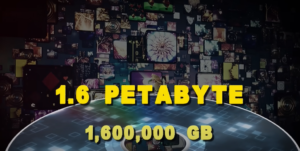

The entire virus was only 1 kilobyte in size.
To put that into perspective, a single photo on your phone today is thousands of times larger. Even most viruses of that era were many kilobytes long. CIH managed to pack advanced infection techniques, stealth mechanisms, and destructive payloads into an almost impossibly small space.
CIH specifically targeted Windows 95, 98, and ME, infecting .EXE executable files — the programs you double-click to run.
Now here’s where it became truly dangerous.
Most viruses increase the size of the files they infect, making detection easier. CIH did something far more clever. It used a technique called hole patching.
Executable files often contain unused gaps in their internal structure. CIH squeezed itself into these unused spaces instead of appending data to the end of the file. The result?
Infected files stayed exactly the same size.
To antivirus software of the late 1990s, this made CIH almost invisible.
How CIH Spread Without the Internet
Unlike modern malware, CIH didn’t spread through email attachments or online exploits. Its distribution was simpler — and more effective for that time.
When a user ran an infected program, CIH quietly infected other executable files on the same hard drive. Then, when that software was shared — burned to a CD, copied to another PC, or uploaded to a website — the virus traveled with it.
Incredibly, major software distributors accidentally helped spread it. Pirated versions of popular games like Sin, along with various Asian software packages, shipped already infected. Millions of copies were distributed worldwide before anyone realized what was happening.
By the time antivirus companies began detecting CIH reliably, it was already deeply embedded across the globe.
April 26th: The Trigger Date
CIH was programmed with a payload activation date: April 26th.
This date wasn’t random. It marked the anniversary of the 1986 Chernobyl nuclear disaster, which is how the virus earned its infamous nickname.
On April 26th each year, CIH would “wake up” and execute its destructive payload. And what it did next was unprecedented in malware history.
Attack One: BIOS Destruction
Before Windows loads, before any operating system runs, your computer relies on a tiny piece of firmware called the BIOS (Basic Input/Output System). The BIOS lives on a chip on the motherboard and tells the computer how to initialize hardware and start the boot process.
In the late 1990s, BIOS chips were flashable, meaning their contents could be rewritten using software. CIH exploited this capability.
When activated, the virus overwrote the BIOS with random garbage data, completely erasing the instructions the motherboard needed to start.
The result was catastrophic:
- The computer wouldn’t POST
- No display signal
- No beep codes
- No way to boot
Pressing the power button did absolutely nothing.
Fixing this wasn’t simple. The BIOS chip had to be physically removed and reflashed using specialized hardware. In 1998, almost no home users had access to such tools. For many, the only solution was replacing the entire motherboard — if replacements were even available.
Attack Two: Hard Drive Obliteration
As if killing the BIOS wasn’t enough, CIH delivered a second blow.
The virus overwrote the first megabyte of the hard drive, including:
- The partition table
- File system structures
- Critical boot data
Even if a technician somehow restored the BIOS, the hard drive data was gone.
Photos. Documents. Homework. Business records. Financial data.
All permanently destroyed.
There was no recovery software. No cloud backups. No undo button.
In 1999, if your hard drive was wiped, your data was simply… gone.
April 26, 1999: Global Chaos
When April 26th arrived in 1999, the world woke up to widespread computer failure.
South Korea was hit especially hard, with thousands of computers in schools, businesses, and government offices rendered useless overnight. Turkey, China, and other countries reported massive outbreaks. Repair shops were overwhelmed. Entire fleets of office computers were declared unfixable.
Estimated financial damage ranged between $500 million and $1 billion in 1998–1999 dollars.
Students lost final projects. Businesses lost accounting records. Some companies were forced to shut down temporarily because their entire IT infrastructure was destroyed.
This was all happening in a world without automatic backups, without cloud storage, and without widespread digital redundancy.
The Legal Twist: No Punishment
Despite the global damage, Chen Ing-hau was never punished.
At the time, Taiwanese law did not criminalize writing a virus — only intentionally using one maliciously. Chen claimed CIH was released as a proof of concept and that he never intended it to spread so widely.
Legally, there was little that could be done.
But historically, the damage was already irreversible.
Why Security Experts Still Study CIH
Even today, cybersecurity professionals view CIH with a mix of horror and reluctant admiration.
From a technical standpoint, it was brilliant:
- Only 1 KB in size
- Advanced tunneling techniques
- Intercepted system calls
- Avoided detection using hole patching
- Hid from 1998-era antivirus tools
No malware before or since has caused more physical hardware damage with less code.
CIH fundamentally changed how the industry thought about security.
How CIH Changed Computers Forever
After the Chernobyl Virus, hardware manufacturers acted fast.
Motherboards began shipping with BIOS write protection. Flash chips gained hardware safeguards. Over time, BIOS evolved into UEFI, adding secure boot mechanisms and cryptographic verification.
Modern systems implement:
- SPI flash protections
- Secure Boot
- Firmware integrity checks
- Hardware-level write locks
A CIH-style attack is now nearly impossible on modern consumer systems.
But in 1998, CIH exposed just how fragile our digital foundations were.
Final Thoughts: A 1 KB Warning
CIH remains the most destructive computer virus ever created in terms of hardware damage. No virus before or since has successfully bricked computers on such a massive scale.
The Chernobyl Virus taught the world a harsh lesson:
Our computers are only as secure as we make them.
Sometimes, all it takes is 1 kilobyte of code to bring everything crashing down.
Disclaimer
This article is for educational and historical purposes only. It does not promote, encourage, or provide instructions for creating or distributing malware. Understanding past security failures helps prevent future ones.
#CyberSecurity #MalwareHistory #CIH #ChernobylVirus #ComputerHistory #TechLessons