If you’re someone who deeply values their privacy and security online, chances are you’ve looked into using Tails OS at some point. While it’s a powerful tool for anonymity, it isn’t the most secure option available—especially in high-risk environments. Enter Qubes OS, a system designed not only for privacy but for security by design. In this article, we’ll dive into how each system works, their strengths, and why Qubes OS may be the better choice for the ultra-cautious user.
What Makes Tails OS So Popular?
Tails OS (The Amnesic Incognito Live System) is well-known for its strong focus on privacy:
- It routes all internet traffic through the Tor network, anonymizing your identity.
- It leaves no trace of your activity on the device unless you create a persistent storage.
- It runs from a USB stick, which means you can plug it in anywhere, use it, and walk away without a trace.
However, there are critical limitations in terms of security.
The Security Weakness in Tails OS
While Tails is great for anonymity, if an attacker manages to gain root access while the system is running, they can potentially disable Tor, expose your real IP address, and compromise your location.
This scenario becomes especially dangerous in cases involving law enforcement or sophisticated hackers. In these situations, Tails’ stateless nature and Tor routing might not be enough.
Why Qubes OS Is a Game Changer
Qubes OS offers a fundamentally different approach: virtualized compartmentalization.
Every task you perform in Qubes OS happens inside an isolated virtual machine (VM), known as a “qube.” This isolation adds a critical layer of security that Tails simply can’t offer.
How Does Qubes OS Work?
- Each Qube is a self-contained environment.
- If one Qube is compromised (say from a malicious file or webpage), the attack is contained.
- Your host machine’s IP address and data stay protected unless the attacker can perform a VM escape, which is incredibly rare and complex.
Qubes OS + Whonix = Powerful Privacy
Qubes OS ships with Whonix-based VMs, which work similarly to Tails in terms of traffic routing:
- Your actual browsing takes place inside the Whonix Workstation.
- All internet traffic is routed through the Whonix Gateway, which you don’t interact with directly.
- This layered model keeps your real IP address hidden, even if the workstation Qube is compromised.
This separation makes it much more difficult for any attacker to trace your activity back to your real identity.
The Zen Hypervisor Advantage
Qubes OS uses the Xen Hypervisor instead of KVM, which is commonly used in other virtualization platforms. Why?
- Dom0, the host operating system in Qubes, contains only a minimal codebase (just a few hundred thousand lines).
- KVM hosts typically include a full Linux kernel and may also have a desktop environment and many drivers—leading to bloat and more attack surfaces.
- Dom0 doesn’t connect to the internet at all, drastically reducing the chance of remote exploits.
This results in a much more secure system architecture.










More Than Just Tor: Everyday Browsing on Qubes
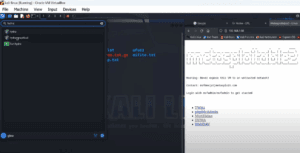
Unlike Tails or standalone Whonix, Qubes OS isn’t locked to Tor-only browsing. It includes:
- A Personal Qube for normal browsing (not Tor-based), using Fedora or Debian templates.
- Each Qube is color-coded:
- Red for Whonix/Tor-based Qubes
- Yellow for Personal Qubes
This visual distinction helps prevent accidental cross-usage between private and public browsing tasks.
System-Level Isolation with Service Qubes
Qubes goes even further by assigning dedicated Qubes for services:
- Net Qube – Handles internet connections
- Firewall Qube – Manages traffic filtering
- USB Qube – Manages USB device access
- Vault Qube – Stores sensitive data with no network or USB access
This approach ensures that no Qube directly handles both input devices and the network, a common vector for attacks.
Custom Setups and Flexibility
You can even create custom Qubes:
- Want an Arch Linux-based Qube that only connects via Mullvad VPN? Go for it.
- Prefer a separate Qube for cryptocurrency transactions? Easy.
The modular design makes it easy to tailor your setup to your threat model.
Clipboard Sharing Without Compromising Security
There’s an inter-Qube clipboard that allows you to securely copy and paste, for example:
- Copy a password from your Vault Qube’s manager
- Paste it into a login form in your Whonix or Personal Qube
This feature balances convenience and security smartly.
The One Thing Tails Does Better: The Panic Option
Tails has a unique edge: the physical panic kill switch.
- Since it runs off a USB drive, removing the drive causes the OS to shut down immediately.
- Many users attach the USB drive to a lanyard or belt loop, so it gets pulled out automatically if the laptop is snatched.
This feature is crucial in high-risk environments like raids or physical threats.
Meet BusKill: The Qubes-Compatible Dead Man Switch
While Qubes doesn’t have a built-in panic option, there’s a great third-party solution: BusKill.
- A magnetic breakaway USB switch that powers off or wipes your machine when disconnected.
- Works across all OSes, including Qubes.
- Even allows for automatic data destruction on trigger.
- Entirely open source, available on GitHub.
Compared to Tails’ USB lanyard method, BusKill offers greater flexibility and stronger kill-switch options.
Conclusion: Qubes OS for the Ultra-Paranoid
If your main concern is privacy, Tails is still a solid option. But if you want robust compartmentalized security, Qubes OS is hands down the superior choice.
With features like isolated VMs, a minimal host system, and optional integrations like Whonix and BusKill, Qubes gives you the freedom to browse, store sensitive data, and run applications in secure silos.
For those operating in high-risk environments or just wanting to take privacy to the next level, Qubes OS is the ideal fortress.
Tags
privacy, security, Qubes OS, Tails OS, Whonix, Tor, virtual machines, anonymity, cybersecurity, Linux, secure operating system, Zen hypervisor, BusKill, digital safety, encrypted browsing
Hashtags
#QubesOS #TailsOS #Whonix #PrivacyTools #Cybersecurity #SecureBrowsing #AnonymousInternet #LinuxSecurity #DigitalPrivacy #BusKill #TorNetwork #VirtualMachines