For over a decade, search engine optimization (SEO) was a relatively straightforward game. Find a keyword, write optimized content, build backlinks, and watch the traffic — and income — roll in.

But today, everything has changed.
Thanks to the rise of AI-generated content, Google has cracked down harder than ever, reshuffling search rankings and penalizing even legitimate sites. Many SEO experts — even veterans — are finding themselves confused and starting over from scratch.
If you’re just starting to learn SEO in this new AI-driven world, this article is for you. We’ll explore what strategies still work, what no longer does, how to use AI the right way, and the mindset shift required to thrive in 2025 and beyond.
The New SEO Reality: Adapt or Fade Away
Search engines are still here, and they’re still massive. Google processes over 5 trillion searches a year — that’s nearly 100 times more than what AI tools like ChatGPT will handle in conversations this year. So no, SEO is not dead. But the playbook has changed.
Here’s how.
The web is now flooded with mass-produced, low-quality AI content. In response, Google has become more selective, prioritizing content that genuinely serves user intent over content created just to “game the system.”
SEO Fundamentals Still Matter
Despite the rise of AI, the core elements of SEO remain intact:
- Keywords still matter
- Search intent still matters
- Crawlable, indexable content still matters
- Backlinks still boost rankings
📌 Disclaimer: The referenced course is provided by Ahrefs. The author of this article is not affiliated with Ahrefs.
But here’s the thing — while understanding the basics is necessary, it’s no longer sufficient.
Shift Your Mindset: From Ranking Content to Serving Users
In the past, SEO copywriting became formulaic. People copied the top-ranking page, added a few unique points, stuffed in keywords, and bought backlinks. Rankings followed. But Google’s algorithm is smarter now, and AI-generated content has made this strategy obsolete.


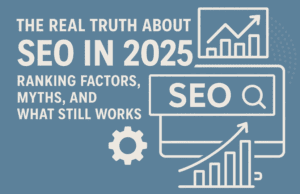



Here’s what matters more in 2025:
Search engines don’t buy from you. People do.
To succeed in SEO today, you must focus on understanding your audience — not just keywords.
Example:
If you want to rank for “how to start a YouTube channel”, don’t just target the keyword. Ask:
- Are readers total beginners?
- Do they need gear suggestions?
- Are they trying to earn money?
- Would a checklist or a video tutorial help more?
If your content genuinely helps users with what they’re actually looking for, you’ll not only rank better — you’ll build trust, keep readers engaged, and convert more traffic into customers.
AI in SEO: Use It, Don’t Abuse It
Let’s get one thing straight — AI isn’t the enemy. It’s one of the most transformational technologies since the internet itself.
The problem is how people use it.
Bad content comes from bad instructions. If you don’t understand SEO, you can’t guide AI to create effective content. But if you have SEO skills, tools like ChatGPT can speed up your:
- Brainstorming
- Keyword clustering
- SERP analysis
- Content planning and structuring
So here’s the right approach:
Use AI as your assistant — not your replacement.
Strong SEO fundamentals plus smart AI prompting is a winning formula.
Prepare for the Unexpected: Don’t Rely on Google Alone
SEO might bring in free and consistent traffic today, but Google updates can wipe that traffic out overnight. This has happened to countless creators — many of whom have shared their stories publicly.
That’s why modern SEO success also means diversification.
The skills you learn in SEO (keyword research, search intent, technical SEO) apply to:
- YouTube
- Quora
- eBay
If you master Google SEO, you’re well-equipped to dominate search-driven platforms across the web. For instance, applying traditional SEO principles helped the author generate over 1 million YouTube views per month from search alone.
Final Thoughts: You Need to Be Worth Finding
In a world where AI can crank out endless mediocre content, copying existing pages just won’t cut it anymore — and honestly, it shouldn’t.
If you want long-term success in SEO:
- Master the fundamentals
- Embrace AI as a tool, not a crutch
- Focus on real human intent
- Diversify your presence across platforms
Tags:
SEO tips, SEO for beginners, AI in SEO, search engine optimization 2025, Google SEO, ChatGPT for SEO, SEO content strategy, SEO tools, Ahrefs, user intent, SEO course
Hashtags:
#SEO #AISEO #SearchEngineOptimization #GoogleSEO #ContentStrategy #ChatGPT #Ahrefs #DigitalMarketing #UserIntent #SEOTrends2025