The next era of Windows is almost here — and it’s going to be revolutionary. If you’re a tech enthusiast or even a casual user, you’ll want to pay close attention to what Microsoft is cooking up with Windows 12, also referred to as WS1. The upcoming release is packed with cutting-edge AI features, a new modular design, performance upgrades, stronger security standards, and possibly even a subscription model.
In this detailed blog post, we’ll break down:
- The expected release timeline of Windows 12
- How it compares to Windows 11 24H2
- AI-powered features and daily workflow enhancements
- Hardware requirements (including TPM 2.0 enforcement)
- Gaming improvements with DirectStorage
- The truth about the rumored subscription model
- Upgrade advice for users on old PCs
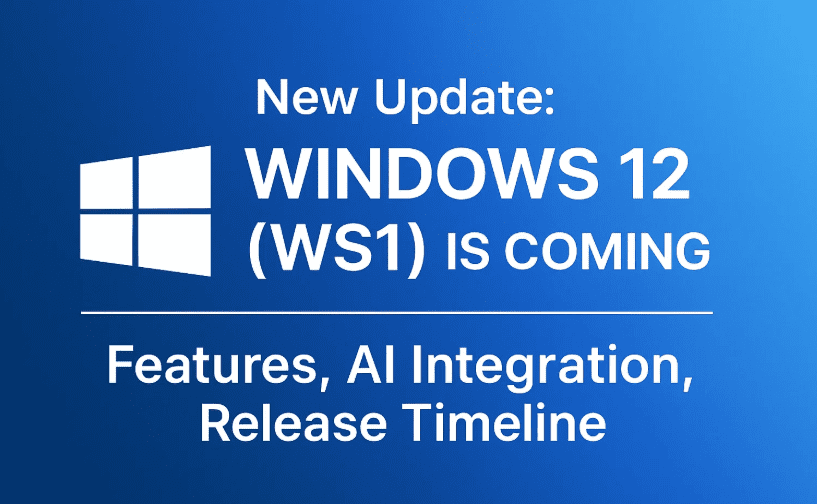
Let’s dive into what could be the most advanced Windows OS to date.
So Far, Let’s Recap: What’s Happening with Windows 11 24H2?
Before we talk about Windows 12, let’s clarify the situation with Windows 11 24H2. Many expected WS1 (Windows 12) to arrive in 2024, but instead, Microsoft released Windows 11 24H2 — a highly optimized version with better AI integration and support for newer chipsets.
Even if you’re running an older PC — such as 2nd, 3rd, or 4th Gen Intel — it’s still possible to install Windows 11 24H2 using workarounds. While Microsoft might not officially support older hardware, several tech communities have successfully tested and verified stable performance on legacy systems.
So if you haven’t upgraded yet, don’t worry. Windows 11 24H2 can be installed on most older systems using compatible ISOs and setup tweaks.
But remember — once Windows 12 lands, things will change quickly.
The Big Question: When Will Windows 12 (WS1) Launch?
Microsoft has not officially announced the release date of Windows 12, but based on their historical patterns, we can make some educated guesses:
- Most previous versions of Windows were released in September or October
- Windows 12 is expected to launch in October 2025
- Some internal sources suggest the OS may arrive before Windows 10 support ends (which is October 14, 2025)
That gives us a window of Q3 to Q4 of 2025 for the likely launch.
This timeline aligns with Microsoft’s push toward AI-centric computing and extended support transitions.
Let’s Move to the Exciting Part: New Features in Windows 12 (WS1)
Windows 12 (WS1) isn’t just a design refresh. It’s a fundamental shift toward AI-assisted computing, modular performance, and cloud-connected personalization.

Here are the most promising features expected in WS1:
1. AI Integration: Your PC Becomes Your Assistant
Imagine an OS that doesn’t just respond to commands, but understands your daily habits, adapts to your routine, and anticipates your needs.
That’s exactly what Microsoft is aiming for with deep AI integration.
Key AI Features:
- AI-Powered Search: Faster, more contextual search with voice and natural language input
- Smart Suggestions: Personalized file access, app recommendations, and notification prioritization
- Voice Commands: Hands-free control of apps, system settings, and workflows
- AI Learning Loop: The OS will learn your behavior patterns and streamline recurring tasks
Think of it as Copilot, evolved. Over time, your PC becomes more like a personal assistant, understanding your preferences and adjusting accordingly — just like a close colleague or friend would.
2. Modular Design for Custom Workflows
Windows 12 will feature a modular system design, which means users can enable or disable parts of the OS based on their usage.
Whether you’re a gamer, content creator, developer, or minimalist user — your system can be:
- Lightweight
- Highly customizable
- Optimized for your specific use-case
This helps in:
- Reducing bloat
- Saving storage
- Improving boot times
- Enhancing system responsiveness
It’s a huge win for power users and enterprise users who need lean, focused systems.
3. Fast and Seamless Updates
Microsoft is reworking the update delivery system in Windows 12. Updates will be:
- Smaller in size
- Faster to install
- Less intrusive to user activity
And since AI components continuously evolve, the OS will frequently fetch micro updates in the background, improving performance and usability without requiring full system reboots every time.
4. Better Gaming Performance with DirectStorage and AI Rendering
If you’re a gamer, here’s the good news.
Windows 12 will take gaming performance to the next level with:
- DirectStorage 2.0: Faster loading times for games stored on NVMe SSDs
- AI-driven graphics optimization: Dynamic resource allocation based on gameplay
- Improved FPS (frames per second): Especially for systems with discrete GPUs
The OS will analyze your gaming patterns and optimize graphics pipelines, so the next time you launch your favorite game, the experience is smoother and more immersive.
5. Enhanced Security: TPM 2.0 Becomes Mandatory
This is where things may become controversial for some users.
With Windows 11, Microsoft recommended TPM 2.0 for better security. But in Windows 12, TPM 2.0 is likely to become mandatory — especially for:
- Secure Boot
- Hardware-based encryption
- Windows Hello biometric login
- Firmware protection against rootkits and malware
What if your system doesn’t have TPM 2.0?
- Most 8th-gen Intel and newer CPUs support TPM 2.0
- Older PCs may not officially support WS1
- Workarounds may still appear — but they’ll likely be harder to implement
In short: your data and OS will be safer than ever — but legacy hardware may be left behind.
6. AI-Powered Security & Privacy Enhancements
In addition to TPM, Windows 12 may include:
- AI-assisted threat detection
- Real-time behavioral analysis
- Automatic policy adjustment based on app behavior
- Encrypted file vaults for sensitive data
The OS will monitor threats more intelligently — not just relying on signatures, but predicting malware behavior using AI models. This is a massive leap in consumer-level endpoint protection.
7. Subscription Model Rumors
This one isn’t confirmed — but it’s creating a lot of buzz.
Some industry insiders are hinting that Microsoft may introduce a subscription-based pricing model for Windows 12, similar to:
- Microsoft 365 (Office Suite)
- Adobe Creative Cloud
While it’s not yet clear whether WS1 will require a subscription, there’s a chance some premium AI features may be locked behind a paywall.
We’ll keep an eye on this — but for now, it’s just speculation.
FAQs: Common Questions About Windows 12 (WS1)
Q1: Can I install Windows 12 on my old PC?
Only if your PC supports TPM 2.0 and Secure Boot. Most systems from 2017 onward may be compatible. If not, you’ll have to stick with Windows 11 24H2.
Q2: Will AI work without internet in Windows 12?
Some features will work offline, but most AI assistants and Copilot-like features rely on cloud processing.
Q3: Will Windows 12 be free?
If you’re already on a genuine copy of Windows 10 or 11, upgrades may be free. However, this hasn’t been officially confirmed.
Q4: What’s the biggest difference between Windows 11 and 12?
AI integration, modular customization, performance optimization, and stricter hardware requirements are the major shifts.
Final Thoughts: Should You Upgrade?
Windows 12 is shaping up to be the smartest, most secure, and most user-aware version of Windows ever released. While Microsoft hasn’t officially branded it “Windows 12” in many places yet, all signs point to this being a major version leap.
If you’re using Windows 10 or an early build of Windows 11, now is the time to:
- Upgrade to Windows 11 24H2 if possible
- Check your hardware compatibility for future WS1
- Keep an eye on official announcements for beta releases
The AI revolution is coming to your desktop. Whether you’re ready or not, Windows 12 is set to redefine how we interact with our PCs.
Tags: windows 12, ws1 update, windows 12 features, windows 12 release date, windows 11 24h2, tpm 2.0 windows, secure boot, windows ai features, modular windows os, windows for old pc, windows gaming, windows directstorage, copilot os
Hashtags:
#Windows12 #WS1 #Microsoft #WindowsUpdate #TPM2 #AIinWindows #WindowsForGamers #WindowsSecurity #DirectStorage #ModularOS #Windows12Release
Disclaimer:
This article is based on leaks, developer documentation, insider builds, and trends observed in Microsoft’s product cycles. All projected features are subject to change. Always refer to the official Microsoft Windows website for the latest announcements and compatibility guidelines.