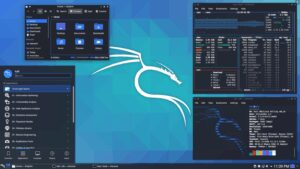
Linux users are no strangers to change, experimentation, and the occasional philosophical debate over the “right way” to build a desktop environment. Recently, I found myself in an oddly conflicted state while sitting in front of a brand-new Debian 13 installation running KDE 6. This was supposed to be a victory moment. A combination I had been waiting for: the solid stability of Debian married to the fresh power of KDE’s next-generation desktop.
And yet, as I explored the desktop, emotions turned unexpectedly mixed. What should have been triumph began to feel like a contradiction. KDE, as beautiful and innovative as it is, continues to struggle with one big problem: a lack of consistent vision.

In this article, I’ll break down what’s happening with KDE, why the new KDE Linux distribution has sparked both excitement and skepticism, and what it all means for the future of the Linux desktop ecosystem.
Table of Contents
- The Promise of KDE: Beauty Meets Chaos
- KDE as an Ecosystem, Not Just a Desktop
- The KDE Neon Experiment: Lessons Learned
- KDE Linux: The New Distribution
- Fragmentation vs Focus: The Core Dilemma
- Why GNOME’s Vision Feels More Coherent
- The Cost of Spreading Resources Too Thin
- What Users Actually Want from a Desktop
- Frequently Asked Questions
- Conclusion: A Call for Focus
1. The Promise of KDE: Beauty Meets Chaos
KDE has always been the darling of customization enthusiasts. Its elegant aesthetics, advanced features, and endless flexibility make it one of the most powerful Linux desktop environments ever created. On paper, it’s everything a user could want: a modern design philosophy combined with a traditional structure and nearly unlimited customization.
But beneath the glossy surface, cracks begin to show. For every cutting-edge feature, there’s an oddly outdated panel or an inconsistent design choice. For every breakthrough effect like the rotating desktop cube, there’s the frustrating decision to remove it—only to bring it back later.
This isn’t a minor nitpick. It highlights a broader issue: KDE often feels like brilliant creativity without a guiding compass.
2. KDE as an Ecosystem, Not Just a Desktop
It’s important to understand that KDE is not just a desktop environment. It’s an entire ecosystem:
- Plasma Desktop – The flagship interface.
- Plasma Mobile – A push into smartphones and tablets.
- KDE Applications – A full suite of apps like Dolphin (file manager), Okular (document viewer), and Krita (digital painting).
- Frameworks – The underlying libraries and development tools powering it all.
The scale is impressive. Few open-source projects attempt to cover this much ground. But the size also introduces risks: inconsistency, scattered focus, and resource waste.
3. The KDE Neon Experiment: Lessons Learned
Before KDE Linux, there was KDE Neon. Built on Ubuntu LTS, Neon was KDE’s first attempt at controlling its own distribution. The idea was simple: deliver the latest KDE software directly, without waiting for distributions to package it.
But Neon had issues. The Ubuntu base needed constant tweaking to build Plasma properly, which—ironically—made it less stable than promised. KDE itself admitted that Neon failed on the “reliability angle.”
That’s already telling. When your goal is stability and you end up with instability, it’s not just a technical issue. It’s a vision problem.







4. KDE Linux: The New Distribution
Now, KDE is trying again with KDE Linux, a new distribution that’s still in alpha but openly available for testing. Its stated mission is ambitious:
- Showcase the “best of KDE” with a bulletproof OS.
- Provide a coherent “here’s how you get it” story for users and OEMs.
- Offer multiple editions: Testing, Enthusiast, and Stable.
At first glance, this sounds exciting. But when you pause and think about it, several contradictions emerge:
- KDE already has Neon. Why start another distribution?
- Maintaining multiple editions means even more fragmentation.
- Their end-of-life plan admits that one day, the OS could just morph into a different distribution entirely.
That last point is shocking. Imagine dedicating years of your work setup to KDE Linux, only to have it turn into something else entirely at the end of support. That doesn’t inspire confidence—it feels like an experiment being conducted on users.
5. Fragmentation vs Focus: The Core Dilemma
Here’s the crux: KDE is spreading itself thin.
Instead of consolidating resources into polishing Plasma, improving consistency, and making sure KDE apps integrate seamlessly, energy is going into maintaining:
- KDE Plasma (desktop)
- KDE Neon (distribution)
- KDE Linux (new distribution, with three editions)
- Plasma Mobile
- A massive app ecosystem
It’s a classic case of trying to be everything to everyone—and ending up not being the best at any one thing.
6. Why GNOME’s Vision Feels More Coherent
Now, let’s contrast with GNOME.
Many users dislike GNOME for its strict design choices and limited customization. Yet, there’s no denying one strength: consistency of vision.
When you use GNOME, you may not like every decision, but you always know what to expect. The design language is unified. The philosophy is clear. That’s why major distributions like Ubuntu, Fedora, and even Debian often default to GNOME instead of KDE.
KDE, meanwhile, sometimes feels like it’s permanently under construction—a work in progress rather than a finished product.
7. The Cost of Spreading Resources Too Thin
Every new project consumes time, energy, and money. For KDE, those resources could instead be used for:
- Better integration testing.
- Stricter design guidelines.
- Consistent UI/UX decisions.
- Improved documentation for developers and users.
Instead, they’re launching yet another distribution. It’s hard not to see this as a misallocation of effort.
8. What Users Actually Want from a Desktop
Let’s step back for a moment. What do users really want from their Linux desktop environment?
- Reliability – It should work consistently.
- Polish – A cohesive design that feels complete.
- Flexibility – Options for customization, but without breaking stability.
- Longevity – Confidence that today’s setup won’t be abandoned tomorrow.
KDE actually has all the pieces to deliver this. The technology is there. The talent is there. The passion is there. But unless the leadership focuses, users will keep feeling like they’re beta-testing an experiment rather than living in a finished desktop.
9. Frequently Asked Questions
Q1. Does KDE really need its own distribution?
Not necessarily. KDE would benefit more from making its desktop environment so polished that distributions want to use it as their default. A dedicated KDE distro risks splitting resources without solving the underlying problems.
Q2. How is KDE Linux different from KDE Neon?
KDE Neon was built on Ubuntu LTS but struggled with reliability. KDE Linux is an attempt to create a more cohesive, “bulletproof” KDE-driven OS with multiple editions. But it’s still early days, and many see it as repeating past mistakes.
Q3. Should I switch to KDE Linux now?
Not unless you’re comfortable testing early software. It’s still in alpha, and KDE itself warns that stability isn’t guaranteed. For daily use, Debian, Fedora KDE, or openSUSE with Plasma might be safer choices.
Q4. Is this criticism unfair to KDE developers?
No. The developers are extremely talented and dedicated. The problem lies not with individuals but with organization and leadership, which hasn’t provided a clear long-term vision for KDE’s direction.
Q5. Why do many distributions prefer GNOME over KDE?
Consistency. GNOME offers a unified design and experience. Even if controversial, its philosophy is clear and stable. KDE, despite being more powerful, often appears fragmented and experimental to distro maintainers.
10. Conclusion: A Call for Focus
KDE has everything it needs to dominate the Linux desktop world: innovation, talent, a vibrant community, and some of the most technically advanced features of any environment. Yet, it keeps tripping over the same obstacle: lack of focus.
KDE Linux could succeed, but unless it addresses the deeper problem—scattered resources and inconsistent vision—it risks being another fascinating experiment that drains energy without delivering real stability.
Users deserve more than beautiful chaos. They deserve beautiful software. KDE has the potential to deliver it, but only if the project prioritizes cohesion over fragmentation, and quality over quantity.
Disclaimer
This article reflects a critical analysis of KDE’s current direction. It does not undermine the contributions of KDE developers, who work passionately to advance free software. Readers testing KDE Linux should remember that it is in alpha state and not intended for production environments. Always back up important data before experimenting.
Tags: KDE, KDE Linux, KDE Neon, Linux Desktop, Debian 13, GNOME vs KDE, Plasma Desktop, Open Source Ecosystem
Hashtags: #KDE #Linux #OpenSource #DesktopEnvironment #Plasma #Debian #KDENeon