🌙 1. A Night in Dalian
Midnight.
China.
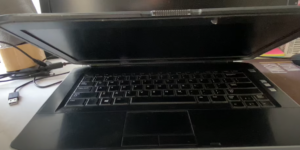
A dim hotel room glows faintly from a single laptop screen. The city outside, Dalian, is silent under the weight of fog. Inside, a man named Park sits hunched over the bed-side desk, his eyes red, his fingers trembling from five days of relentless typing and hunting.
He’s been working on a project codenamed “How to Create a Monster.”
The monster isn’t flesh and blood — it’s code. A creation that could bring nations to their knees.
For nearly a week, Park hasn’t slept properly. He eats alone, occasionally visiting the hotel restaurant for a few bowls of noodles, then returns to his dimly lit workstation. The assignment is clear: finish a cyber-weapon. His superiors in Pyongyang want results. Failure isn’t an option — not in a country where mistakes carry consequences beyond professional reprimand.
The problem is, the weapon doesn’t work.
Park searches online — hacker forums, obscure archives, dark-web marketplaces — for clues. Somewhere, someone must have cracked the missing piece. Then, suddenly, a post catches his attention.
“EternalBlue: NSA Exploit Leaked.”
He clicks.
Inside, he finds the key — a piece of American cyber-espionage technology stolen and leaked by a mysterious group calling themselves The Shadow Brokers. EternalBlue can exploit a flaw in Windows systems, granting unrestricted access to machines across the world.
Park’s pulse quickens. He knows this is it.
Within hours, he begins integrating it into his program — piece by piece, building the monster that will soon crawl across the internet.
But before he can finish… the screen goes blank.
His computer is wiped clean.






A message pings from his superior, Konbun. The project has been “deployed.” Without him. The unfinished monster has been released.
What followed that night would go down in cybersecurity history — the day the world met WannaCry.
⚙️ 2. Birth of the Monster
To understand WannaCry, we must step back — to a country that built a cyber-army out of isolation, hunger, and ideology.
After the Korean War, the peninsula was split into two. While the South embraced capitalism and technology, North Korea turned inward, supported by the Soviet Union and China. But by the 1990s, both allies had either collapsed or modernized, leaving Pyongyang stranded.
To survive, the regime turned to illicit ventures — counterfeiting currencies, smuggling luxury goods, and later, cybercrime. By 2010, North Korea’s intelligence services had trained a new class of soldiers — not with rifles, but with keyboards.
Their testing ground?
Their southern neighbor — South Korea.
Between 2009 and 2013, South Korean networks were bombarded by denial-of-service attacks, wiping hard drives and taking banks offline. Then came “Dark Seoul” — a cyber-offensive that shut down three major TV stations and two banks in just one day. It was clear: North Korea’s digital soldiers were no longer amateurs.
And soon, they’d target the world.
💣 3. From Code to Catastrophe
The weapon Park and his peers were working on was more than a virus. It was a self-replicating ransomware worm — something that could move from one computer to another without human help.
At its core were two powerful exploits — both originally American:
| Exploit | Creator | Purpose | Role in WannaCry |
|---|---|---|---|
| EternalBlue | NSA | Exploited SMBv1 protocol flaw to gain remote control of Windows systems. | Used to spread WannaCry across networks. |
| DoublePulsar | NSA | A stealth “backdoor” that kept the infected system open for further use. | Enabled WannaCry to inject its payload repeatedly. |
Together, they formed the skeleton of the “monster.”
WannaCry didn’t need phishing emails or fake downloads to spread — it propagated automatically. One infected PC could silently infect every other unpatched Windows machine on the same network, and then jump to the next.
Once inside, the ransomware would encrypt all user files — documents, images, databases — turning them into unreadable gibberish with a .wncry extension. A bright red message appeared:
“Oops, your files have been encrypted!
Send $300 worth of Bitcoin to unlock them.”
Victims had three days to pay. After seven, their files would be lost forever.
But what made this attack so terrifying was not the ransom — it was the speed. Within hours, WannaCry had spread across continents.
🌍 4. The First Victims
The first traces appeared in Southeast Asia around 7:44 a.m. on May 12, 2017. Within an hour, it hit Europe — Spain, France, Germany — and by noon, it had reached the United Kingdom.
Then came chaos.
Screens at hospitals, train stations, offices, and schools went dark. In the U.K., the National Health Service (NHS) became one of the biggest victims. Medical staff watched helplessly as their computers displayed red ransomware screens. Patient records, surgery schedules, and diagnostic tools were all locked.
Dr. Tony Bleetman, an emergency consultant in London, later recalled:
“The virus hit every computer around me. Within minutes, we couldn’t access medical records, booking systems — nothing. We went back to using pens, paper, and whiteboards.”
Across the world, similar stories unfolded.
Automobile plants in France stopped production. Telecom companies in Spain disconnected networks. Universities, logistics firms, even government agencies froze.
By midday, the monster had gone global.
🔥 5. The Global Blackout
WannaCry’s spread was unprecedented — infecting over 200,000 computers across 150 countries within hours. It crippled:
- Hospitals and healthcare systems
- Transportation and logistics networks
- Telecom and utility providers
- Financial institutions
The worm exploited a simple truth: millions of Windows systems had not installed Microsoft’s security patch for the SMBv1 vulnerability. The patch existed — but apathy and outdated systems made them sitting ducks.
Microsoft later called it a “wake-up call for the industry.”
Meanwhile, the ransom payments trickled in. But even that didn’t work properly. There was no automated decryption system — victims who paid rarely got their files back. The entire payment mechanism was crude, almost amateurish.
It wasn’t about the money anymore.
It looked more like a statement — or an experiment gone wrong.
🧑💻 6. The Man Who Accidentally Saved the World
At 2:30 p.m., in a quiet British seaside town, 22-year-old Marcus Hutchins sat down at his desk after lunch. He had no idea he was about to become a global hero.
As a malware researcher, Marcus was analyzing WannaCry’s code out of curiosity. While examining its network behavior, he noticed something odd — the ransomware kept trying to connect to a strange, unregistered web domain.
Assuming it was a command-and-control server, Marcus registered the domain name to monitor the traffic. Within minutes, something unexpected happened:
The infection stopped spreading.
The domain was not a control server at all — it was a kill switch.
The moment Marcus registered it, WannaCry believed it was running in a research sandbox and shut itself down globally.
By 3:03 p.m., the digital plague had been contained.
Marcus Hutchins had just saved the world — purely by accident.
🕵️ 7. Who Was Behind WannaCry?
When the dust settled, investigators began piecing together the evidence. What they found was disturbing — and politically explosive.
The FBI, NSA, and U.K. NCSC discovered that WannaCry shared code patterns with two earlier attacks:
- The Sony Pictures Hack (2014)
- The Bangladesh Bank Heist (2016)
Both had been attributed to a mysterious hacking collective known as the Lazarus Group — widely believed to be backed by North Korea.
WannaCry used the same compiler, same encryption techniques, and even identical IP addresses as Lazarus’s previous operations. The links were undeniable.
🧩 8. Connecting the Dots: The Lazarus Group and Park Jin-Hyok
For years, Lazarus Group had operated from the shadows — an elite cyber unit under North Korea’s military intelligence, responsible for espionage, theft, and sabotage.
But one slip-up changed everything.
Investigators traced an email address used in multiple cyberattacks — it was linked to a front company called Chosun Expo Group, which supposedly offered software development services from China. The same account had once sent a job application, complete with a CV and photo.
That photo belonged to Park Jin-Hyok — a North Korean programmer educated in computer science, fluent in English and C++, and reportedly a member of Unit 121, North Korea’s cyberwarfare division.
The U.S. Department of Justice later charged him with involvement in the Sony hack, the Bangladesh Bank heist, and WannaCry.
The monster had a face.
🧠 9. The NSA Connection and Shadow Brokers Leak
Yet, there was another player in this story — one that rarely faces scrutiny.
The National Security Agency (NSA).
EternalBlue and DoublePulsar — the exploits that made WannaCry possible — were developed by the NSA. The agency had known about the Windows vulnerability since 2012 but kept it secret for offensive operations.
Then, in 2017, a hacker group called The Shadow Brokers stole and released these tools online. Within weeks, security researchers — and malicious actors — began dissecting them. North Korean hackers were among the first to weaponize the leaks.
In a public statement after the attack, Microsoft President Brad Smith criticized the U.S. government:
“The WannaCry attack is yet another example of why the stockpiling of vulnerabilities by governments is such a problem. It’s as if the U.S. military had some of its Tomahawk missiles stolen.”
The NSA’s silence spoke volumes.
🧩 10. The Aftermath and Global Lessons
WannaCry was eventually neutralized, but its shadow lingers. It exposed not only the fragility of digital infrastructure but also the interconnected recklessness of world powers.
- North Korea showed the world it could wage cyberwar without missiles.
- The NSA demonstrated the risks of hoarding exploits.
- Corporations learned the cost of neglecting security updates.
- Ordinary users discovered that one careless click or skipped update could cripple an entire network.
The total damage was estimated in billions of dollars.
Yet the attackers earned less than $200,000 — suggesting the goal was not money, but chaos and power.
❓ 11. FAQ – What We Learned from WannaCry
Q1. What exactly was WannaCry?
A self-propagating ransomware worm that exploited a Windows vulnerability to encrypt files and demand ransom in Bitcoin.
Q2. Who created WannaCry?
It’s attributed to North Korea’s Lazarus Group, acting under state direction.
Q3. How did it spread so fast?
It used the NSA’s EternalBlue exploit to automatically infect other computers without user interaction.
Q4. Why was it called “WannaCry”?
Because the ransom message displayed “Oops, your files have been encrypted” — implying users would “want to cry.”
Q5. What stopped WannaCry?
A researcher named Marcus Hutchins discovered and registered a “kill switch” domain, which halted its global spread.
Q6. Could it happen again?
Yes — and it has. Variants like NotPetya used the same exploit later that year, causing even greater financial damage.
Q7. What’s the biggest takeaway?
Cyberwarfare doesn’t require bombs — just bad code and a vulnerable world.
🧩 12. Final Reflection
As dawn broke over Dalian, Park likely didn’t realize the scale of what he had unleashed.
The “monster” he coded for obedience had turned feral, ravaging hospitals, governments, and entire economies.
It began in a quiet hotel room, but by the time the sun rose, it had circled the globe.
A single programmer, a leaked American exploit, and a world full of unpatched computers — that’s all it took.
WannaCry wasn’t just malware.
It was a mirror — showing humanity how fragile the digital age truly is.
#WannaCry #Cybersecurity #Ransomware #NorthKorea #LazarusGroup #NSA #ShadowBrokers #DigitalThreats #HackingHistory #CyberWar