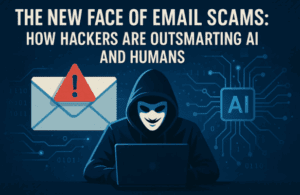
If you’ve ever tried to email a large group—maybe 1,500 people in your organization or a list of friends who love your travel updates—you’ve probably run into strange issues. Messages bounce. Some people never receive them. Others find your email in the spam folder even though they asked to hear from you.
It feels unfair, but there’s a reason: modern email systems are constantly fighting spam. And unfortunately, what looks like “normal” behavior to you (sending one message to many people) can look suspicious to email providers.
In this guide, we’ll walk through:
- What not to do when emailing many people
- Why “just put everyone in BCC” isn’t a real solution
- Safer and more professional ways to send bulk email
- Important rules so you don’t accidentally become “the spammer”
Let’s start with why large-group email is such a problem in the first place.
Why Sending to Many People Is So Hard Now
Before we get into solutions, it helps to understand the real enemy here.
Email providers—your ISP, Gmail, Outlook, corporate mail servers—receive millions of junk messages every day. To protect their users, they use aggressive filters that look for patterns similar to spam:
- One person sending the same message to many addresses
- Messages coming from IP addresses that look unusual (for example, you’re traveling overseas)
- Emails being sent in bursts to a lot of recipients at once
So even if:
- Everyone on your list asked to receive your emails, and
- You never send anything shady
…your email can still be blocked, delayed, or silently dropped because it resembles spam in structure.
That’s why you need to be careful with how you send large messages—especially if you’re handling hundreds or thousands of recipients.
Don’t #1: Putting Everyone in “To” or “CC”
Let’s begin with the most common instinct: you open your email app, type your message, and then paste every address into the To or CC field.
It feels simple. It feels natural. But technically, it’s one of the worst things you can do at scale.





Why This Looks Like Spam
When you send a single email with a long list of recipients:
- Your sending email service (like your ISP, Gmail, Outlook, etc.) sees that you’re sending one message to many people.
- The receiving services (the email providers of your recipients) see a message addressed to lots of people at once.
That pattern is exactly what many spammers use—one message, many targets.
Some providers may:
- Refuse to send your email at all
- Throttle it (delay it)
- Accept but route it straight to the spam folder
And this can happen even if you only have 10 people on the list. Some systems are stricter than others. You don’t always know where their cutoff is.
A Good Mental Rule
If the number of recipients visible in the To/CC field is more than a small handful (say more than 5), you should start to be cautious. For large lists, you should never send via To/CC.
Don’t #2: Assuming BCC Solves Everything
At this point, many people discover BCC (Blind Carbon Copy) and think they’ve found the perfect solution.
Before we criticize it, let’s acknowledge what BCC does well.
What BCC Is Good For
BCC hides the list of recipients from each other. That means:
- People can’t see everybody else’s email addresses
- You respect privacy and avoid exposing your entire contact list
From a manners and privacy perspective, this is much better than dumping everyone into To or CC.
Why BCC Still Doesn’t Fix the Spam Problem
Even with BCC, two important things are still true:
- Your sending provider still knows that one message is being sent to many recipients at once.
- Receiving providers may see multiple identical emails coming in to many of their users in a short time.
Imagine 200 of your recipients have Gmail addresses. Gmail suddenly sees:
- 200 messages
- Same content
- Coming from the same sender
- Within a very short period
To Gmail, this looks suspiciously like a bulk mailing campaign—and possibly like spam.
So yes, BCC is better for privacy, but it doesn’t fix the delivery risk. In some cases, it can still hurt you.
Don’t #3: Relying on Free Email Accounts for Bulk Sending
Free email services (like free Gmail, Outlook.com, Yahoo Mail, etc.) are fantastic for personal use. But when it comes to bulk sending, they can quietly work against you.
Why Free Accounts Are Treated Carefully
A huge amount of spam originates from free accounts:
- They’re easy to create
- Spammers can abandon them and make new ones
Because of this, when a free account starts sending messages to a large number of recipients—even legitimately—filters may treat that activity with suspicion:
- Your sending limit may be capped
- Your account might be temporarily blocked
- Emails may go to spam more often
This doesn’t mean you can’t send some group emails from a free address. It just means that once you’re sending regularly to many people (dozens, hundreds, or thousands), you’re using a tool for something it wasn’t designed for.
A Crude Workaround: Sending in Smaller Batches
Some people try a workaround: instead of sending one email to 100 recipients, they send 10 emails to 10 recipients, or 20 emails to 5 recipients each.
It’s a bit like trying to carry a heavy load by taking many smaller trips.
Does This Help?
Sometimes, yes. Smaller batches:
- Reduce the chance of hitting provider limits
- May look less like spam if the numbers are low
But there are problems:
- It’s time-consuming – you’re manually managing groups and sending multiple emails.
- Rapid bursts can still look suspicious – if you send many similar emails in a short time, filters may still notice.
- It doesn’t scale – if you have 1,500 or 5,000 contacts, manually batching becomes a nightmare.
So this method might be acceptable for rare, small-scale cases, but it’s not a good long-term solution—especially not for weekly or monthly newsletters.
Real Solution #1: Use Group Email Services (Google Groups, Groups.io)
Now let’s talk about tools designed for this exact problem.
Instead of sending one message from your personal account to many people, you can use a group email service. These services act as a middle layer between you and your recipients.
How Group Email Services Work
You create a group, add people’s email addresses, and then send your message to the group’s email address. The service then:
- Distributes the message individually to each member
- Manages subscriptions, delivery, and sometimes moderation
Two popular options are:
- Google Groups – part of Google’s ecosystem, allows discussion groups and email-based lists. (Wikipedia)
- Website: https://groups.google.com
- Groups.io – a modern group email and discussion platform with extra features like file sharing, calendars, and more. (Groups.io)
- Website: https://groups.io
Why Group Services Are Better
Group email services help you:
- Look less like spam – they’re recognized as legitimate bulk senders.
- Stay compliant – many handle opt-in and unsubscribe mechanisms.
- Scale easily – works for small clubs, nonprofits, communities, and large organizations.
For personal or community use—like travel updates to friends, club announcements, or hobby groups—Google Groups or Groups.io can be an excellent fit.
Real Solution #2: Use a Newsletter / Mailing List Service
If you’re sending regular messages to a large audience—like organizational announcements, weekly updates, or a professional newsletter—then the best solution is a mailing list or newsletter service.
These are built specifically to send email to hundreds or thousands of people at once.
What Newsletter Services Do for You
Modern email marketing and newsletter platforms usually offer:
- Bulk email sending with proper technical setup (SPF, DKIM, etc.)
- Subscriber management (sign-up forms, lists, segmentation)
- Unsubscribe links built-in
- Reports (who opened, who clicked, who bounced, etc.)
- Compliance with anti-spam laws and best practices
Popular examples include:
- Mailchimp – a widely-used email marketing platform, with a free tier for smaller lists.
- Website: https://mailchimp.com
- AWeber – long-time email marketing provider with automation and small-business focus.
- Website: https://www.aweber.com
- Substack – originally built for newsletters that are also published online, with options for free and paid subscriptions.
- Website: https://substack.com
You don’t have to use these exact platforms—but tools in this category are what you should be looking for.
For your 1,500+ people organization with weekly emails, this is the ideal solution category. That’s exactly what these platforms are made for.
Essential Bulk Email Rules (So You Don’t Become “That Person”)
No matter which solution you choose—groups, newsletters, or something else—there are some rules you really should follow. They’re a mix of good manners, deliverability best practices, and in some cases legal requirements.
1. Don’t Add People Without Permission
This is the golden rule.
- People should ask to be on your list, or clearly agree to receive updates.
- Adding strangers or scraping emails is spam, even if your content is “nice.”
A common best practice is confirmed opt-in (also called double opt-in):
- They sign up with their email
- They receive a confirmation link
- Only after they click it are they added to your list
Many mailing platforms support this automatically.
2. Send What You Promised—Nothing More
If people signed up for:
- “Weekly organization updates” – don’t start sending daily promotions
- “Travel stories from my trip” – don’t suddenly switch to random product recommendations
Sending unrelated content can make people feel tricked, and they’re more likely to report your email as spam.
3. Make It Easy to Unsubscribe
A clear, easy, one-click unsubscribe is not just a courtesy—it’s often a requirement for commercial email.
Hard-to-find or broken unsubscribe options:
- Annoy people
- Increase spam complaints
- Hurt your deliverability over time
Newsletter platforms automatically include unsubscribe links for this reason.
4. Be Clear About Who You Are
Every email should make it obvious:
- Who is sending it (name and/or organization)
- Why the recipient is getting it
If recipients don’t recognize you, they’ll treat the email like any other spam—even if they technically signed up months ago and forgot.
Practical Scenarios and What You Should Use
Let’s connect this to some real-world situations, similar to the questions in the original text.
Scenario 1: Organization with 1,500+ Members
“I have an organization and would like to send weekly emails. I currently have 1,500 people and expect more soon.”
Best approach:
- Use a newsletter / mailing list service like Mailchimp or AWeber (or similar services).
- Import your subscribed members (following their rules and consent requirements).
- Set up a simple weekly email campaign.
As your list grows, the service will handle deliverability, unsubscribes, and scaling.
Scenario 2: Travel Updates to Friends
“When I travel, I send emails to a selection of friends who have asked to be on my list. But my ISP thinks I’m spamming and blocks the messages.”
Options here:
- For a small group: use a Google Group or Groups.io mailing list so you send one email to the group address.
- For a bigger growing list: consider a newsletter tool, even if you’re not “running a business.” They work just as well for hobby or personal updates.
Either way, you’re moving away from raw “send to lots of people from my personal email account,” which is what triggers ISP suspicion.
FAQ: Common Questions About Sending Email to Many People
1. Why does my ISP block emails when I’m clearly not spamming?
From your perspective, they’re legitimate messages. But your ISP doesn’t know your relationships—only the pattern:
- Many recipients
- Same content
- Possibly from a different country while you’re traveling
That’s enough for their filters to be cautious, especially if they’re trying to protect their reputation with other providers.
2. Is using BCC ever okay?
Yes, for:
- Small groups
- Occasional updates
- One-off events
But for regular mailings to a large or growing group, BCC is fragile and risky for deliverability. It’s a short-term tool, not a long-term solution.
3. Do I need a paid newsletter tool?
Not necessarily.
Most popular platforms have free tiers for small lists (for example, up to a certain number of subscribers or emails per month). As your list grows, you might eventually need to pay, but you can start small at zero cost.
4. Can I just use my company’s email server?
If you’re part of an organization, this depends on:
- IT policies
- Limits on bulk sending
- Whether they already have newsletter tools integrated
Often, organizations prefer you use official mailing tools rather than sending hundreds of emails directly from Outlook or similar apps.
5. Is it really that serious if a few people mark my mail as spam?
Yes. Spam complaints are tracked and aggregated:
- Too many complaints can damage your sender reputation
- Future emails—even to people who want them—might go to spam
- In extreme cases, your sending account or IP can be blocked
That’s why permission, relevance, and easy unsubscribe are so important.
Final Thoughts: Think Like a Sender and a Receiver
Sending email to many people at once used to be simple—just paste all the addresses and hit Send. Today, that approach can cause more harm than good.
To summarize:
- Avoid using To/CC or even BCC for large lists.
- Treat free personal email accounts as poor tools for ongoing bulk messages.
- For organizations, clubs, and newsletters, use group email services or newsletter platforms designed for exactly this purpose.
- Follow basic rules: permission, relevance, easy unsubscribe, and clear identity.
If you set things up correctly once, sending to hundreds or thousands of people becomes:
- More reliable
- More professional
- Less stressful
And best of all, you won’t be fighting your email provider every time you send a simple update.
#EmailTips #Newsletters #EmailMarketing #Productivity #TechBasics #AntiSpam