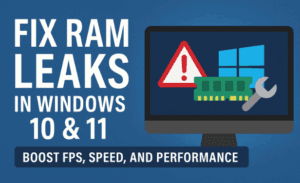
If you’ve opened Task Manager on your Windows PC and noticed an overwhelming number of background processes, you’re not alone. Many of these processes can increase system load, slow down performance, and even impact your FPS during gaming sessions. Thankfully, there are a few strategic tweaks you can apply to lower the overall process count and improve performance — especially helpful for gamers and power users.

In this article, we’ll go through step-by-step methods to reduce background processes in Windows 11, using built-in settings and configuration tools, all while ensuring you don’t disable anything critical to system functionality.
1. Should You Use the “SvcHostSplitThresholdInKB” Tweak?
One tweak that has gained popularity is changing the SvcHostSplitThresholdInKB registry key to potentially reduce process count.
How to Access It:
- Press
Win + R, typeregedit, and press Enter. - Navigate to:
HKEY_LOCAL_MACHINE\SYSTEM\CurrentControlSet\Control - Find the entry named SvcHostSplitThresholdInKB.
The theory is that by setting this value to match your system’s installed RAM (in KB), Windows will consolidate services under fewer svchost.exe instances, appearing as fewer processes in Task Manager.
Note: This does not truly reduce the number of processes; it just groups them, making it appear as fewer entries.
Our Verdict:
After testing, this tweak didn’t produce noticeable performance improvements or FPS gains. It’s more of a cosmetic change than an actual performance booster. Additionally, editing registry values without full understanding may cause unintended issues.
Recommendation: Skip this tweak unless you’re comfortable reverting registry changes or using system restore.
2. Disable Startup Programs via Settings
Startup applications can severely impact system boot times and background process count.
How to Disable Them:
- Open Settings → Apps → Startup.
- Sort the list by Startup impact to identify high-impact applications.
- Disable any apps you don’t use daily.
Examples of apps you can consider disabling:
- Microsoft Edge (if using another browser)
- OneDrive (if not syncing)
- Riot Games or Epic Games Launcher (unless frequently gaming)
- Microsoft Bing Services
- Vanguard Tray Notification (for non-Valorant players)
Pro Tip: Some apps like Epic Games Launcher may be convenient to leave enabled if you use them regularly.
3. Disable Background Apps in Installed Apps Settings
In Windows 11, you can stop apps from running in the background individually.









Here’s How:
- Go to Settings → Apps → Installed Apps.
- Click the three dots next to any app you don’t use regularly.
- Select Advanced Options.
- Under Background app permissions, choose Never.
This doesn’t uninstall the app — it just prevents it from consuming resources in the background.
Good candidates to disable include:
- Maps
- Cortana
- Any pre-installed apps you don’t use
4. Disable Unnecessary Windows Services
Windows runs several background services — some of which you might not need.
How to Manage Services:
- Press
Win + R, typeservices.msc, and press Enter. - Look for the following services and consider disabling them:
| Service Name | Safe to Disable If… |
|---|---|
| Connected User Experiences and Telemetry | You don’t want to send diagnostics to Microsoft |
| Downloaded Maps Manager | You don’t use offline maps |
| Print Spooler | You don’t use a printer |
| Windows Biometric Service | You don’t use fingerprint scanning |
| Windows Insider Service | You’re not in the Windows Insider program |
To disable:
- Right-click on a service → Properties
- Set Startup type to Disabled
- Click Apply → OK
⚠️ Warning: Do not disable services without researching their purpose. Disabling essential services can break functionality like Bluetooth, networking, or system updates.
5. Adjust Windows Visual Effects for Performance
Reducing visual animations can lower CPU and GPU usage slightly and make your system feel snappier.
To Adjust for Best Performance:
- Press
Win + R, typeSystemPropertiesPerformance.exe, and press Enter. - In the Performance Options window, select Adjust for best performance.
- Then, re-check the following for basic usability:
- Animations in the taskbar
- Show thumbnails instead of icons
- Show window contents while dragging
- Smooth edges of screen fonts
Click Apply → OK.
Final Thoughts
Reducing your system’s process count and background activity isn’t just about raw numbers in Task Manager — it’s about ensuring your system runs only what you need, when you need it. While some tweaks like the registry edit may not yield tangible performance improvements, adjusting startup apps, background permissions, and unnecessary services can result in faster boot times, lower RAM usage, and smoother gaming performance.
Useful Links
- 🔗 Windows Services Guide (Microsoft)
- 🔗 Windows 11 Official Help
- 🔗 Epic Games Launcher
- 🔗 Microsoft OneDrive
Disclaimer
This article involves editing system settings and services. Please proceed with caution. It’s strongly recommended to create a System Restore Point before making changes. Disabling the wrong service or modifying registry entries can lead to system instability.
Tags
Windows 11 optimization, reduce background processes, improve FPS, task manager tweaks, startup programs, registry tweak, background apps, disable Windows services, performance boost, gaming performance, PC optimization, adjust for best performance
Hashtags
#Windows11 #GamingPerformance #PCOptimization #BackgroundProcesses #TaskManagerTips #StartupApps #WindowsServices #FPSBoost #RegistryTweak #Windows11Tips