Google Chrome is one of the most popular web browsers, but many users don’t realize that a few simple tweaks can significantly enhance its performance, security, and usability. Whether you’re a casual user or a power user, optimizing Chrome can make your browsing experience smoother and more efficient.
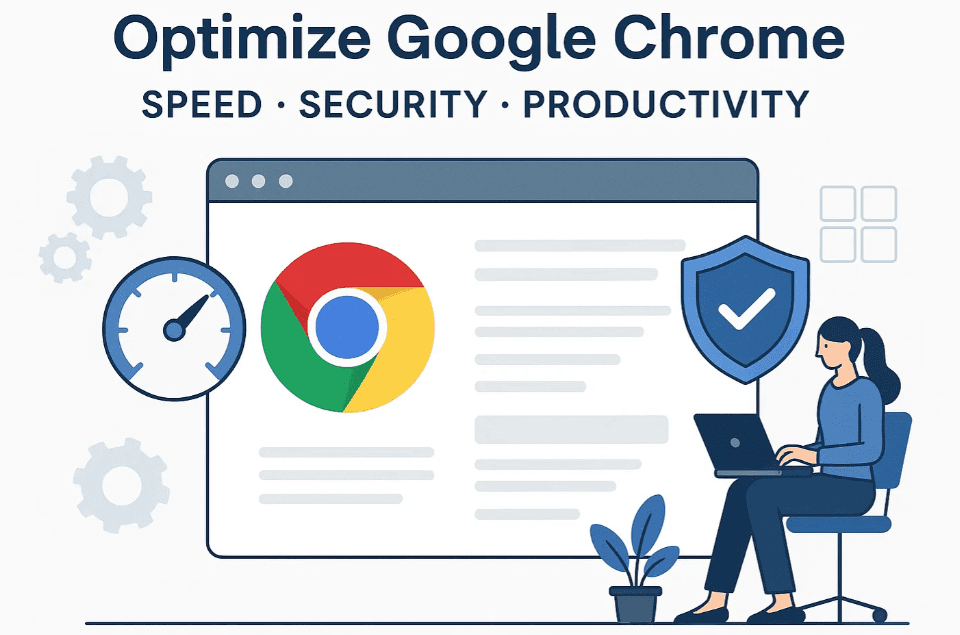
In this guide, we’ll walk you through step-by-step optimizations, troubleshooting common issues, and the best extensions to supercharge Chrome in 2025.
Part 1: Make Chrome Faster, Safer, and More Comfortable
1. Update Chrome Regularly
The first and most crucial step is ensuring you’re using the latest version of Chrome. Updates include security patches, bug fixes, and performance improvements.
How to update Chrome:
- Click the three-dot menu (⋮) in the top-right corner.
- Go to Help > About Google Chrome.
- If an update is available, Chrome will install it automatically.
- Click Relaunch to restart the browser.
🔹 Why it matters: Running the latest version keeps your browser secure and fast.
2. Set Your Startup Pages
If you frequently visit the same websites (like Gmail, Google Docs, or news sites), set them to open automatically when Chrome launches.
How to set startup pages:
- Go to Settings > On startup.
- Select Open a specific page or set of pages.
- Add your preferred URLs.
🔹 Pro Tip: This saves time by loading your most-used sites instantly.
3. Change Your Default Search Engine
Chrome defaults to Google, but if you prioritize privacy, consider alternatives like:
- DuckDuckGo (Privacy-focused)
- Startpage (Google results with privacy)
How to change your search engine:
- Go to Settings > Search engine.
- Choose your preferred search provider.
4. Customize Chrome’s Appearance
Personalize Chrome for better readability and aesthetics.





How to customize appearance:
- Go to Settings > Appearance.
- Select a theme (Dark Mode is great for night browsing).
- Toggle the bookmarks bar (Ctrl+Shift+B to show/hide).
- Adjust font size for better readability.
5. Manage Download Locations
Avoid losing files by setting a default download folder or prompting Chrome to ask where to save each file.
How to manage downloads:
- Go to Settings > Downloads.
- Choose a default folder or enable “Ask where to save each file before downloading.”
6. Use Multiple Profiles (Work & Personal)
If you share Chrome with others or want to separate work and personal browsing, use profiles.
How to set up profiles:
- Go to Settings > You and Google.
- Click Add under “Profiles.”
- Sign in with a different Google account (optional).
🔹 Bonus: Syncing lets you access bookmarks, passwords, and history across devices.
7. Organize Bookmarks with Folders
Too many bookmarks? Keep them tidy with folders.
How to organize bookmarks:
- Press Ctrl+Shift+O to open the bookmarks manager.
- Right-click to create folders and drag bookmarks into them.
- Export bookmarks (as HTML) to back them up.
8. Control Site Permissions for Privacy
Some websites request access to your camera, microphone, or location. Restrict permissions for untrusted sites.
How to manage site permissions:
- Go to Settings > Privacy and security > Site Settings.
- Adjust permissions for camera, microphone, location, notifications, etc.
🔹 Security Tip: Block notifications from spammy sites.
Part 2: Fixing Common Chrome Problems
1. Chrome is Slow or Laggy?
Solutions:
- Clear cache & browsing data (Ctrl+Shift+Delete).
- Disable hardware acceleration (Settings > System).
- Close unused tabs (Too many tabs consume RAM).
- Disable unnecessary extensions (chrome://extensions).
2. Chrome Won’t Open or Keeps Crashing?
Solutions:
- Launch Chrome in Safe Mode (disable extensions).
- Reinstall Chrome (Download from Google Chrome’s official site).
3. Websites Won’t Load?
Troubleshooting steps:
- Check internet connection (Try another browser).
- Flush DNS (Open Command Prompt →
ipconfig /flushdns). - Disable proxy settings (Settings > System > Open proxy settings).
4. Passwords Not Syncing?
Fix:
- Go to Settings > Sync and Google services.
- Ensure Sync is turned on.
- Sign out and sign back in.
5. Video/Audio Not Working?
Fix:
- Disable hardware acceleration (Settings > System).
- Update audio/video drivers.
6. Extensions Not Working?
Fix:
- Update extensions (chrome://extensions).
- Reinstall problematic extensions.
7. High CPU/Memory Usage?
Fix:
- Open Chrome’s Task Manager (Shift+Esc).
- Identify and close memory-heavy tabs/extensions.
8. Reset Chrome to Default Settings
If all else fails:
- Go to Settings > Reset settings.
- Click Restore settings to their original defaults.
⚠️ Disclaimer: Resetting won’t delete bookmarks or passwords but will reset preferences.
Part 3: Best Chrome Extensions in 2025
Extensions enhance Chrome’s functionality, but too many can slow it down. Here are the top picks:
Must-Have Extensions
- uBlock Origin – Best ad-blocker (lightweight & privacy-friendly).
- Todoist – Task manager for productivity.
- Checker Plus for Gmail – Get email notifications without opening Gmail.
Extension Tips:
✔ Install only trusted extensions (Check reviews & developer info).
✔ Disable unused extensions to save memory.
✔ Test extensions if Chrome misbehaves (disable one by one).
Final Thoughts
Optimizing Chrome takes just a few minutes but drastically improves speed, security, and usability. Follow these steps to:
✅ Speed up Chrome (Clear cache, disable bloat).
✅ Enhance privacy (Change search engine, restrict permissions).
✅ Fix common issues (Crashes, sync problems, high CPU usage).
✅ Boost productivity (Use extensions wisely).
Have questions? Drop them in the comments!
Tags:
Google Chrome, Browser Optimization, Chrome Tips, Speed Up Chrome, Chrome Extensions, Privacy, Productivity
Hashtags:
GoogleChrome #BrowserTips #ChromeOptimization #TechTips #Productivity #PrivacyMatters
🔗 Download Chrome: Official Google Chrome Website
Disclaimer: Some extensions may impact browser performance. Always download from trusted sources like the Chrome Web Store.