In recent years, India has seen a massive rise in digital adoption — from government offices to private organizations, almost every department is now digitizing its operations.
One major shift happening quietly but significantly is the transition from Gmail to Zoho Mail — especially within Indian government bodies and public institutions.
This move is part of a larger effort to reduce dependency on foreign services and adopt homegrown, data-secure alternatives. Zoho Mail, a product of India’s very own Zoho Corporation, has emerged as one of the best alternatives to Gmail for professional and institutional use.
If you’ve been using Gmail and are now planning to switch to Zoho Mail, you might be wondering:
“Will my old emails disappear after switching?”
The good news — nothing gets deleted. You can migrate all your old Gmail emails, contacts, and calendar entries to Zoho Mail without losing any data. In this article, we’ll go through this process step by step, covering every detail you need to know.
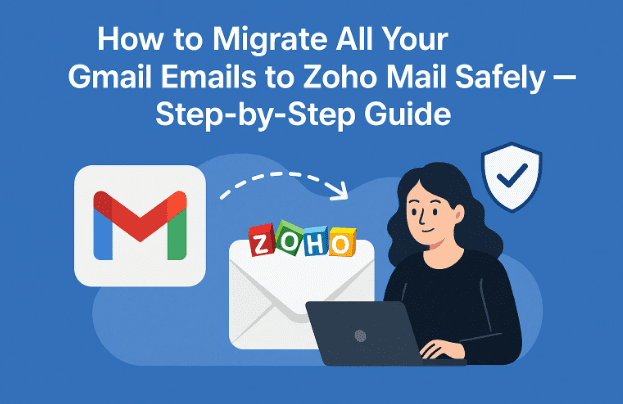
💡 1. What Is Zoho Mail and Why It’s Replacing Gmail
Zoho Mail is a professional email service built by Zoho Corporation, an Indian software company known for its enterprise tools like CRM, Docs, and Meeting.
It provides a complete suite of email and productivity tools similar to Google Workspace — but with one key difference:
All your data is hosted and stored in India, under Indian privacy laws.
This is a major reason why many government departments and public organizations are now preferring Zoho Mail over Gmail. It gives them:
- Data sovereignty — your data never leaves the country.
- Enhanced privacy controls under Indian jurisdiction.
- Affordable enterprise pricing without international exchange costs.
2. Why Indian Departments Are Switching to Zoho Mail
Over the last few years, several Indian ministries, educational institutions, and even small private firms have started migrating their communication systems to Zoho Mail.
Here are some reasons behind this transition:
- Local data storage: Ensures compliance with Indian data protection norms.
- Full Gmail-like interface: Makes switching easy for employees.
- Integration with other Zoho apps: Like Zoho WorkDrive, Zoho Projects, and Zoho Cliq.
- Security features: End-to-end encryption, spam protection, and zero-ad tracking.
Now that you understand the reason for the switch, let’s move on to setting up your account.








🧑💻 3. How to Create a Zoho Mail Account
To begin the migration, you first need an active Zoho Mail account.
Step 1: Visit the Zoho Mail website
Go to 👉 https://www.zoho.com/mail
Here, you’ll find two main options:
- Create a new Zoho Mail account (for individuals)
- Set up Zoho Mail with your company domain (e.g., yourcompany.com)
If you’re an organization or institution, it’s highly recommended to use the domain-based option, as it allows branded email addresses like info@yourcompany.com.
Step 2: Verify your domain
Zoho will ask you to verify domain ownership by adding a DNS record. This ensures only authorized users can configure emails for that domain.
Step 3: Log in to Admin Console
Once verified, visit 👉 https://admin.zoho.com.
This opens the Zoho Mail Admin Console, where you can manage:
- User accounts
- Groups and aliases
- Data migration
- Email routing and security settings
⚙️ 4. Understanding Zoho Mail Admin Console
Think of the Admin Console as the control panel for your entire Zoho Mail system.
From here, you can:
- Add or remove users
- Manage access permissions
- Set up email forwarding rules
- Control data migration from other platforms like Gmail, Outlook, or Yahoo
Now that you’re inside, let’s move forward to the migration section.
📤 5. How to Start Gmail-to-Zoho Data Migration
In the Admin Console sidebar, navigate to:
Admin Console → Data Migration → Start Migration
You’ll now be prompted to select a migration type.
Choose:
One-click Migration
Then, from the list of sources, select:
Google Workspace (Gmail)
This tells Zoho that you’ll be migrating data from Gmail.
Next, Zoho will ask for authorization to access your Gmail data securely through Google APIs.
🔑 6. Authorizing Zoho to Access Your Gmail Account
Zoho doesn’t automatically copy your Gmail data — you must grant permission first.
Here’s how:
- Click Authorize when prompted.
- Sign in with your Gmail account.
- Approve the access request to allow Zoho to read your Gmail data securely.
This step ensures your Gmail is safely linked with Zoho’s migration tool using encryption and OAuth verification — no passwords are stored by Zoho.
📁 7. Transferring Emails, Contacts, and Calendars
Once authorized, Zoho will ask:
“Which data would you like to migrate?”
You can choose:
- Emails
- Contacts
- Calendar events
You can also filter specific folders, set a date range, or exclude certain mail categories to make the process faster.
When ready, click Start Migration.
✅ The migration runs in the background, so you can continue using your computer as normal.
🔐 8. Handling Gmail 2-Step Verification (App Password Method)
If your Gmail account uses 2-Step Verification (2FA), you’ll need to generate an App Password before Zoho can connect.
Follow these steps:
- Go to your Google Account → Security.
- Under “Signing in to Google”, select App Passwords.
- Generate a new app password for “Zoho Mail.”
- Copy the generated 16-character password.
You’ll use this app password instead of your usual Gmail password when setting up IMAP migration.
🧠 9. Setting Up IMAP Server Migration Manually (Advanced Method)
If for any reason you prefer a manual setup or your organization wants full control, you can use IMAP-based migration.
In Zoho Admin Console:
Admin → Data Migration → Add New Server
Fill in the following details:
| Field | Value |
|---|---|
| Source | Gmail |
| Server Address | imap.gmail.com |
| Port | 993 |
| Security | SSL |
| Username | Your Gmail address |
| Password | The App Password you generated earlier |
Now select the folders or mail labels you want to transfer.
Once everything is selected, click Start Migration.
This method offers greater flexibility if you want to migrate only specific folders or user accounts.
🕒 10. Monitoring Migration Progress
Migration time depends on your mailbox size.
- Small accounts (under 2 GB) may finish in an hour or two.
- Large accounts (10 GB+) can take up to 24–48 hours.
To check the progress:
- Go to Admin Console → Data Migration → Migration Progress.
- Here, you’ll see detailed status reports for each user.
Zoho processes emails in batches, so don’t worry if not all messages appear immediately.
🌐 11. Changing MX Records to Route All Future Emails to Zoho Mail
Once migration is done, the next step ensures new incoming emails land in Zoho Mail — not Gmail.
You’ll need to update your domain’s MX (Mail Exchange) records.
Steps:
- Log into your domain registrar (like GoDaddy, Namecheap, BigRock, etc.).
- Find DNS Settings or Zone Editor.
- Delete existing Gmail MX entries.
- Add the following Zoho Mail MX records:
| Priority | Mail Server |
|---|---|
| 10 | mx.zoho.in |
| 20 | mx2.zoho.in |
| 50 | mx3.zoho.in |
Save the settings — DNS propagation may take a few hours.
Once updated, all future emails for your domain will arrive directly in Zoho Mail.
📬 12. Setting Up Forwarding in Gmail for Backup
To ensure no email gets missed during the transition, set up Gmail Forwarding temporarily.
How:
- Open Gmail → Settings (⚙️) → See all settings.
- Go to the Forwarding and POP/IMAP tab.
- Click Add a forwarding address and enter your Zoho Mail address.
- Confirm via the verification email Zoho will send.
Now, any new email received in Gmail will automatically be forwarded to Zoho Mail — acting as a backup until DNS updates are fully live.
🧹 13. Tips to Keep Zoho Mail Organized After Migration
Once your emails are successfully migrated, here are a few steps to keep your new Zoho account clean and efficient:
- 🧾 Delete unnecessary emails in Gmail before migrating — this reduces migration time.
- 🗂️ Use folders and filters in Zoho to categorize old emails.
- 🔔 Set up spam filters to avoid unnecessary junk mail.
- 💾 Regularly back up important emails or export archives periodically.
So far, you’ve done an excellent job completing all major steps — your new Zoho Mail account should now be fully operational.
❓ 14. Frequently Asked Questions
Q1. Will my old Gmail emails be deleted after migration?
No, migration only copies your data — your Gmail account remains intact unless you delete messages manually.
Q2. Can I move emails from multiple Gmail accounts to one Zoho account?
Yes, but you’ll need to repeat the migration process separately for each Gmail account.
Q3. What if my migration stops midway?
Check your internet connection and Zoho Admin “Migration Progress” logs. If needed, you can safely restart migration — it will resume from where it left off.
Q4. Do I need a paid Zoho Mail plan for migration?
Basic migration works with the free Zoho Mail plan, but business domains and multiple-user transfers require a paid plan.
Q5. What happens to attachments and calendar invites?
All attachments, contacts, and calendar events migrate seamlessly. Zoho Mail maintains the folder structure and time stamps exactly as in Gmail.
🌟 15. Final Thoughts
Migrating from Gmail to Zoho Mail may feel like a big step, but it’s simpler than it sounds — especially when you follow the process carefully.
Zoho Mail offers everything Gmail does, and more importantly, it keeps your data safe within India’s jurisdiction.
For individuals, this means better privacy. For organizations and government bodies, it ensures compliance with data protection laws and national digital sovereignty.
So, whether you’re moving for security, performance, or simply to go “vocal for local,” Zoho Mail is a solid alternative that blends reliability with independence.
⚠️ Disclaimer
This guide is for informational and educational purposes only. Data migration between Gmail and Zoho Mail should comply with your organization’s IT and data policies. Always verify domain and MX settings carefully before switching live email services.
Tags:
Zoho Mail, Gmail to Zoho Migration, Email Transfer, Indian Email Services, Zoho Admin Console, Data Privacy, MX Records Setup, Email Forwarding
Hashtags:
#ZohoMail #GmailMigration #EmailSetup #DataPrivacy #MadeInIndia #DigitalIndia #TechGuide