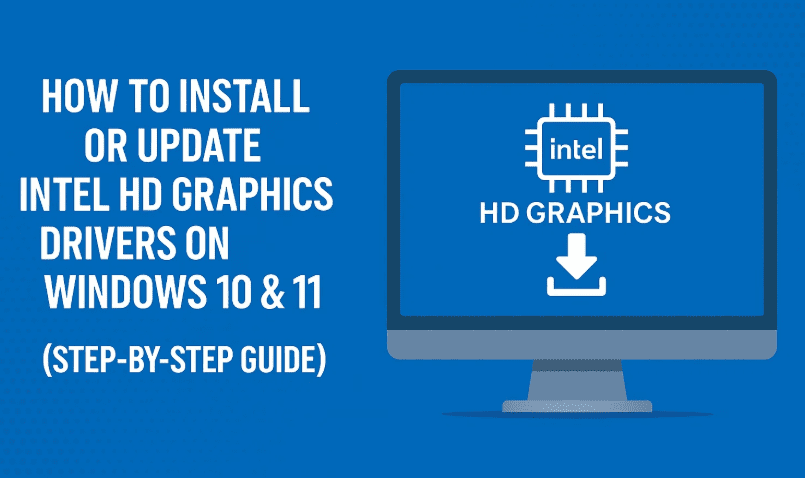
Keeping your Intel HD Graphics drivers up to date ensures optimal performance for gaming, video playback, and everyday computing. Whether you’re using Windows 10 or Windows 11, this detailed guide walks you through both automatic and manual methods to update or install the latest Intel graphics drivers safely and correctly.
🚀 Why Update Your Intel Graphics Driver?
Updating your graphics driver can:
- Fix display issues and bugs
- Boost gaming performance
- Improve compatibility with new software and operating systems
- Ensure smooth HD video playback
Whether you’re a gamer, video editor, or regular user, this guide has you covered.
🔧 Method 1: Use the Intel® Driver & Support Assistant (Recommended)
This tool automatically scans your PC and finds the exact graphics driver you need.
🪜 Steps to Follow:
- Open a Web Browser (Chrome, Firefox, Edge – your choice).
- Go to the official Intel website:
https://www.intel.com - In the search bar, type Intel Driver and Support Assistant and hit Enter.
- Click the link titled Intel® Driver & Support Assistant.
- Click the Download Now button.
- Once downloaded, locate the
.exefile in your Downloads folder and double-click to start installation. - Follow on-screen prompts:
- Accept the license agreement
- Decline the Intel improvement program (optional)
- Once installed, click Launch.
- It will open in your browser and automatically scan your system.
- If an update is available for your Intel HD Graphics, click Download next to it.
- Follow the on-screen instructions to install it.
- Once complete, restart your PC when prompted.
🛠️ Method 2: Manually Install the Intel Graphics Driver
Prefer more control or want to install a specific version? This method is for you.
Step 1: Identify Your Processor
- Right-click Start and choose System.
- Look under Processor to identify your Intel CPU (e.g., Intel Core i5-7500).
- The first digit of the processor number indicates the generation (e.g., i5-7500 = 7th gen).
- Note your processor and generation for later.
Step 2: Find the Correct Driver
- Open a browser and return to:
https://www.intel.com - In the search bar, type:
Intel HD Graphics Driver - Click the result linking to the Intel Download Center or Drivers List.
- Use the filter to select your graphics model (e.g., Intel HD Graphics 620 or Intel UHD Graphics 630).
- You can also filter by processor generation if unsure.
- Select your operating system: Windows 10 or 11.
- Click the Download button for the latest driver.
Step 3: Install the Driver
- Once downloaded, go to your Downloads folder.
- Double-click the
.exefile to launch the installer. - Follow the installation wizard:
- Click Begin Installation
- Accept the Terms and Conditions
- Choose Clean Installation (recommended)
- Wait for installation to complete.
- Restart your PC when prompted.
✅ How to Verify the Driver Installed Successfully
- Right-click Start and choose Device Manager.
- Expand the Display adapters section.
- You should see your Intel HD/UHD Graphics listed (e.g., Intel HD Graphics 620).
- No yellow warning icons means it’s working properly.
- Right-click the device > Properties > Driver tab
- Check Driver Version and Driver Date.
You might be intrested in these topics too!
- How to Boot Windows 11 into Safe Mode (2025 Guide): Step-by-Step for Beginners and Experts
- Fixyfier: The All-in-One Free Windows Repair Tool for Everyone
- The Ultimate Guide to Troubleshooting 30 Common Desktop PC Problems
- 5 Best Way to Automatic Repair Loop and “Startup Repair Couldn’t Repair Your PC” Error
- How to Debloat Windows 10 and 11 Without Any Third-Party Software
💡 Pro Tips Before Updating
🔌 Tip 1: Disconnect Internet Temporarily
To avoid Windows reverting to an older driver version during install, disconnect from the internet before installation.
🕹️ Tip 2: Create a Restore Point
Just in case something goes wrong, create a system restore point first.
Steps:
- Search Create a restore point in the Windows search bar.
- In System Properties, click Create.
- Name the restore point and confirm.
- Done — you now have a safety net.
❓ Frequently Asked Questions (FAQs)
Q1: Do I need to uninstall the previous driver first?
A: Not usually. The installer will overwrite the old one. But if you have issues, try a clean install or uninstall manually before updating.
Q2: What if I don’t see Intel HD Graphics in Device Manager?
A: Your device may use another GPU (like NVIDIA/AMD), or your driver is missing. Use the Intel Driver Assistant or install the driver manually.
Q3: I get a black screen after installing – what do I do?
A: Boot into Safe Mode, roll back the driver, or use the restore point you created earlier.



📌 Tags:
intel hd graphics driver, intel driver support assistant, graphics driver update windows 11, update intel driver manually, windows 10 display driver, how to fix intel graphics, intel graphics install guide
📢 Hashtags:
#IntelGraphics #Windows11 #DriverUpdate #TechSupport #DisplayDriver #IntelSupport #HDGraphics
🔗 Official Software Link:
Intel Driver & Support Assistant:
https://www.intel.com/content/www/us/en/support/intel-driver-support-assistant.html
🛡️ Disclaimer:
This guide is meant for educational and troubleshooting purposes. Always download drivers from official sources only like Intel.com to avoid malware or driver conflicts. Proceed with caution and create a system restore point before making major changes.
Keeping your graphics drivers up-to-date ensures your PC can handle anything from Netflix binge sessions to casual gaming and even video rendering. So go ahead, follow these steps, and give your visuals a performance boost!