You’ve already stepped into the creative world—graphic design, motion, photography, editing, content writing—now you want to grow faster, earn better, and lead. This article lays out a grounded path, inspired by a real journey from low pay and frustrating gigs to managing brands, negotiating meaningful raises, and building an agency/academy. No shortcuts, no vague “follow your passion” lines—just concrete, field-tested steps.
Before we begin, a quick note on style: you’ll see numbered sections, clear bullet lists, and small “let’s move” transitions so it reads like a human mentor guiding you. If something feels unclear, I’ll propose the better alternative right there.
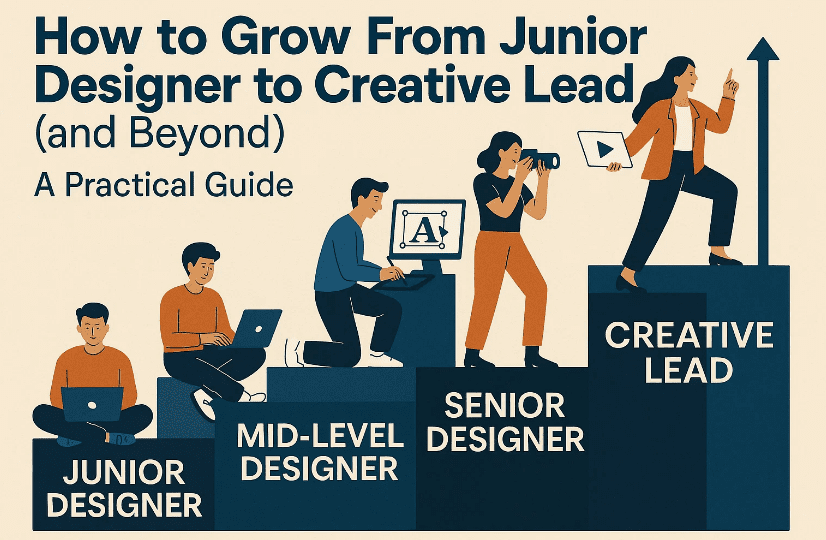
Table of Contents
- 1 Who This Guide Is For
- 2 The Three Pillars: Skill, Personality, Honesty
- 3 The Creative Industry Map (So You Don’t Wander)
- 4 Pick a Lane—Then Pivot When the Market Shifts
- 5 Why Small Teams and Startups Accelerate Growth
- 6 From ₹16k to ₹80k+: A Realistic Salary Trajectory (and How to Ask)
- 7 Portfolios That Actually Hire You
- 8 Your 30-60-90 Day Plan to Become Indispensable
- 9 Communication and Presence: Sound (and Be) Like a Lead
- 10 Freelancing Ethically Alongside a Job: Pipeline, Pricing, Templates
- 11 What Creative Heads Really Do (Daily Responsibilities)
- 12 When to Start Your Agency or Academy (Decision Checklist)
- 13 The Honesty Advantage (Your Quiet Multiplier)
- 14 The “Universe Effect”: Luck Favors the Prepared
- 15 Tools That Matter (Official Links)
- 16 FAQ: Common Career Dilemmas Answered
- 17 One-Page Action Checklist
1 Who This Guide Is For
Let’s set expectations. This guide is meant for people who can already open the software and ship a decent deliverable, but want to level up fast:
- Junior/mid designers stuck at a plateau
- In-house creators (social, packaging, e-commerce) wanting bigger scope
- Motion/photography/video/content folks looking to move into strategy and leadership
- Freelancers who want steadier pipelines and better pricing
If you’re a first-timer, bookmark this for later and start with fundamentals; otherwise, let’s move.
2 The Three Pillars: Skill, Personality, Honesty
So far, many creatives obsess over tools alone. In reality, you’ll grow on three fronts:
- Skill: craft quality + speed (design systems, motion timing, typography, color, layout, camera basics, editing flow).
- Personality: how you show up (ownership, clarity, calm under pressure, curiosity, reliability).
- Honesty: the underrated edge (transparent estimates, fair dealing, giving credit, protecting client budgets, doing the right thing when unseen).
Think of it like this: skill opens doors, personality keeps you in the room, honesty makes people fight to keep you there.
3 The Creative Industry Map (So You Don’t Wander)
Before charging ahead, map the terrain. Otherwise you’ll “work hard” in the wrong direction.
- Agencies (advertising/digital/brand): multi-client, fast pace, exposure to strategy and campaigns; great for leveling up quickly.
- In-house brands/startups: end-to-end ownership; you see brief → production → performance → iteration.
- Specialist studios (motion/CGI/VFX/packaging/editorial): deep craft mastery; excellent if you love going “pro-level” in one thing.
- Freelance/consulting: freedom, pricing power, and client selection—requires business hygiene, pipeline building, and consistent delivery.
You can move between these. The key is knowing why you’re in each season.
4 Pick a Lane—Then Pivot When the Market Shifts
Let’s keep this practical. Early on, choose a lane in demand (social design, e-commerce content, motion cutdowns, packaging). As the market shifts, pivot on purpose:
- Ten years ago, 2D motion had limited mainstream demand in many Indian companies; today it powers ads, reels, explainers, product demos.
- Packaging and e-commerce visuals used to be “nice to have”; now they’re decisive for conversion.
- Camera literacy and light audio cleanup are helpful even for designers; shoots stall less when you can guide or fill gaps.
Rule of thumb: specialize for leverage, generalize for resilience. Go deep in one area, but keep adjacent skills warm so you can cross bridges when the market moves.



5 Why Small Teams and Startups Accelerate Growth
Let’s move to something counter-intuitive. Big names look great on LinkedIn; small teams can grow you faster:
- You touch the whole funnel: social, email, packaging, landing pages, motion, shoots.
- You see cause and effect quickly (campaign → metrics next week).
- Your suggestions get implemented, not archived.
- You become indispensable because you’re not one of fifty; you’re one of five.
This is how many creatives jump from “asset maker” to creative problem-solver—the persona that commands real raises.
6 From ₹16k to ₹80k+: A Realistic Salary Trajectory (and How to Ask)
Here’s a composite, real-world trajectory (2–4 years; your mileage will vary):
- Stage 1 (₹16–28k): join a small brand/agency; ship consistently; volunteer for stretch work (light motion, basic scripts, vendor coordination).
- Stage 2 (₹28–40k): own multi-disciplinary tasks; storyboard; guide editors/illustrators; handle production logistics.
- Stage 3 (₹40–70k): become the dependable owner; lead campaigns; manage vendors; present to stakeholders; reduce rework.
- Stage 4 (₹70–90k+): act as brand creative lead; mentor juniors; define repeatable systems; report outcomes.
Now, how you ask matters more than when.
Prepare before you ask
- Maintain a one-pager of outcomes (not outputs):
- “Email redesign lifted CTR by 18%”
- “Motion hook cut CPC by 23%”
- “Packaging refresh improved retailer acceptance in 1 round”
- Remove a bottleneck: shoots stall? learn basic camera ops; feedback messy? create a review checklist; approvals slow? propose a brief template.
- Close loops: public timelines, status updates, and on-time delivery build trust.
Use a clear script
“Over the last 9 months I led campaigns X and Y, introduced Z workflow that cut revisions by ~30%, and mentored two juniors who now deliver independently. Given the expanded scope and results, I’m asking for a move from ₹40k to ₹70k. If it’s not immediate, can we set a 60-day plan with concrete targets?”
You’re not pleading—you’re aligning pay with value already delivered.
7 Portfolios That Actually Hire You
Let’s tidy this up. Recruiters and founders skim in 10 seconds to decide if you earn 2 minutes more.
Make it scannable
- Showcase 3–6 case studies (not 30 thumbnails).
- Each case is one story: problem → your role → process → results.
- Show thinking: 2–6 slides of sketches, boards, iterations.
- Show outcomes: numbers when allowed; else proxies (“approved in first round,” “cut production cost by one shoot day,” etc.).
Case-study skeleton (copy this)
- Snapshot: 1 hero visual + 1-line goal
- Context: brand, audience, constraints
- Role & collaborators: who did what (credit others!)
- Process: brief → concept → exploration → production
- Finals: hero stills + motion stills/GIFs
- Outcome: metrics, testimonials, approvals
- What I’d improve next time: shows maturity
Keep a private “scrapbook” during projects—screens, notes, A/Bs—so turning work into case studies takes hours, not weeks.
8 Your 30-60-90 Day Plan to Become Indispensable
So far so good—now a step-by-step play you can reuse in any new role.
Days 0–30: Learn and map
- Absorb brand guidelines, tone, constraints.
- Meet marketing/product/performance/sales/legal/production; ask: “What slows you down about creative?”
- Ship quick wins: fix file structure, make a motion bumper, set export presets.
- Document the workflow: brief → concept → review → versioning → delivery.
Days 31–60: Fix and lead
- Propose 2–3 friction removers (brief template, review checklist, render pack).
- Own one campaign end-to-end.
- Set timelines publicly; close loops; ask for specific feedback.
- Start mentoring a junior (multiplies you).
Days 61–90: Scale and measure
- Build a reusable system (social kit: sizes, type scales, motion timings).
- Measure outcomes and report them simply.
- Present a 10-slide recap: “what we fixed + next quarter’s plan.”
- Ask for the raise/title change using your receipts.
9 Communication and Presence: Sound (and Be) Like a Lead
Leads aren’t the loudest; they’re the clearest.
- Headlines first, then detail: “Two routes—fast ‘good’ by Friday, or slower ‘great’ by Tuesday. Which do you prefer?”
- Status pings: “Campaign A—concepts done; need sign-off on scripts 1–3; ETA Friday 5pm.”
- Defend choices with intent: “We picked this type for legibility on 10pt packs; avoided serifs due to smearing in flexo.”
- Say ‘don’t know’ + plan: “I don’t know yet; I’ll test both hooks tonight and share a cut by 11am.”
- If English isn’t first language: clarity beats flourish. Prepare meeting phrases and recap decisions in writing.
10 Freelancing Ethically Alongside a Job: Pipeline, Pricing, Templates
Quick reality check: always obey your employment contract and local laws. Avoid conflicts; use your own gear.
Pipeline (no marketplaces needed)
- Warm network: ex-managers, friendly agencies, founders who’ve seen your work.
- Light outreach: 10 useful emails/week based on a visible problem (sample below).
- Referrals: deliver on time, be easy to work with, and ask for intros.
Rate ladder (adapt to scope/market)
- Social pack/short motion: ₹8k–₹15k
- Mini-campaign (3–5 assets, light motion): ₹20k–₹50k
- Identity or multi-asset launch (motion + static + adaptations): ₹60k–₹1.5L+
Cold email you can adapt
Subject: Quick idea to lift [brand]’s [channel]
Hi [Name], I like how you position [product] around [benefit]. Your [Instagram/ads] rely on static visuals—here are two rough motion hooks that could improve first-3-second hold. If you’d like, I can turn this into a 5-asset test pack by [date]. Ballpark ₹[X]. If it wins, we can standardize the style into a monthly kit.
Either way, congrats on [recent launch].
—[You], [portfolio link]
One-pager agreement essentials (consult a lawyer for real contracts)
- Scope & revision count
- Milestones & delivery format
- Payment terms (advance + on delivery)
- Usage rights (where/how long)
- Confidentiality & credits
- Kill fee (if project stops mid-way)
11 What Creative Heads Really Do (Daily Responsibilities)
From the outside it looks like “meetings and sofa time.” In reality, heads own risk and standards:
- Standards: define “good” with real examples.
- Process: simple, repeatable steps so juniors don’t guess.
- Delegation: clear owners, deadlines, review dates.
- Coaching: critique the work, not the person; offer 1–2 concrete alternatives.
- Responsibility: if print is wrong or TVC misses the brief, the call comes to you—that’s why the role pays more.
Creative review checklist
- On-brief? (audience, single message, CTA)
- On-brand? (type, color, tone, logo use)
- Accessible? (contrast, sizes, legibility)
- Platform-optimized? (durations, crops, safe areas, exports)
- Measurable? (what are we testing; what outcome expected)
12 When to Start Your Agency or Academy (Decision Checklist)
Let’s move to the big jump many imagine.
Green lights
- You’re turning down paid work due to bandwidth.
- 2–3 anchor clients would legally/ethically follow you.
- You have outcome-driven case studies (not only pretty images).
- 3–6 months of savings runway.
Pick your shape
- Studio: specialize (e.g., performance motion for D2C), hire slowly, build repeatable systems.
- Agency: sell strategy and creative; add account management early.
- Academy: you need empathy, curriculum design, and recent industry proof. Start with cohorts; keep it honest and practical.
13 The Honesty Advantage (Your Quiet Multiplier)
This isn’t moral theater; it’s a growth strategy.
- Credit collaborators, publicly.
- Give realistic estimates—even if a competitor “underquotes.”
- Return or discount when you miss a promise (rare but reputation-making).
- Protect the client’s time and money like it’s yours.
- Keep boundaries with NDAs and conflicts.
Honest creatives get compounding referrals. Over years, that beats any hack.
14 The “Universe Effect”: Luck Favors the Prepared
People call it luck when the right door opens. It’s usually habit compounding:
- Keep learning adjacent skills (camera basics, light audio cleanup, scripts).
- Say yes to stretch assignments, then figure them out.
- Show your work consistently (portfolio, LinkedIn, Behance, Instagram).
- Maintain relationships (send short congrats and helpful notes).
- Own outcomes, not just outputs.
Do this 12–24 months and your path will look “lucky.”
15 Tools That Matter (Official Links)
Let’s keep it focused. Tools don’t replace taste—but good tools save time. Use what fits your context and budget.
Design & Illustration
- Adobe Creative Cloud (Photoshop, Illustrator): https://www.adobe.com/creativecloud.html
- Affinity Designer/Photo: https://affinity.serif.com
- Figma (design + collaboration): https://www.figma.com
- Inkscape (vector, FOSS): https://inkscape.org
- GIMP (raster, FOSS): https://www.gimp.org
Motion & Video
- Adobe After Effects / Premiere Pro: https://www.adobe.com/creativecloud.html
- DaVinci Resolve (edit, color, Fusion): https://www.blackmagicdesign.com/products/davinciresolve
- Blender (3D, FOSS): https://www.blender.org
Asset Management & Handoff
- Adobe Bridge: https://www.adobe.com/products/bridge.html
- Zeplin (handoff): https://zeplin.io
Pick a core stack and master it—tool-hopping kills momentum.
16 FAQ: Common Career Dilemmas Answered
Q1: I’ve delivered solid work for months but my pay hasn’t moved. Switch or stay?
A: Ask once with receipts and a plan. If the company can’t define a path or stalls beyond a cycle, switch. Carry your outcomes doc; it shortens new-role negotiations.
Q2: How do I negotiate without sounding aggressive?
A: Anchor on value and scope, not need. “Here’s what changed in my responsibilities and the results since joining. Based on that, I’m asking for ₹X or a 60-day plan with targets.”
Q3: I’m scared to touch motion/camera/copy—it’s “not my lane.”
A: Start micro: a 10-sec motion bumper, a simple window-light product video, a first-pass script for a writer to refine. Small reps compound.
Q4: Is freelancing while employed okay?
A: Only if your contract permits and there’s no conflict. Keep it outside hours, on your own gear, and never poach clients.
Q5: Do I need perfect English to lead?
A: You need clarity, not poetry. Prepare phrases, run meeting templates, and write crisp recaps. Respect follows reliability.
Q6: When should I start an agency or academy?
A: When work is overflowing, processes exist, clients would follow you legally, and you have savings. Don’t start to escape a tough quarter; start to serve real demand better.
Q7: I keep getting stuck in “make this pretty” work. How do I move to strategy?
A: Ask for the goal behind each request, propose 2 options tied to that goal, and report results. Strategy begins when you talk outcomes and experiments, not only aesthetics.
17 One-Page Action Checklist
This week
- Choose one lane to deepen + one adjacent skill to add (e.g., motion for a static designer).
- Convert one project into a case study with outcomes.
- Install a review checklist (Section 11) for your current work.
- Send 5 warm emails to past managers/clients with one specific, useful idea each.
This month
- Share a 30-60-90 plan with your manager (Section 8).
- Lead one campaign end-to-end.
- Track 3 outcomes (CTR/CPC/revision count/approval speed).
- Rehearse and schedule your raise conversation (Section 6).
This quarter
- Mentor a junior; build a repeatable system (social kit/motion presets).
- Decide: stay and scale, switch roles, or prepare studio/academy.
- Refresh portfolio + LinkedIn/Behance with 2 new case studies.
Disclaimer
Compensation ranges, timelines, and hiring practices vary by country, industry, and company maturity. Always follow your employment agreement and local laws regarding side work, confidentiality, and intellectual property. All product names/logos are trademarks of their respective owners; external links are provided for convenience only.
Tags
graphic design career, motion design growth, creative leadership, portfolio case studies, salary negotiation, freelance pipeline, design agency tips, startup vs agency, artist personality development, honest business practices
Hashtags
#GraphicDesign #MotionDesign #CreativeCareers #DesignLeadership #PortfolioTips #FreelanceLife #SalaryNegotiation #StartupLife #AgencyLife #HonestWork