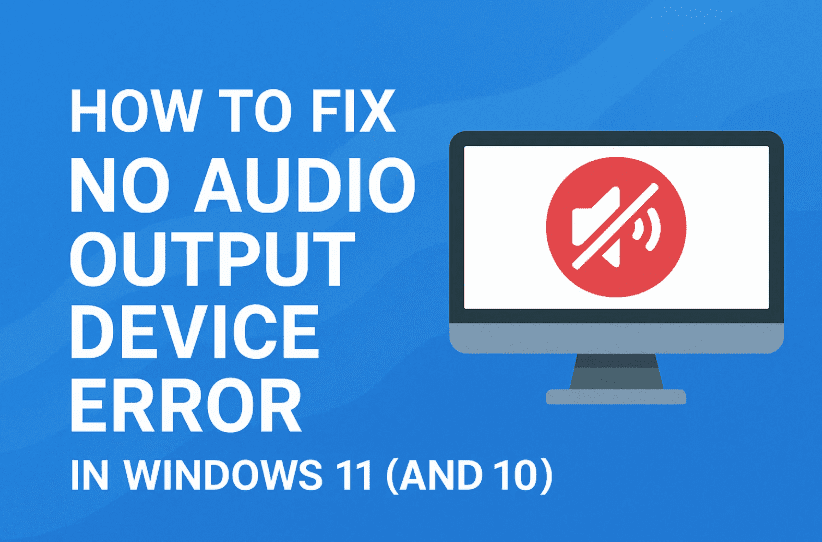
Are you getting a “No Audio Output Device Found” error in Windows 11? Or maybe your sound settings are greyed out, and your PC refuses to play any sound? Don’t worry — you’re not alone, and this problem is fixable.
In this blog post, we’ll walk you through a complete, human-friendly step-by-step guide to troubleshoot and fix audio or sound driver issues in Windows 11 — and the same methods work for Windows 10 too!
Whether you’re seeing errors like:
- ❌ No audio output device installed
- 🔇 Realtek driver missing from Device Manager
- 🧱 Sound not working after a Windows update
This guide is for you!
🔧 Step 1: Check and Restart Windows Audio Services
Let’s begin by ensuring your system’s core audio services are running.
Here’s how:
- Press Windows + S, type services, right-click, and select Run as administrator.
- Inside the Services window, click anywhere and press the W key to scroll down to Windows Audio.
- If it shows Stopped, right-click > Properties.
- Set Startup type to Automatic
- Click Start
- Click Apply and OK
- If it’s already running, right-click and Restart the service.
🔁 Restarting the service refreshes internal audio dependencies that may be stuck.
🎛️ Step 2: Check Sound Settings in Control Panel
Sometimes, the audio device is disabled or not listed.
Do this next:
- Open Control Panel > View by Large Icons
- Click on Sound
- Under the Playback tab, check if your audio device (e.g., Realtek High Definition Audio) is listed.
- If it’s greyed out with a downward arrow, right-click > Enable
- If it’s not listed at all — proceed to the next step.
🛠️ Step 3: Run the Windows Sound Troubleshooter
Windows comes with a built-in troubleshooter that can sometimes fix the problem automatically.
Steps:
- Right-click the speaker icon in the taskbar.
- Click Troubleshoot sound problems
- Let Windows scan and attempt fixes.
- Choose Yes if it asks you to apply recommended changes.
⚠️ If it says “No audio device connected,” then you’ll need to reinstall or update your drivers manually. Let’s move to the next method for that.
📦 Step 4: Use Device Manager to Update or Reinstall Drivers
Now it’s time to dive deeper into the Device Manager to inspect your audio hardware.
Follow these steps:
- Press Windows + X > Select Device Manager
- Expand the Sound, Video, and Game Controllers section.
- If Realtek Audio is listed:
- Right-click > Update driver
- Choose Search automatically for drivers
- If Realtek Audio is listed:
- If nothing is listed:
- Click View > Show hidden devices in the top menu.
- Still missing? Proceed to install the driver manually.
🌐 Step 5: Download the Correct Audio Driver from Manufacturer Website
If your audio device isn’t detected, it’s likely your drivers were wiped out or corrupted. Here’s how to fix that by downloading drivers directly from your manufacturer.







Step-by-step instructions:
- Open a web browser and go to your laptop or motherboard manufacturer’s website.
- Locate the Driver & Download section.
- If required, enter your device serial number.
- To get your serial number:
- Press Windows + R, type
cmd, and run this command:wmic bios get serialnumber
- Press Windows + R, type
- To get your serial number:
- Once your model is detected, look for the Audio drivers (e.g., Realtek High Definition Audio).
- Download the driver setup file and install it.
💾 Step 6: Install the Realtek Audio Driver
After downloading the installer, follow these final steps:
- Run the setup.exe file.
- Follow the on-screen instructions > Click Next > Install
- Once installation is complete, choose Yes, restart my computer now
- After restart, the audio should be back.
🖥️ Final Verification
Let’s confirm everything worked!
- Go to Device Manager
- Under Sound, Video, and Game Controllers, you should now see Realtek High Definition Audio
- Also, go to Control Panel > Sound, and check if Realtek is the default playback device
- Play a test sound — your speakers should work now!
❓Frequently Asked Questions (FAQs)
Q1. Will this method work for Windows 10 too?
✅ Yes, these steps are compatible with both Windows 10 and Windows 11.
Q2. My audio still doesn’t work after installing drivers. What now?
Try these:
- Reboot your PC again.
- Check BIOS/UEFI to see if the onboard audio is disabled.
- Try a System Restore to a previous working state.
Q3. Can I use generic drivers from Microsoft?
You can, but OEM drivers (from Dell, HP, etc.) are more reliable.
🧠 Pro Tips
- Always install drivers from official sources — never from shady third-party sites.
- If you update Windows frequently, keep a backup of your drivers.
- Use “Show Hidden Devices” in Device Manager to uncover disabled or ghost drivers.
✅ Conclusion
So there you have it — a complete guide to fixing the dreaded No Audio Output Device Installed error. From checking services to manually installing the correct driver from your laptop’s manufacturer, we’ve covered every possible solution in one place.
🎧 If your audio is working again, sit back and enjoy your favorite tunes or YouTube videos — in full sound quality!
🏷️ Tags:
windows 11 audio fix, no audio output device, realtek driver missing, windows 10 sound problem, fix sound issues pc, dell realtek audio download, install audio driver
🔖 Hashtags:
#Windows11 #NoSoundFix #RealtekAudio #DeviceManager #SoundDriver #TechGuide #AudioNotWorking #FixWindowsAudio #HowToFix
Let us know if you found this guide helpful — and if the issue is resolved, don’t forget to share this with someone facing the same problem!