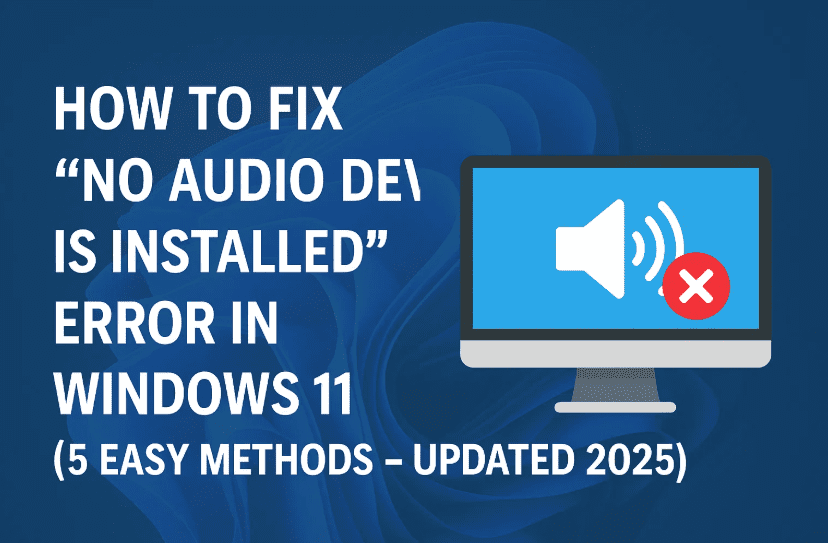
Imagine booting up your PC only to be greeted by a frustrating message — “No audio device is installed.” No sound, no audio icon, no joy.
If you’re facing this issue in Windows 11, you’re not alone. Whether it’s after a system update, driver conflict, or fresh install, this sound error can be fixed with a few guided steps. In this blog, I’ll walk you through 5 proven methods to restore your sound and make sure your audio drivers are working perfectly.
Let’s get started!
🔊 What Causes the “No Audio Device is Installed” Error?
This problem usually occurs due to:
- Missing or corrupted audio drivers
- Audio service not running
- Outdated Windows
- Improper audio settings
- Hardware detection failure
✅ Let’s Fix It: Step-by-Step Solutions
We’ll begin with some basic checks and move toward more advanced troubleshooting steps. Stick with the guide, and you should have your sound back by the end!
🛠️ Step 1: Check Audio Settings via Control Panel
Before anything else, let’s ensure your audio device isn’t just disabled.
Follow these steps:
- Open Control Panel
PressWindows + R, typecontrol panel, and hit Enter. - Change View Mode
Switch to Large icons from the top-right dropdown. - Click on Hardware and Sound → Sound.
- If your audio device is visible:
- Right-click it → click Disable
- Then right-click again → click Enable
⚠️ If no device is showing up at all, move to the next step.
⚙️ Step 2: Restart Windows Audio Service
Windows Audio Services must be running in the background. Here’s how to check it:
Steps:
- Press
Windows + R, typeservices.msc, press Enter. - Scroll down and look for Windows Audio.
- Right-click on it → Properties.
- Set Startup type to Automatic.
- Click Start (or Restart if already running), then click OK.
👂 Now check again if your audio device appears. If not, let’s move to Step 3.
🧩 Step 3: Use the Built-in Troubleshooter
Windows 11 has built-in troubleshooters for almost every common issue. Let’s use the audio one:
How to run it:
- Press
Windows + Ito open Settings. - Navigate to System → Troubleshoot → Other troubleshooters.
- Find Playing Audio → click Run.
The system will now scan for issues, ask a few questions (like whether you heard a beep), and attempt to repair the problem.




✅ Give it permission if it asks to apply automatic fixes or reinstall drivers.
🔄 Step 4: Update Audio Drivers & Windows
Sometimes a missing or outdated driver is the root cause. Here’s how to fix that.
Update Windows:
- Open Settings → Windows Update.
- Click Check for updates.
- Let Windows install any pending updates (it may include audio driver updates).
Update Audio Drivers Manually:
- Right-click Start → Device Manager.
- Expand Sound, video and game controllers.
- If your sound device is visible:
- Right-click on it → Enable device (if disabled)
- Then Update driver → Search automatically
- If your audio driver is still missing:
- Click Action → Scan for hardware changes
🧠 If your device doesn’t reappear, it’s time to install it manually (Step 5).
🌐 Step 5: Manually Install the Correct Audio Driver
If automatic updates failed, download the latest driver from your PC manufacturer’s website.
Step-by-step:
- Open System Information
PressWindows + R, typemsinfo32, press Enter.- Note down your System Model.
- Or use Command Prompt:
Open CMD and run:wmic csproduct get name- This will show your model number (e.g., Latitude 3420).
- Now open your browser and visit your manufacturer’s official support site:
- Dell: https://www.dell.com/support
- HP: https://support.hp.com/
- Lenovo: https://support.lenovo.com/
- Search using your model number or service tag.
- Look for the latest Audio Driver (e.g., Realtek HD Audio).
- Download and install the driver by following on-screen instructions.
During Installation:
- Click Next → Accept license → Complete setup.
- If prompted, restart your PC.
- Sometimes, a second restart may be required to complete driver installation.
💡 Some systems will auto-run the setup again after reboot — don’t worry, just complete it.
🙋 Frequently Asked Questions (FAQs)
Q1: My sound card is not listed in Device Manager. What should I do?
Try scanning for hardware changes via Device Manager. If it’s still missing, install drivers from the official support site using your PC model or service tag.
Q2: Why did the audio stop working after a Windows update?
Sometimes updates reset or uninstall incompatible drivers. Reinstalling the correct driver usually solves the issue.
Q3: Can I use third-party driver tools?
It’s not recommended. Always download drivers directly from your manufacturer’s official website.
Q4: What if I still don’t get sound after installing the driver?
Make sure the device is enabled and set as default playback device under Control Panel > Sound.
🎉 Final Words
Having no sound on your Windows 11 system is frustrating — especially if you’re in the middle of work, watching a movie, or just trying to enjoy music. But as you’ve seen, the fix doesn’t require magic — just a few methodical steps!
To recap, you can:
- Check Sound settings via Control Panel
- Restart audio services
- Run the audio troubleshooter
- Update or reinstall your drivers
- Manually download and install audio drivers from your PC’s support website
Apply these in order and you should be hearing that familiar Windows startup chime again in no time!
🔖 Tags:
windows 11 audio fix, no sound device, realtek audio driver, fix windows sound, no audio device installed, dell audio driver, windows troubleshoot, sound not working, how to install audio driver, windows update audio issue
📢 Hashtags:
#Windows11 #NoAudioDevice #SoundIssueFix #RealtekDriver #DeviceManager #AudioDriver #TechSupport #WindowsTroubleshoot #SoundNotWorking
Disclaimer: This guide is for educational purposes. Always ensure you’re downloading drivers from official manufacturer websites. Modifying system settings carries a small risk — proceed with caution and back up your data if needed.