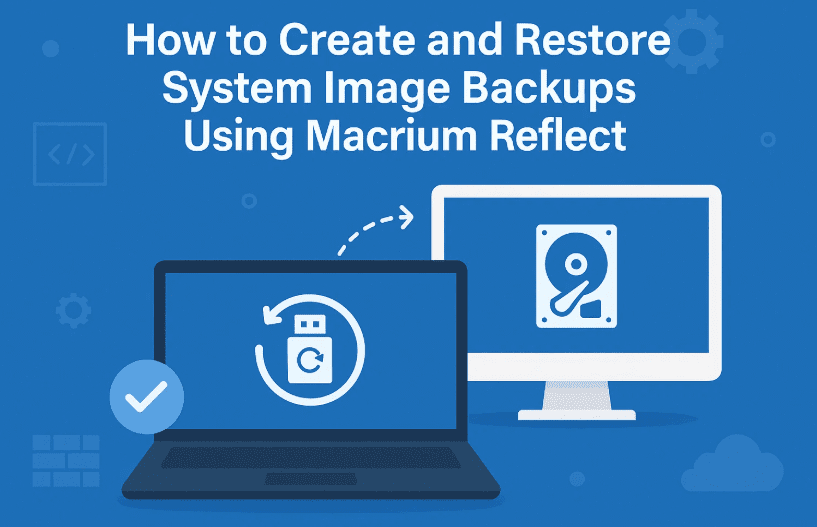
When your computer fails to boot, crashes, or becomes unresponsive due to system errors, having a reliable system image backup can save you from a complete disaster. One of the best tools available for this task is Macrium Reflect – a powerful backup and recovery software for Windows.
Whether you’re a beginner or someone managing multiple PCs, this guide walks you through everything you need to know about creating backups and restoring your system using Macrium Reflect, including advanced features like boot menus, ISO recovery media, and file-level browsing.
🔗 Official website: https://www.macrium.com/products/home
🧰 What is Macrium Reflect?
Macrium Reflect is a backup utility for Windows that lets you:
- Create full system image backups
- Perform file-level backups
- Clone hard drives
- Restore Windows in case of corruption or boot failure
It’s available as a 30-day free trial, and the paid version costs around $50/year for one PC.
🛠️ Setup: Create Recovery Media in Macrium Reflect
Before you create a backup, it’s essential to set up rescue media, which allows you to boot your system into recovery mode even if Windows fails to start.
Step 1: Open Macrium Reflect
Launch the software and go to:
Other Tasks → Create Rescue Media
Step 2: Choose Your Recovery Media Option
You have multiple choices:
- Add recovery boot menu (adds Macrium Reflect to Windows boot options)
- Create ISO file (for burning to a bootable USB using tools like Rufus)
- Burn to CD/DVD
Step 3: Add Boot Menu (Optional)
If you want the Macrium recovery menu to show every time you boot your PC:
- Select the boot menu option
- Click Build
You can always remove this later from the settings.











Step 4: Create ISO File
Click Build ISO, name it (e.g., RecoveryISO2.iso), and save it.
Burn it using Rufus or similar software to a USB drive for emergencies.
💾 Creating System Image Backups
Once the recovery media is ready, it’s time to create your system image backup.
Step 1: Go to “Create Backups”
You’ll see two main backup options:
- Image selected disks (custom disk/partition backup)
- Create image of partitions required to restore Windows (recommended for beginners)
We’ll use the second option for simplicity.
Step 2: Select Source and Destination
- Select the C: drive (your Windows OS)
- Choose a different drive (e.g., E: drive) to store the backup
- Uncheck any unnecessary drives
- Browse and select or create a folder (e.g.,
ImageBackup) - Name the backup (e.g.,
backup_image.mrimg)
Step 3: Adjust Advanced Options (Optional)
Customize:
- Compression levels
- File size splitting
- Password protection
- Auto verification
- Shut down after completion
Click Next.
Step 4: (Optional) Schedule and Retention
You can schedule:
- Daily, Weekly, Monthly
- Full, Differential, Incremental backups
For this guide, we’ll do a one-time manual backup. Click Finish, name the definition (e.g., image_backup_def.xml), and run it.
⏱ Backup time depends on your system and data size.
📂 File & Folder Level Backup (Optional)
You can also back up just files/folders:
- Choose File and Folder Backup
- Select specific files or folders
- Save to a backup folder (e.g.,
RecoveryBackup) - Name and run the task just like you did with the image backup
Now you have two types of backups ready:
- Full system image
- File-level backup
🔁 How to Restore Your System Using Macrium Reflect
Let’s walk through the recovery process using the backup we just created.
Step 1: Boot into Recovery Environment
If you added the boot menu:
- Restart PC → Select Macrium System Recovery
If not:
- Insert the bootable USB
- Change your boot order from BIOS/UEFI
Step 2: Select Backup to Restore
You’ll see your existing backups (image and file).
If not visible:
- Right-click → Folder to Search → Add your backup folder
Step 3: Start the Restore
- Right-click on your system image → Restore Image
- Ensure Source (backup) and Destination (C:) are correct
Step 4: Configure Options (Optional)
- Enable Verify Image before restore
- Enable SSD Trim
- Replace Master Boot Record (MBR) if boot issues persist
Click Finish → Confirm with checkbox → Continue
Macrium will restore the image and reboot automatically when done.
🔁 Any changes or files added after the backup will be lost, so always save new files before restoring.
🔍 Browse a Backup Image Without Restoring
Want to retrieve just one file?
Step 1: Go to “Existing Backups”
- Right-click your image → Browse Image
- Mount the backup as a virtual drive (e.g.,
Z:)
Step 2: Copy Files
You can now open the drive, explore folders, and copy files like normal.
Step 3: Unmount the Image
- Go to Restore → Detach Image
- Select the mounted drive and detach
🧹 Remove the Boot Menu (Optional)
If you don’t want the Macrium option to show up during every boot:
- Go to Other Tasks → Create Rescue Media
- Uncheck Add Boot Menu Option
- Save and reboot – now it won’t appear anymore
⚠️ Important Note Before Restoring a Backup
Restoring a system image will completely overwrite your current data and settings.
If you’ve installed programs, made system changes, or saved files since the last backup, make sure to:
- Back up those new files manually
- Store them on a separate drive or cloud storage
🧠 FAQs About Macrium Reflect
Q. Is Macrium Reflect free?
It was previously free, but now it’s a paid product with a 30-day free trial. The Home Edition costs around $50/year for one PC.
Q. Can I create a bootable recovery USB with it?
Yes. You can create an ISO file and burn it to a USB using tools like Rufus.
Q. Can I clone my disk to another drive?
Yes, Macrium Reflect also includes a disk cloning feature for migrating data to a new SSD or HDD.
Q. Can I schedule automatic backups?
Absolutely. You can create backup schedules with full, differential, or incremental strategies.
✅ Final Thoughts
Macrium Reflect is a reliable and powerful backup and recovery tool that every Windows user should consider. While it may no longer be free, the features it offers – especially system image backups, recovery tools, and boot menu integration – make it worth every penny for anyone serious about data protection.
Whether you’re preparing for hardware failure or experimenting with system tweaks, Macrium Reflect gives you peace of mind knowing you can roll back your system in minutes.
🔗 Try Macrium Reflect: https://www.macrium.com/products/home
🏷️ Tags & Hashtags
Tags: system image backup, Macrium Reflect, Windows recovery, backup software, bootable recovery USB, data protection, disk cloning, system restore tool, backup guide
Hashtags:
#MacriumReflect #WindowsBackup #SystemRestore #BootableUSB #DataRecovery #BackupSoftware #PCBackup #TechTools #FileRecovery #WindowsTips