Embedded systems are everywhere — in smartphones, cars, industrial machinery, smart TVs, medical equipment, and more. Combining embedded systems with Linux creates powerful, scalable, and flexible solutions used in industries across the globe.
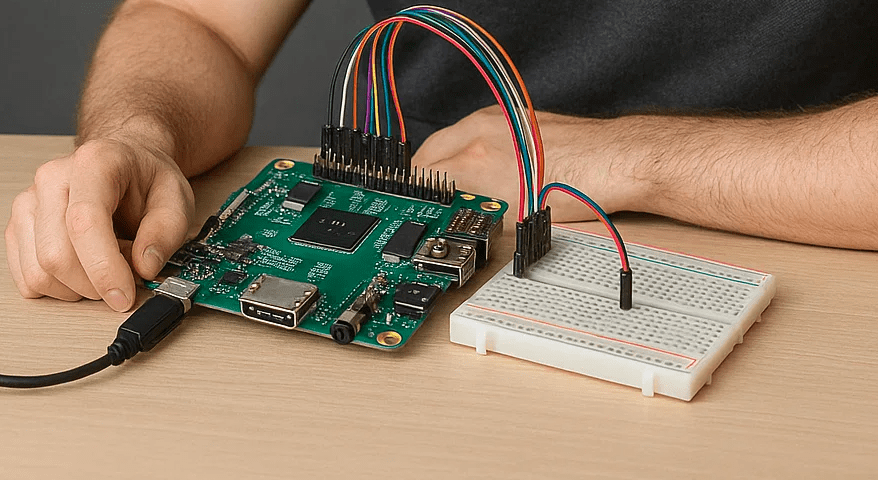
If you want to become an expert in this high-demand field, you’re on the right path. This blog covers everything you need to know, step-by-step, from mastering C to writing your own Linux device drivers.
🧠 What Are Embedded Systems?
An embedded system is a combination of hardware and software designed to perform a specific function within a larger system. Unlike general-purpose computers, embedded systems are dedicated to particular tasks — like controlling the braking system in a car or managing temperature in a smart thermostat.
Examples:
- Microwave Oven Controller
- Automotive Engine Control
- Smart Home Devices
- Wearable Fitness Trackers
🧱 What Is Embedded Linux?
Embedded Linux is a scaled-down version of the Linux operating system that runs on embedded hardware. It is lightweight, fast, and customizable, making it a favorite for developers building Internet of Things (IoT) devices, routers, and industrial controllers.
🚀 Step-by-Step Roadmap to Become an Expert
✅ 1. Master C Programming Skills
C is the foundation of embedded systems. Almost all embedded software is written in C because it gives you low-level access to memory and hardware.
- Learn syntax, data structures, pointers, and memory management.
- Work on C projects: calculators, file I/O programs, linked lists.
- Practice debugging using GDB and
valgrind.
📘 Resources:
- “The C Programming Language” by Kernighan and Ritchie
- Online C compilers like replit.com
✅ 2. Understand Embedded System Architecture
You need to know how microcontrollers, memory, buses, interrupts, and peripherals work together.
Focus areas:
- Microcontroller vs Microprocessor
- RAM/ROM/Flash memory mapping
- Interrupt handling
- GPIO, I2C, SPI, UART communication
🛠️ Hands-on Tip: Work with Arduino or STM32 boards.
✅ 3. Practice Embedded Systems Programming
Start programming on bare-metal boards (no OS), using C and microcontroller SDKs.




- Configure timers, ADCs, and UARTs manually.
- Write your own delay functions and interrupt handlers.
- Use tools like Keil, MPLAB X, or STM32CubeIDE.
✅ 4. Learn Linux Command-Line (CLI)
Linux is essential. Get comfortable with the bash shell, CLI tools, and file systems.
Key commands to learn:
ls,cd,cat,chmod,grep,find,ps,top- Use pipes and redirection:
|,>,>>,2>
📚 Practice on: Ubuntu or Raspberry Pi
✅ 5. Practice Programming in Linux
Learn to write and compile C programs in Linux using gcc.
- Create Makefiles to automate builds.
- Understand system calls (
open,read,write,fork,exec). - Explore inter-process communication (pipes, shared memory).
✅ 6. Build Embedded Linux and Boot a Board
This is the real fun! Learn to build and boot a Linux kernel on hardware.
- Learn Buildroot or Yocto Project
- Create root file systems (BusyBox)
- Flash bootloaders like U-Boot to boards
- Boot your own custom kernel on boards like BeagleBone, Raspberry Pi, or NanoPi
🔧 Tools to know:
dd,mkimage,menuconfig,bitbake
✅ 7. Learn Device Driver Development
Device drivers are how Linux talks to hardware.
Start with:
- Character Device Drivers: simplest to write and understand.
- Learn kernel module programming (
insmod,rmmod,dmesg).
Eventually:
- Write drivers for GPIO, LEDs, Buttons, Sensors.
- Work with
sysfs,procfs, and kernel APIs.
✅ 8. Write and Test Drivers on Real Hardware
Testing is essential. Use development boards or QEMU virtual boards.
- Test
open,read, andwriteoperations on your driver. - Use kernel logs (
dmesg) to debug. - Document the behavior and interface for your device.
📊 Comparison Table: Bare-Metal vs Embedded Linux
| Feature | Bare-Metal Programming | Embedded Linux |
|---|---|---|
| Boot Time | Very fast (milliseconds) | Slower (seconds) |
| Hardware Requirements | Minimal | Higher (RAM, Flash, CPU) |
| Programming Language | C (only) | C, C++, Python, Shell |
| Real-Time Capability | Excellent (with RTOS) | Good (with PREEMPT-RT patch) |
| Cost | Low | Higher due to storage needs |
| Use Cases | Small gadgets, sensors | Smart devices, routers, kiosks |
❓ Q&A Section
Q1. Do I need to know C++ or Python?
C is mandatory. C++ and Python are optional but useful — Python for scripting, automation, and testing; C++ for large applications.
Q2. Can I learn all this without hardware?
Yes, you can simulate embedded systems using QEMU, Docker, or virtual environments. But real boards give the best experience.
Q3. How long will it take to become proficient?
With focused learning:
- Basic proficiency in 6–8 months
- Job-ready in 12–18 months (with hands-on practice)
Q4. Are there good career opportunities?
Absolutely. Demand is high in:
- IoT Development
- Automotive Embedded Systems
- Robotics
- Medical Device Firmware
- Linux Kernel Development
Q5. What are some beginner boards to start with?
- Raspberry Pi – Linux-based, good for OS-level learning
- STM32 Blue Pill – Bare-metal, excellent for C practice
- ESP32 – Great for wireless IoT development
🏁 Conclusion
Becoming an expert in embedded systems and Linux is a step-by-step journey. Start with C, move to bare-metal projects, explore Linux, and then dive into building embedded Linux systems. If you combine curiosity with hands-on experimentation, this path can lead you to a highly rewarding tech career.
🏷️ Tags:
embedded systems learning, linux embedded development, embedded linux tutorial, device driver beginner, linux kernel module, embedded programming, c programming embedded
🟦 Hashtags:
#EmbeddedSystems #LinuxDevelopment #CProgramming #DeviceDrivers #IoTDevelopment #BareMetalProgramming #LinuxCLI #KernelProgramming #TechLearning #LearnToCode