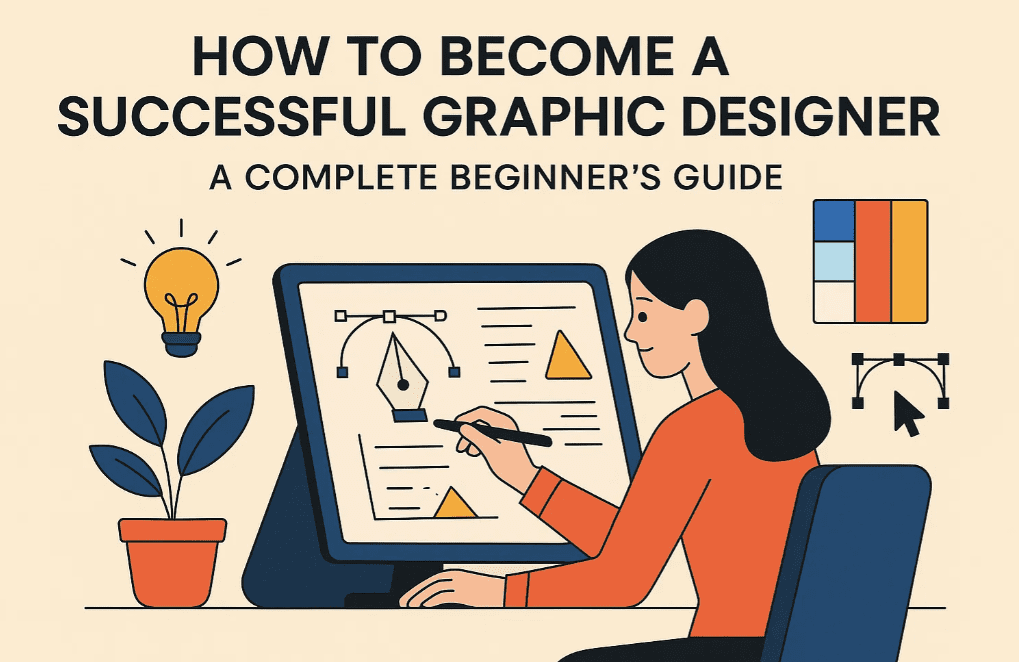
Becoming a graphic designer isn’t just about creativity—it’s about understanding the elements of design, building the right skills, and knowing how to land clients. Whether you’re a student, a recent graduate, or someone curious about a career in design, this guide will take you through the essential steps to get started with graphic design, tools to use, potential salary, and how to start earning from home as a freelancer.
🌟 My Journey into Graphic Design
My interest in graphic design began when I was in Class 10, back in 2017. I got my first PC and was fascinated with photo editing. I started watching tutorials all day, learning from platforms like YouTube and later explored channels like Satori Graphics, Flux Academy, and Will Paterson.
I didn’t attend any professional coaching classes. Everything I learned was through free resources online. Eventually, this hobby turned into a full-time income stream.
🎨 Step-by-Step Guide to Start Your Graphic Design Career
1. Understand What Graphic Design Is
Graphic design is a vast field that combines art and technology to communicate ideas visually. Designers use typography, color, images, and layout techniques to create everything from logos to website interfaces.
2. Master the 5 Essential Design Elements
Before you start designing, it’s crucial to understand the following design principles:
- Color Theory: Understand how colors interact and convey emotions.
- Typography: The art of choosing and arranging fonts. It significantly affects how your message is perceived.
- Alignment: Proper alignment brings clarity and structure to your designs.
- Contrast: Helps in highlighting important elements.
- Hierarchy: Establishes the order in which the viewer processes information.
Pro Tip: If you master these five design elements, you’re already halfway to becoming a great designer.
3. Explore Various Fields of Graphic Design
Graphic design is not limited to logos. Here are some specialized fields you can choose from:
- Brand & Identity Design
- UI/UX Design (User Interface/User Experience)
- Print Design
- Packaging Design
- Advertising & Marketing Design
- Social Media Design
- Illustration & Graphic Art
You can specialize in one field or combine multiple based on your interests. For instance, I work in UI/UX, branding, packaging, and social media design.
4. Average Salary of a Graphic Designer in India
Salaries vary depending on your expertise and chosen field:
- Entry-Level Designers: ₹5–6 LPA (Lakhs Per Annum)
- UI/UX Designers: ₹10 LPA or more
- Branding Experts: ₹8–10 LPA
- Freelancers: Income depends on projects; often higher than full-time jobs
Freelancing allows you to earn from international clients via platforms like Fiverr, Upwork, and Freelancer.
Best ways to make $10 a day as a beginner graphic designer?




5. Top Software Tools for Graphic Designers
Most professionals use Adobe software, especially:
If you’re starting out, don’t worry about the tool—your design skills are what matter most. Even free tools like Canva, Photopea, or Figma can get the job done if used well.
6. Build Your Portfolio
A portfolio is a must-have. It showcases your work and helps potential clients or employers evaluate your skills.
You can build your portfolio on platforms like:
Tip: Break down your designs—show before/after versions, and explain your design choices to attract more clients.
7. How to Find Clients as a Freelance Designer
Here are a few proven ways to find your first clients:
- Freelance Websites: Sign up on Fiverr, Upwork, Freelancer, etc.
- Cold Emailing: Reach out to brands, creators, or agencies via email and pitch your design services.
- Social Media: Share your work regularly on Instagram, LinkedIn, and Twitter. Show process breakdowns to attract inbound leads.
Building your brand online can bring clients directly to you.
8. Freelancing: What You Must Know
If you choose freelancing over a job, you must be your own manager. Here’s what you need to handle:
- Client communication
- Contracts
- Pricing and Invoices
- Time management
Learning basic freelancing skills is crucial to maintain professionalism and long-term client relationships.
🙋 FAQ: Frequently Asked Questions
Q1. Do I need a degree to become a graphic designer?
A: No, your portfolio matters more than a degree. Skills and experience win over formal education in this field.
Q2. Can I learn graphic design for free?
A: Absolutely! Platforms like YouTube, free courses on Coursera or Skillshare, and communities on Reddit and Discord are gold mines.
Q3. Is freelancing better than a full-time job?
A: Both have pros and cons. Freelancing offers flexibility and higher earnings potential but requires business skills.
Q4. Which is the best design software for beginners?
A: Start with Canva or Photopea. Once you’re confident, move to Adobe Photoshop and Illustrator.
🔚 Conclusion
If you’re passionate about design and ready to learn the basics, there’s no reason you can’t succeed in graphic design. Master the core elements, pick a specialization, build your portfolio, and start networking. Whether through a job or freelancing, graphic design offers a flexible and rewarding career.
✅ Tags:
graphic design, how to become a graphic designer, freelancing for designers, design career, design software, design portfolio, UI/UX design, branding design, design tools
🔖 Hashtags:
#GraphicDesign #FreelancingTips #DesignCareer #UIUX #DesignSoftware #AdobeIllustrator #DesignPortfolio #BeginnerGuide #WorkFromHome #CreativeJobs
Disclaimer: This article is based on personal experience and publicly available resources. Earnings in freelancing or employment may vary based on skills, consistency, market demand, and client engagement. Always do your own research before choosing career paths or platforms.