In recent years, Google Ads has started behaving more like Meta Ads (Facebook & Instagram Ads). But why? What changes has Google Ads made that align so closely with Meta’s advertising model?
This article explores:
✔ Why Google Ads is shifting towards a Meta-like approach
✔ Key changes in Google Ads’ targeting & campaign strategies
✔ How advertisers should adapt to these shifts
✔ The future of Google Ads vs. Meta Ads
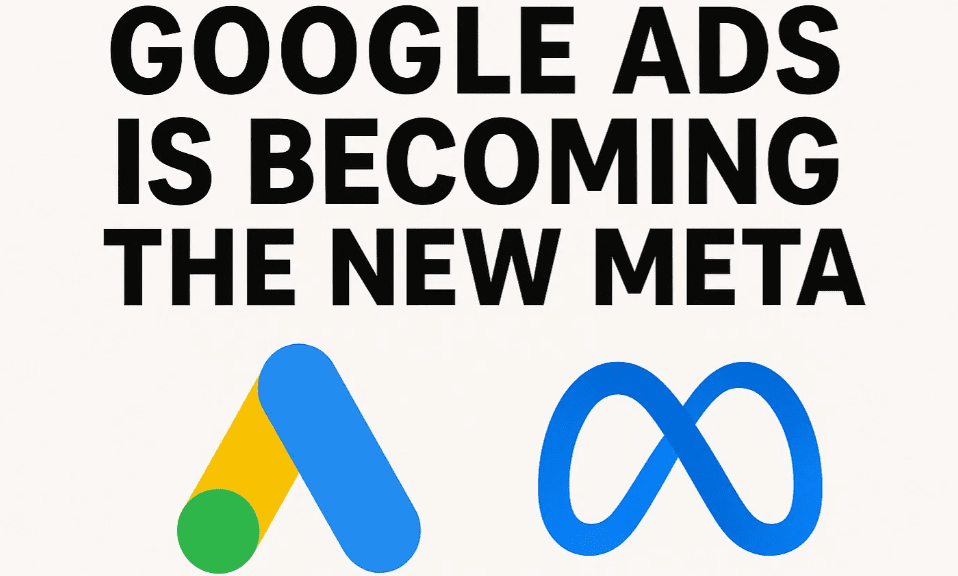
Why is Google Ads Mimicking Meta’s Strategy?
Historically, Google Ads relied on keyword-based targeting (search intent), while Meta Ads focused on audience-based targeting (interests, demographics). However, Google is now integrating audience-first approaches, similar to Meta.
Key Reasons Behind This Shift:
- Changing User Behavior
- Users no longer rely solely on search engines for purchases.
- Many discover products via social media feeds, YouTube Shorts, and discovery ads.
- Google must adapt to passive discovery (like Meta) rather than just active search.
- Revenue Competition
- Meta dominates impression-based ad revenue (scroll-based ads).
- Google needs to leverage its own inventory (YouTube, Discover, Gmail) more effectively.
- AI & Automation Demands
- Both platforms now push automated, AI-driven campaigns (Performance Max, Advantage+).
- Advertisers are encouraged to focus on creatives & audience signals rather than manual optimizations.
How Google Ads is Becoming Like Meta Ads
1. Shift from Keywords to Audience Intent
- Old Google Ads: Strictly keyword-based (e.g., “best running shoes”).
- New Google Ads: Broad match & phrase match now behave like interest-based targeting (similar to Meta).
- Example: A “digital marketing” ad may show for “online marketing course” or “social media ads.”
2. Introduction of Audience-First Campaigns
- Performance Max (PMax) = Google’s version of Meta’s Advantage+
- Uses AI to auto-optimize across Search, Display, YouTube, Discover, and Gmail.
- Removes manual bidding options (like Meta’s “Maximize Conversions”).
- Demand Gen Campaigns
- Focuses on YouTube Shorts, Discover Feed, and Gmail ads (similar to Meta’s Reels & Stories).
3. Creative-First Approach
- Google now emphasizes:
- High-quality visuals (like Meta’s carousel & video ads).
- Multiple ad formats (responsive search + display ads).
- Automated asset generation (AI suggests creatives).
4. Less Control, More AI Reliance
- Both platforms push advertisers to:
- Trust AI for placements & bidding.
- Feed broad audience signals instead of micromanaging.
What Does This Mean for Advertisers?
✅ Opportunities:
✔ Better scaling beyond just search ads.
✔ More touchpoints (YouTube, Discover, Gmail).
✔ AI-driven efficiency (less manual work).
❌ Challenges:
✖ Less transparency in placements.
✖ Harder to control exact targeting.
✖ Creative fatigue (must constantly update visuals).
How to Adapt?
- Test Performance Max & Demand Gen – Don’t rely only on Search.
- Invest in Video & Visual Ads – YouTube Shorts & Discover feed are growing.
- Use Audience Signals – Feed Google data (customer lists, website visitors).
- Monitor Automation – AI isn’t perfect; review placements regularly.
Future of Google Ads: More Like Meta?
- Yes, but not identical.
- Google lacks a social media network (like Facebook/Instagram).
- However, YouTube, Discover, and Gmail will become bigger ad hubs.
- Expect more AI-driven, audience-based campaigns.
- Search Ads won’t die but will become one part of a broader strategy.
Final Verdict: Should You Worry?
No—this shift is inevitable. The key is adapting early:
- Diversify beyond Search.
- Leverage YouTube & Discovery ads.
- Optimize for AI, not just keywords.
Google Ads isn’t “copying” Meta—it’s evolving to match user behavior. Advertisers who embrace this change will stay ahead.
Tags:
Google Ads, Meta Ads, Digital Marketing, PPC , Performance Max, AI Marketing , Advertising Trends
Hashtags:
#GoogleAdsUpdate #MetaVsGoogle #AIDrivenAds #PerformanceMarketing #DigitalAds
Disclaimer:
- Google Ads and Meta Ads are third-party platforms. Performance may vary based on industry and strategy.
- Always test new campaign types before full-scale investment.
What’s your take? Is Google Ads becoming too much like Meta? Share your thoughts below! 🚀