So far, so good—we’ve got a juicy pile of intel to turn into a clean, human, no-shortcuts guide. In this article, we’ll unpack the bigger, more varied maps, clear up the skill-based matchmaking confusion, explain why Levolution (the big scripted map event) isn’t returning, and—most importantly—help you adjust your playstyle so you enjoy the game more from day one. I’ll add context wherever the original notes were fuzzy, and I’ll ask for clarification where names or details might be off.
No hype, no “smash that like button”—just the good stuff, with step-by-step breakdowns, FAQs, and practical checklists. Ready? Let’s set the table first.
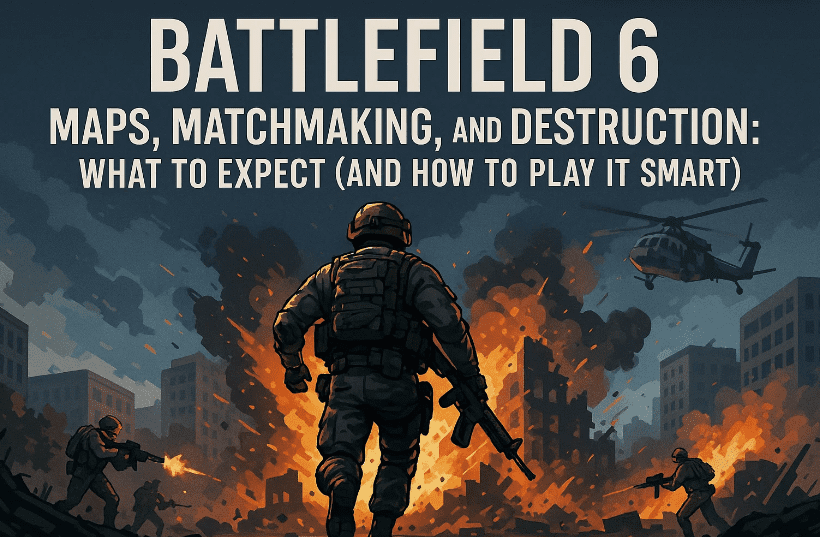
Table of Contents
- 1. 🎯 Why This Article (and What We’re Covering)
- 2. 🗺️ Design Philosophy: “Scale Isn’t Everything”
- 3. 🧭 Map Line-Up Preview (Knowns, Unknowns, and What They Mean)
- 4. 🚀 Pace & Flow: Fixing the “Spawn-Die-Repeat” Experience
- 5. 🧨 Levolution vs. Organic Destruction: What’s Actually Changing
- 6. 🧠 Matchmaking & “SBMM”: What DICE Says and How It Feels
- 7. 👥 Playstyles by Map Type: Infantry-Only, Mixed, and All-Out Warfare
- 8. 🧰 Loadouts, Vehicles, and Roles: Practical Tips You Can Use
- 9. 🧪 A Simple 5-Step Squad Plan for Any New Map
- 10. ❓FAQ: Your Biggest Questions, Answered
- 11. 🔗 Official Links (Studios, Game Pages)
- 12. ⚠️ Disclaimer & Request for Clarifications
- [Tags & Hashtags]
🎯 Why This Article (and What We’re Covering)
The beta sparked a lively debate: some players loved the relentless action, while others felt overwhelmed by the tempo, describing matches as “spawn, die, spawn, die.” The development team (DICE & partners) has since indicated the remaining launch maps are larger and designed to accommodate more playstyles—from infantry purists to tank drivers, heli pilots, and the brave souls who fly jets.
What we’ll do here is turn that high-level message into something you can actually use:
- What the map philosophy implies for real matches.
- A map-by-map preview (based on the information provided) with likely tempo and vehicle mix.
- Why Levolution (BF4-style big scripted events) isn’t the direction anymore—and what replaces it.
- A clear explanation of skill-based matchmaking in a Battlefield context.
- Practical playstyle guidance so any map feels fun rather than frustrating.
Okay—expectations set. Let’s move to the foundation: how the maps are being designed and why “bigger” doesn’t just mean “better.”
🗺️ Design Philosophy: “Scale Isn’t Everything”
The core idea echoed by the design leads is simple: map size should serve gameplay, not exist for bragging rights. Massive spaces are trendy in shooters, but scale without density or purpose turns into “open world emptiness.” The team’s stated goal is to build maps that suit multiple player types without diluting identity:
- Infantry lanes that breathe (cover, flank routes, micro-objectives).
- Armor corridors where tanks matter but aren’t invincible.
- Air playgrounds (helis/jets) that feel rewarding and counterable.
- Meaningful objectives that don’t require a marathon to reach.
Think of it like a city with districts: each part is designed for a certain kind of fight, and the seams between them are tuned so transitions feel intentional, not random.
So far, so good. With that lens in mind, let’s walk through what the launch slate looks like and what you can expect to feel on each battlefield.
🧭 Map Line-Up Preview (Knowns, Unknowns, and What They Mean)
From the article notes you shared, launch features nine maps. We’ve already seen or tested:
- Siege of Cairo — played in beta.
- Iberian Offensive — played in beta.
- Liberation Peak — played in beta, largest of the three.
A new beta rotation adds:
- Empire State — infantry-only, set in Brooklyn, New York. Expect smaller scale, dense urban infantry play.
The remaining five (as described in your notes):







- Operation Firestorm — “burning oil field,” features infantry + tanks + helicopters + jets.
- Likely profile: All-out warfare, large footprint. Comparable to classic sand/industrial battle spaces with long sightlines. Expect vehicle supply lines, burning cover, and high AA relevance.
- Saints Quarters — close-quarters infantry map; fast tempo; lots of corridors and choke points.
- Likely profile: Infantry-only, small to mid. Tight sightlines, breakable cover, constant angles. Think aim discipline and teamwork over solo heroics.
- New Sobeck City — “brave the heat as infantry, advance in a tank, take skies in an attack heli (no jets).”
- Likely profile: Mixed-combat, mid to large. Urban sprawl meets desert fringe; helis matter, but jets are off the board, making AA and rooftop play extra important.
- Mirra Valley — described as the largest map at launch; “war-torn landscape,” every vehicle type.
- Likely profile: All-out warfare, very large. Expect varied terrain (valleys, trenches, ruined hamlets), long trek potential between flags, and the need for transports and forward spawns.
- Manhattan Bridge — Brooklyn again; “close-quarters gunplay,” attack heli, “large-scale destruction.”
- Likely profile: Mixed-combat, mid. Infantry lanes on/under bridge decks, verticality from approaches, helis shaping routes. (No jets mentioned, so AA and small-arms AA discipline will matter.)
How the nine maps spread by combat style (based on the notes):
- Infantry-only: Empire State, Saints Quarters (2 maps)
- Mixed (heli but no jets): New Sobeck City, Manhattan Bridge (2 maps)
- All-out (jets included): Siege of Cairo, Iberian Offensive, Liberation Peak, Operation Firestorm, Mirra Valley (5 maps; note that beta maps’ exact vehicle rules can vary by mode)
⚠️ Names & details note: Some names/titles (e.g., developer names quoted in the source) might have spelling variances. If you can confirm spellings for the design leads and any official map names/art, I’ll update this section to match the studio’s canonical list.
Great—now that we see the spread, the next logical step is to talk about tempo. Bigger maps help, but pacing is also a design decision—and something players can influence with smart play.
🚀 Pace & Flow: Fixing the “Spawn-Die-Repeat” Experience
Players who struggled in the beta generally reported two pain points:
- Compresssed fights: constant proximity, limited breathing room.
- Chain deaths: spawning near action without tools or time to reset.
What the larger maps aim to change
- Buffer distances increase between flags, allowing smart rotations without instant third-party wipes.
- Multiple approach vectors reduce predictable funneling.
- Vehicle availability (especially transports) redistributes pressure and opens rescue/exfil routes.
What you can do right now, regardless of map size
- Spawn discipline: Avoid spawning on teammates in mid-chaos. Choose a safer flag or deploy from transport to set your angle.
- Tempo toggles: After a won fight, pause 5–10 seconds to plate up, reload, and scan; don’t sprint straight into another choke.
- Micro-objectives: When a flag is lost, resist YOLO retakes. Instead, cut off reinforcement lanes first; then collapse in a pincer.
- Anti-snowball: If armor is rolling you, dedicate one squad to AT and repairs; your K/D may dip, but your team wins fights that matter.
So far so good. Now, about those big cinematic set pieces—let’s clarify what’s changing and why.
🧨 Levolution vs. Organic Destruction: What’s Actually Changing
Levolution (Battlefield 4’s signature skyscraper collapse on Siege of Shanghai, for example) was thrilling—the first time. On repeat, it turned into a “yep, there it goes” moment. The team’s stated direction here: move away from one-and-done scripted spectacles and invest in systemic, organic destruction that stays fresh because it’s player-driven.
What “organic destruction” usually means in practice
- Incremental damage to cover and structures that changes angles over time.
- Localized collapse (not full-map resets) so firefights evolve naturally.
- Multiple small set pieces that can occur in different orders, making each round slightly new.
What you should expect
- Fewer “press a button, watch The Big Thing fall” moments.
- More reactive play: using explosive damage to alter lanes, crack open windows, ruin a favorite head-glitch, or block sightlines with debris.
This tends to reward improvisational squads: the ones who notice, adapt, and exploit fresh map states mid-round.
🧠 Matchmaking & “SBMM”: What DICE Says and How It Feels
The term SBMM (skill-based matchmaking) carries baggage from games with strict 1v1-style funnels. Battlefield’s large-team sandbox is different. Per the developer comments summarized in your notes:
- Ping and time-to-match are prioritized.
- Skill is a factor, but it’s lower in the list and used primarily as a team balancer—to avoid one team hoarding all the cracked players.
- Large modes need a spread of skill to function (pilots, infantry anchors, armor mains, supports).
How it plays out
- You’ll encounter a mix of player abilities game to game.
- After a standout match (good or bad), you shouldn’t suddenly face only demons or only newbies. The team balancer will try to spread talent.
What to do if matches feel lopsided
- Check the squad screen: join a squad with voice/text synergy; don’t solo into a meat grinder.
- Play an impact role: AA, AT, beacon placement, smoke/cover support—these tilt whole fights.
- Volunteer for the “boring” job (AA umbrella, logistics). You’ll become the reason your side stabilizes.
Great—philosophy and systems covered. Let’s get tactical by playstyle and map type, so you’ve got a plan the moment the loading screen fades.
👥 Playstyles by Map Type: Infantry-Only, Mixed, and All-Out Warfare
Before we list loadouts, a quick mindset check. Battlefield shines when complements meet: infantry + armor + air + logistics. Even on infantry-only maps, roles matter.
A) Infantry-Only (e.g., Empire State, Saints Quarters)
Let’s move to the tight stuff—fast decisions, faster flanks.
- Pacing: high; TTK feels snappier because angles are shorter.
- Win conditions: hold crossfire lines, manage utility (smokes, flashes, soft breach tools), and rotate before you’re flanked.
- Roles that carry:
- Entry / Breacher: SMG/shotgun, flash/smoke, breach charges.
- Anchor / LMG: secures long halls, holds ground during rotates.
- Scout / Marksman: watches long alleys from height; not every lane needs CQC.
- Medic / Support: revives keep tempo; ammo tops up gadgets (key on infantry maps).
Micro-tips
- Pop smoke not just to push but to disconnect a lost fight.
- Pre-aim common corners; slide only when you know the lane is clear.
- Keep sound discipline (no sprint key glued down).
B) Mixed Combat (e.g., New Sobeck City, Manhattan Bridge)
These are the “we do a little bit of everything” playgrounds.
- Pacing: variable; infantry pockets + vehicle arcs.
- Vehicles: helis are present; jets are not (per notes).
- Win conditions: control bridgeheads/rooftops, keep AA pressure active, and maintain spawn logistics (beacons, transports).
Roles that carry
- AA Specialist: launcher + smart positioning; deters helis from farming lanes.
- Designated Marksman: punishes peeks in open approaches; discourages cross-bridge pushes.
- Armor Support: light/MBT used as area denial, not solo hero runs.
- Infantry Engineer: repairs under cover; places mines intelligently, not randomly.
Micro-tips
- Split AA across two squads so one down doesn’t mean instant wipe.
- Rotate vertically (bridge deck ↔ underpass ↔ adjacent buildings) to break stalemates.
- Use suppression and smoke curtains to move teams across exposed spans.
C) All-Out Warfare (e.g., Liberation Peak, Operation Firestorm, Mirra Valley)
This is classic Battlefield: everything, everywhere, all at once—but with structure.
- Pacing: waves; quiet rotates, then explosive objective fights.
- Vehicles: tanks, IFVs, transports, helis, jets—the full orchestra.
- Win conditions: layered control—FOBs/forward spawns, armor corridors, AA umbrellas, air superiority cycles.
Roles that carry
- Transport Leads: moving squads to uncontested flags wins tickets quietly.
- Armor Wolfpacks: two vehicles leapfrogging and repairing each other.
- Air Superiority Pairing: one fighter controls sky; attack heli farms only under AA cover.
- Logistics / Recon: beacons, ammo/health stations; scans for rotating armor; marks routes.
Micro-tips
- Don’t feed armor: if your side lacks AA, build it—or switch to AT and make life painful for armor.
- Use valleys/terrain masking for vehicle moves; avoid ridge-line silhouettes.
- Jets: prioritize enemy CAS first; you can stat-pad later.
🧰 Loadouts, Vehicles, and Roles: Practical Tips You Can Use
Let’s pause and set a clean, simple template you can tweak per map. I’ll keep this system-agnostic (no weapon promos) so it stays relevant.
Infantry Core
- Primary: SMG/AR tuned for your comfortable recoil profile.
- Secondary: Reliable sidearm; don’t neglect it—pistols save pushes.
- Gadgets:
- Smoke (for pushes and escapes)
- Frag/Semtex (for dislodging anchors)
- Throwable sensor or soft intel device if available
- Perks/Field Upgrades: Favor sprint-to-fire, reload speed, ADS stability for CQC maps; choose ammo/utility perks for mixed/all-out.
Anti-Vehicle Kit
- Launcher with lock-on or dumbfire depending on map lanes.
- Repair tool if you’ll ride armor; mines for bridge chokepoints.
- AA launcher on mixed maps; coordinate volley fire so pilots can’t juke one rocket at a time.
Armor Basics
- Two-vehicle rule: Pair up; one peeks, one covers/repairs.
- Ammo discipline: Don’t tunnel into infantry farms; your job is area denial and objective control.
- Soft cover scanning: Destroy likely head-glitches before pushing a lane.
Air Basics
- Heli: Work with ground AA; pop up, strike, drop. Don’t hover to farm—you will die.
- Jets: First job is air denial; then strike ground. Communicate targets; leave lone infantry alone unless they’re hard-denying your armor.
🧪 A Simple 5-Step Squad Plan for Any New Map
Let’s move to a practical mini-playbook you can run even with randoms.
- Call your role mix at spawn (1 AA/AT, 1 medic, 2 flex).
- Take the off-angle flag first (not the obvious mid). Set a beacon/transport loop.
- Establish denial (mines on likely armor routes; AA arcs covering infantry lanes).
- Rotate on timers (60–90 seconds per stand-off—if it’s not breaking, you reposition).
- Secure a sustain loop (ammo/health drops at each staging area; refresh smoke).
That simple structure stops most “spawn-die” spirals cold.
❓FAQ: Your Biggest Questions, Answered
Q1: Are the remaining maps really larger, or just “less small”?
A: Based on the notes and dev commentary, several remaining maps are decidedly larger, including one billed as largest at launch. More importantly, they’re designed with varied lanes and vehicle ecosystems, which impact tempo more than raw kilometers.
Q2: If there’s no Levolution, will maps feel static?
A: Not if organic destruction is tuned well. Multiple smaller, player-driven changes across a round often feel more dynamic than a single scripted collapse.
Q3: Is SBMM going to ruin casual nights?
A: Battlefield’s implementation—ping/time first, skill lower, team balancing—aims to keep matches varied and fair without strict sweat funnels. You’ll still face strong players, but you won’t be hard-sorted into only mirror-skill lobbies.
Q4: I’m bad at flying. Do I just avoid air maps?
A: Not at all. Play AA/AT/logistics; you’ll have massive impact. If you want to learn flying, use private practice or low-pressure modes first, then graduate to live servers.
Q5: What if my team won’t play objectives?
A: Pick a transport and beacon role—quietly shuttling squads to under-contested flags flips tickets. You’d be shocked how many games are won by logistics.
Q6: How do I handle bridge maps (like Manhattan Bridge) without getting farmed?
A: Vertical rotation is key. Use underpasses/side buildings to reposition, place smoke curtains for traversals, and keep two AA sources active to deny heli hover farms.
Q7: Are infantry-only maps just chaos?
A: They can be, unless you bring utility discipline. Smokes, coordinated flashes, and staggered pushes (two push, two hold cross) turn chaos into controlled trades.
Q8: Will jets dominate on the largest maps?
A: Only if AA and fighters fall asleep. On organized teams, the air cycle becomes: fighters secure sky → CAS makes short runs under AA cover → ground pushes in the window. Solo heroes get swatted.
🔗 Official Links (Studios, Game Pages)
If you’d like to read official materials or follow studio announcements:
- Battlefield (EA) — https://www.ea.com/games/battlefield
- DICE (EA Digital Illusions CE) — https://www.dice.se
- Criterion Games — https://www.criteriongames.com
(These links are provided for reference only. Features and names may change as development continues.)
⚠️ Disclaimer & Request for Clarifications
Disclaimer: This article synthesizes statements and notes from your provided text and interprets them into practical guidance. Game content—map names, modes, vehicle availability, destruction systems, and matchmaking rules—can change before or after launch. Treat all pre-release details as subject to update by the developers. This article is informational and does not represent official announcements.
Tags: battlefield 6 maps, battlefield destruction, levolution, battlefield sbmm, battlefield matchmaking, dice, criterion games, infantry only maps, mixed combat maps, all out warfare, battlefield tips, vehicle tactics, air vs aa, squad strategy, fps pacing
Hashtags: #Battlefield #BF6 #FPS #GameDesign #Multiplayer #SBMM #Levolution #MapDesign #SquadPlay #Tactics