Artificial Intelligence (AI) chatbots like ChatGPT are becoming an everyday tool for writing, research, productivity, and even coding. They are quick, accessible, and offer powerful solutions for various needs. But relying on them too much — especially for sensitive tasks — can pose serious risks to your privacy and data security.
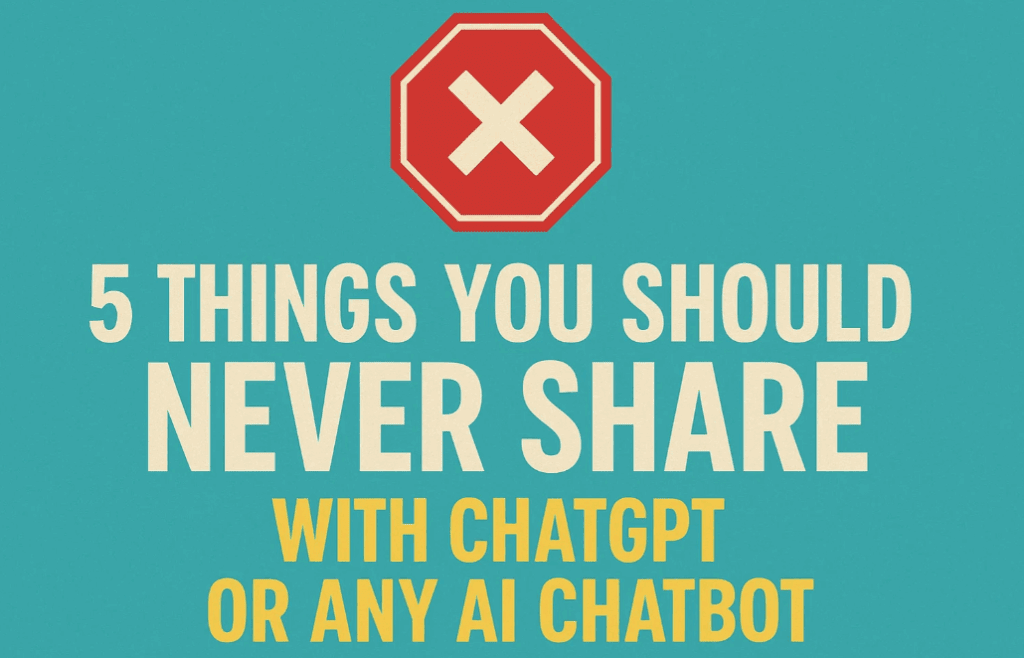
Experts are now warning users to be cautious about the kind of information they share with these tools. Just like you wouldn’t share personal details with a stranger online, you should avoid oversharing with chatbots too. Here’s a detailed guide on five types of information you should never share with ChatGPT or any other AI chatbot, along with some safety practices to protect yourself online.
🛑 1. Personal Information
Never share your personally identifiable information (PII) with AI chatbots. This includes:
- Full name
- Residential address
- Phone numbers
- Email addresses
Even though most platforms claim not to store your personal information, any data you input could be used for model training or stored temporarily. In worst cases, it could be accessed through security vulnerabilities or data breaches.
💳 2. Financial Information
Avoid providing any kind of financial information, such as:
- Bank account numbers
- Credit/debit card details
- Social Security numbers
- UPI IDs or PINs
These pieces of information can easily be misused to steal your money or identity. AI chatbots are not designed to process or protect such sensitive financial data securely.
🔐 3. Passwords and Login Credentials
Never type your passwords, OTPs, or any form of login credentials into a chatbot — even if it’s helping you automate workflows or manage accounts. This includes:
- Account usernames and passwords
- PIN codes
- Recovery answers
- API keys or tokens
Once shared, these credentials could be exposed to misuse, hacking, or unauthorized access.
🏢 4. Workplace or Confidential Business Data
Many professionals use ChatGPT and other tools to assist with emails, reports, and document creation. However, never share:
- Client data
- Proprietary source code
- Financial reports
- Legal documents
- Product roadmaps or confidential project details
For example, in 2023, Samsung banned the use of AI tools internally after a sensitive code snippet was leaked via a chatbot. Sharing business-sensitive information with AI tools can lead to serious legal and professional consequences.
🩺 5. Health Data or Medical Advice
AI chatbots are not certified healthcare providers. Avoid using them to:










- Diagnose illnesses
- Share your health history
- Provide insurance details
- Seek medication advice
Your health information is private and protected under laws like HIPAA (in the U.S.) and similar regulations globally. Trust licensed medical professionals for any health-related guidance, not AI tools.
🔒 Safety Tips for Using Chatbots Securely
To ensure your interactions with AI tools remain secure:
- Use Temporary Chats or Incognito Sessions
Most AI platforms offer a way to disable chat history or use temporary chats. Use these features to prevent your data from being stored or reused for model training. - Regularly Delete Chat History
If you’ve enabled chat history, delete it regularly to reduce exposure. - Avoid Sharing Secrets
A good rule of thumb: If you wouldn’t say it publicly, don’t share it with an AI. Chatbots may store data temporarily or permanently, depending on the service’s policy. - Read the Privacy Policy
Understand how the AI platform handles your data, whether it’s stored, used for training, or shared with third parties.
❓ Frequently Asked Questions
Q1: Can AI chatbots store my conversations?
Yes, depending on the platform. Many services store interactions for training or moderation unless you disable chat history.
Q2: Is ChatGPT HIPAA or GDPR compliant?
ChatGPT is not certified under HIPAA. It does offer some privacy features, but you should avoid sharing health or personal data regardless.
Q3: Can I use AI tools for office work?
Yes, but be cautious. Avoid sharing client information or confidential files unless your organization has approved and secured the AI platform’s use.
Q4: Are there chatbots that guarantee data privacy?
Some tools offer enterprise-grade solutions with better privacy, but even then, caution is recommended.
📢 Final Thoughts
While AI chatbots like ChatGPT are excellent productivity tools, you must use them responsibly. They are not secure vaults for sensitive information, nor are they legally accountable for protecting your data. Use them to brainstorm ideas, draft generic content, or learn new skills — but never as a replacement for trusted human professionals or secure systems.
🏷️ Tags:
ChatGPT safety, AI chatbot privacy, online security, AI do’s and don’ts, personal data protection, workplace AI policy, cybersecurity awareness, ChatGPT limitations, responsible AI usage
📣 Hashtags:
#ChatGPT #AIsafety #CyberSecurity #PrivacyTips #AIChatbots #OnlineSecurity #ResponsibleAI #DigitalPrivacy #DataProtection #AIawareness
⚠️ Disclaimer:
This article is for informational purposes only and does not constitute legal, financial, or medical advice. Always consult appropriate professionals before making decisions involving sensitive information.