When we talk about revolutions, our minds instantly recall moments that reshaped humanity — the invention of the printing press, the Industrial Revolution, or the dawn of electricity. Yet, hidden in plain sight, another transformation has quietly redefined how our world communicates, learns, and even thinks: the open-source revolution.
This is not just a story about software or programming languages. It’s a story about how the decision to share knowledge freely became one of the most powerful forces in human history. From the fall of the Berlin Wall in 1989 to the rise of global networks, open source turned information from a privilege into a right — creating the digital civilization we live in today.
Every click, every message, every digital heartbeat you experience runs on a foundation built by countless contributors who never asked for credit.
They didn’t build products for profit; they built possibility.
In this article, we’ll journey through the origins and inner workings of the Internet’s open architecture — exploring how shared code has powered the rise of the web, data centers, cloud computing, and artificial intelligence itself. Along the way, we’ll uncover how these open systems silently keep our connected world running, from the smallest smartphone to the largest supercomputer.
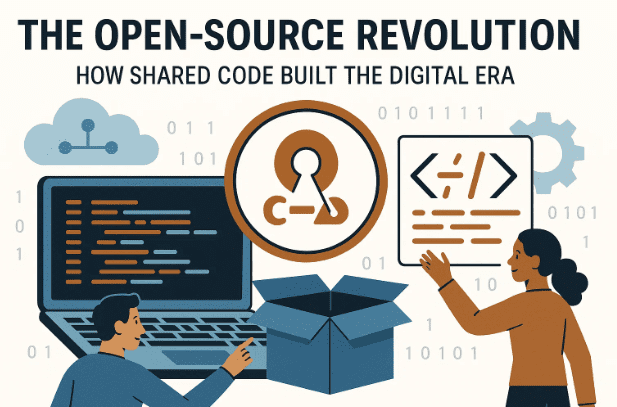
So, sit back as we trace how a few ideas born in universities and hobbyist forums evolved into the most important infrastructure on Earth — the open digital era.
1. 🌍 The Dawn of a New Era: 1989 and Beyond
Some years mark quiet shifts in history — others change the trajectory of civilization itself.
For humanity, 1989 was one such turning point.
Just as 1492 represented exploration and 1789 symbolized revolution, 1989 became the dawn of a digital awakening. The Berlin Wall fell, borders opened, and with them, a new kind of frontier emerged — not made of land or stone, but of data, ideas, and interconnected minds.
That year also marked the early foundations of something invisible yet transformative — the Internet. What began as a small scientific experiment at CERN evolved into an infinite global network that redefined how humans communicate, create, and collaborate.
But behind this revolution was something most people didn’t see — an ethos, a principle of openness. Open source was not just a coding model; it was the DNA of this new era.
2. 🌐 From the Fall of Walls to the Rise of Networks
After the Berlin Wall came down, humanity entered an age of optimism. People dreamed of a unified world — not under a single flag, but under shared understanding and communication.
And that dream took digital form through the Internet. Suddenly, anyone could publish, connect, and learn.
Yet this wasn’t powered by giant corporations — at least not at first. It was powered by open collaboration.









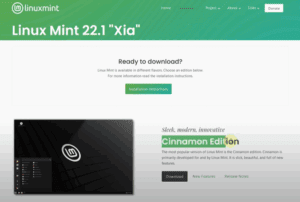
Open-source projects like GNU, Linux, and Apache quietly became the backbone of what we now call the digital age. While Steve Jobs and Bill Gates became household names, the anonymous maintainers of public repositories built the infrastructure on which their empires would later rely.
Let’s now explore how this openness manifested in the very heart of the Internet — its protocols.
3. 🔗 HTTP: The Silent Pulse of the Web
Every time you type a URL, click a link, or load a web page, you are invoking a piece of open technology that powers billions of digital moments — HTTP, or Hypertext Transfer Protocol.
Invented in 1991 by Sir Tim Berners-Lee at CERN, HTTP became the universal language of the web. It wasn’t a product or a company’s trademark. It was — and still is — an open standard.
HTTP works as the courier of the Internet. It moves text, images, and multimedia between servers and browsers seamlessly. Its genius lies in its simplicity and openness:
- No one owns it.
- No license fees are required.
- Anyone can implement or modify it.
This freedom ignited the explosion of web development in the 1990s. Anyone with basic technical knowledge could build a browser or a server. From Mosaic and Netscape Navigator to Google Chrome, every web interface we use today still relies on HTTP’s open foundation.
Why HTTP was Revolutionary
Before HTTP, data exchange was fragmented and proprietary. After HTTP, a universal and public protocol enabled the birth of e-commerce, blogs, social media, and today’s AI-driven applications.
In short, HTTP democratized the Internet.
4. 🔒 HTTPS and Open Security for Everyone
At some point, openness needed protection.
When we started banking, shopping, and sharing personal data online, privacy became essential. The answer came in the form of HTTPS — a secure version of HTTP.
That extra “S” stands for Secure, and it hides an ocean of open-source innovation underneath.
HTTPS encrypts communication using technologies such as SSL (Secure Sockets Layer) and TLS (Transport Layer Security). While SSL was initially commercialized by Netscape, the open-source world quickly made it free and universal through projects like:
- OpenSSL – openssl.org
- LibreSSL
- BoringSSL
These libraries handle the encryption that protects billions of Internet users daily.
A major milestone came with Let’s Encrypt — letsencrypt.org — a free, automated, and open certificate authority that allows anyone to secure their websites with a single command.
Previously, SSL certificates cost hundreds of dollars annually. Today, they’re free — and renewed automatically — thanks to the open-source community.
This simple change made security a right, not a privilege.
<a id=”5″></a>
5. 🖥️ Linux and the Invisible Internet Infrastructure
Behind every website, every cloud service, and even your phone’s app ecosystem lies one operating system: Linux.
Created in 1991 by Linus Torvalds, Linux was initially a personal experiment — but it evolved into the foundation of modern computing. The irony? Most users don’t even know they rely on it.
From routers to Android devices, from banks to government servers, Linux runs silently in the background.
Why? Because it’s:
- Stable – it powers 90% of the world’s cloud servers.
- Free – open to anyone without licensing restrictions.
- Customizable – suitable for both microcontrollers and supercomputers.
Popular server distributions include:
- Ubuntu Server (ubuntu.com)
- Debian (debian.org)
- Red Hat Enterprise Linux
- AlmaLinux
Even routers and home networks often run Linux-based firmware like OpenWRT (openwrt.org) or DD-WRT. These allow everyday users to unlock features once reserved for corporate equipment — from VPNs to advanced firewalls.
In essence, Linux is not just an OS — it’s the infrastructure of the Internet.
<a id=”6″></a>
6. 🌐 Who Controls the Internet? Understanding the Backbone
When people ask, “Who owns the Internet?”, the short answer is: no one. The longer answer is: everyone — collectively.
The Internet is a network of networks. It connects global carriers, regional ISPs, universities, and data centers under shared rules.
These rules — the protocols — are defined not by governments or corporations, but by open bodies such as:
- IETF (Internet Engineering Task Force) – ietf.org
- ISOC (Internet Society)
- W3C (World Wide Web Consortium)
These organizations are non-profit, community-driven, and transparent. They maintain standards like TCP/IP, DNS, and BGP, ensuring interoperability and neutrality across borders.
This decentralized governance allows the Internet to remain resilient, adaptable, and open — even under pressure from political or commercial control.
<a id=”7″></a>
7. ⚙️ Open Source in Network Management and Routing
When you stream a movie or send a message, thousands of data packets find their way through routers, switches, and gateways — most running open-source software.
Tools like:
- pfSense (pfsense.org)
- OPNsense (opnsense.org)
- Bird and FRRouting (FRR)
- Zabbix, Grafana, Prometheus, and Nagios
…are the unsung heroes of Internet stability. They handle routing, monitoring, and load balancing across millions of systems.
Even large telecom companies rely on these open projects because they’re auditable, customizable, and secure.
Open-source networking empowers transparency — ensuring the Internet isn’t dependent on any single vendor or product.
<a id=”8″></a>
8. 📜 The IETF and the Power of Open Standards
While open-source developers write the code, IETF writes the grammar of the Internet.
The IETF publishes Request for Comments (RFC) documents — free, public blueprints for how communication protocols work.
For example:
- RFC 791 defined IPv4
- RFC 2616 defined HTTP/1.1
- RFC 5246 defined TLS 1.2
Anyone can read them, implement them, and propose updates. There’s no licensing or gatekeeping.
This collaborative relationship between the IETF and open-source developers ensures a self-sustaining ecosystem:
- The IETF defines protocols.
- Open-source projects implement and refine them.
- The community tests and improves them.
It’s a virtuous cycle that keeps the Internet evolving.
<a id=”9″></a>
9. ☁️ The Cloud, Containers, and the Rise of Scalable Open Systems
Let’s fast-forward to the modern Internet — the cloud era.
Everything today — from streaming to AI — depends on distributed computing.
But here’s what most people don’t realize: the cloud itself is built on open source.
Foundational technologies include:
- KVM (virtualization)
- QEMU and libvirt (VM management)
- OpenStack (openstack.org)
- Ceph (distributed storage)
- Terraform and Ansible (automation)
- Docker (docker.com) and Kubernetes (kubernetes.io)
Even cloud giants like AWS, Google Cloud, and Microsoft Azure rely heavily on open-source layers for their internal systems — though users rarely see it.
Why Containers Changed Everything
Before containers, deploying software was a nightmare of dependencies and configuration mismatches.
Docker changed that by standardizing how software is packaged and run. Then Kubernetes took it further, orchestrating thousands of containers automatically across clusters.
This open approach turned scalability into a science — one that even small startups could access.
<a id=”10″></a>
10. 🤖 Artificial Intelligence and Open Collaboration
The next digital frontier — AI — is also built upon open foundations.
While the media highlights closed APIs and commercial models, the real innovation happens in public repositories.
Some key open-source AI frameworks include:
- TensorFlow (tensorflow.org)
- PyTorch (pytorch.org)
- scikit-learn (scikit-learn.org)
- Hugging Face Transformers (huggingface.co)
- Jupyter Notebooks, Ray, and MLflow
These tools democratize machine learning, allowing researchers, students, and developers worldwide to build and train models without corporate barriers.
Even powerful AI models like Stable Diffusion, Whisper, Falcon, and Mistral are open — giving everyone the ability to explore generative and language AI.
<a id=”11″></a>
11. 💻 Programming Languages that Empower the Open Web
At the heart of every technology lies a language — and most of today’s essential programming languages are open source.
| Language | Primary Use | Origin & Philosophy |
|---|---|---|
| Python | AI, Data Science | Simple, readable, open foundation |
| Go (Golang) | Cloud, Networking | Developed by Google, open and scalable |
| Rust | Security, Performance | Memory-safe and community-driven |
| JavaScript | Web & Apps | Universal, open ECMAScript standard |
These languages thrive not because of companies, but because of communities.
They evolve through open governance, where anyone can suggest improvements.
This open model fuels innovation faster than any closed ecosystem ever could.
<a id=”12″></a>
12. 🌠 The Legacy of Shared Knowledge
If future historians study our time, they might not remember every tech CEO or product launch.
Instead, they’ll remember the movement that made it all possible — Open Source.
It’s the silent engine behind everything:
- Your smartphone’s Android OS.
- Your browser’s rendering engine.
- Your Wi-Fi router’s firmware.
- The web’s core protocols.
- The AI models generating this very text.
Open source isn’t just code.
It’s a philosophy of trust, collaboration, and shared progress — one that redefines ownership and community in the digital age.
<a id=”13″></a>
13. ❓Frequently Asked Questions (FAQ)
Q1. What exactly is open source?
Open source refers to software whose code is publicly available for anyone to inspect, modify, and distribute. It promotes transparency, collaboration, and community-driven improvement.
Q2. Is open source always free?
Usually yes, but “free” in open source means freedom, not necessarily zero cost. Projects can be monetized ethically through services, support, or enterprise features.
Q3. How does open source ensure security?
Because anyone can review the code, vulnerabilities are discovered and patched faster than in closed systems. Transparency builds reliability.
Q4. What’s the difference between open source and free software?
“Free software” emphasizes user rights (freedom to modify and share), while “open source” focuses on collaborative development and innovation. Philosophically, they overlap.
Q5. Will open source dominate the future?
It already does — from Android to AI, open systems are shaping every digital domain. The future of innovation depends on collaboration, not secrecy.
<a id=”14″></a>
14. ⚠️ Disclaimer
This article is for educational and informational purposes only. All mentioned software and projects are trademarks of their respective owners. Links provided are official sources verified at the time of writing.
Tags: open source, internet history, linux, cloud computing, http, https, kubernetes, docker, artificial intelligence, tcp ip, iot, data centers, technology evolution
Hashtags: #OpenSource #Linux #CloudComputing #AIEthics #HTTP #DigitalEra #TechRevolution #Collaboration