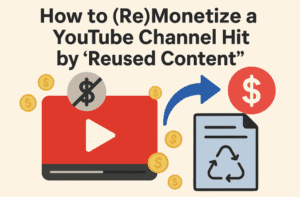
Starting a YouTube channel is exciting, but many creators face one common hurdle—reused content. This policy is one of the biggest reasons channels are rejected for monetization. Even if you gain thousands of views and subscribers, YouTube won’t approve your channel if most of your videos fall under the reused content category.
In this article, we will go step by step through 10 major reasons why channels are flagged as reused content and explain what you can do instead. If you want to ensure your channel gets monetized, these points are absolutely crucial.
🌐 What is Reused Content?
Before we move into the list, let’s clarify what “reused content” means. According to YouTube’s monetization policies, reused content refers to videos that:
- Use other creators’ work without adding significant commentary, education, or transformation.
- Are repetitive or automated in nature (looping or AI voice-only).
- Provide little to no unique value to viewers.
So, YouTube doesn’t punish you for using other materials—it only cares if you’ve added something original and valuable.
Now, let’s dive into the 10 biggest mistakes that lead to reused content and how to avoid them.
1. Uploading Movie or TV Clips Without Commentary
Let’s start with one of the most common mistakes. Many creators upload movie clips, TV serial scenes, or trailers directly to their channel without speaking over them or showing their face.
The problem is clear: if you don’t add your own commentary or analysis, YouTube sees it as simple re-uploading.
✅ Solution:
- If you want to cover movies or shows, create reaction videos or reviews where you share your thoughts.
- Even short commentary (“Did you notice how this scene connects to the story?”) can transform reused clips into original content.
2. Music Videos with Static Images or Lyrics
Another very common trap is uploading music tracks with just lyrics on the screen or a static photo.
This type of content is considered reused because there is no originality or added value—anyone could upload the same thing.
✅ Solution:







- Add your own vocals (covers or karaoke versions).
- Create explainer content like “Song Meaning Explained” with visuals and commentary.
- Use free music libraries if you just want background audio.
3. Using Stock Footage Without Voiceover
Stock videos can be great, but using them as-is with only background music is not enough. YouTube automatically marks such content as reused.
✅ Solution:
- Use stock footage as supporting visuals while you narrate, explain, or tell a story.
- For example, if you’re making a motivational video, add your own voiceover while showing stock clips of nature or people.
4. Re-Uploading Viral Videos
Many people think uploading already viral clips will bring success. And yes, sometimes those videos can get millions of views—but they will not get monetized.
Example: Copy-pasting a trending short like “₹10 biscuit kitne ka hai ji?” will get flagged.
✅ Solution:
- React to viral clips.
- Add your thoughts, humor, or analysis.
- Turn it into a discussion piece, not just a copy-paste.
5. Gameplay Videos Without Commentary
Gaming channels are booming, but here’s the catch: raw gameplay footage without your voice or reactions is considered reused content.
✅ Solution:
- Always include commentary (explaining strategies, funny reactions, tips).
- Even light background music plus your live commentary makes it unique.
- You don’t need professional gear—your phone mic is enough to start.
6. News Channel Using Others’ Clips
Running a news channel is tricky. If you take clips from news agencies or other TV channels and upload them, you risk copyright strikes and reused content issues.
✅ Solution:
- Summarize the news in your own words.
- Record yourself explaining the story or at least add voiceover.
- Use free graphics tools like Canva to create visuals instead of borrowing clips.
7. AI-Generated Voice with Stock Footage
In recent years, many creators have turned to text-to-speech voices over free stock videos. While this looks easy, YouTube often rejects monetization for such channels.
✅ Solution:
- If you use AI voice, make sure the script is original, informative, and adds clear value.
- Combine with custom visuals, animations, or your own research.
- Better yet, use your real voice—it builds trust and increases monetization chances.
8. Compilation Videos
Compilations like meme mashups, funny TikTok collections, or mixed reels are classic examples of reused content.
✅ Solution:
- If you want to make compilations, add voiceover commentary (“Here’s why this clip is hilarious”).
- You could also add context, subtitles, or reactions to make them transformative.
9. Screen Recordings Without Explanation
Screen recording can be very useful, but simply recording your phone or computer screen and uploading it is not original.
✅ Solution:
- Add a tutorial style: explain step by step what you’re doing.
- For example, “How to Install Windows 11” with screen recording and narration is original content.
- Without narration, it’s just reused.
10. Loop Videos (Meditation, Rain, Music Loops)
Finally, let’s talk about loop videos. These include meditation sounds, rain sounds, or looping background visuals. While they may attract views, they almost never get monetized.
✅ Solution:
- If you want to make relaxation or meditation content, record your own sounds or mix them creatively.
- Add guided meditation commentary or unique music arrangements.
📌 Extra Tips to Avoid Reused Content
Now that we’ve covered the 10 main mistakes, let’s discuss some practical tips that will help your channel stand out.
- Show Your Face Whenever Possible – It immediately proves originality.
- Add Your Voice – Even simple commentary makes reused content original.
- Create Tutorials and Educational Content – YouTube loves content that helps viewers.
- Engage With Viewers – Add your thoughts, opinions, or reactions.
- Don’t Chase Shortcuts – Viral re-uploads may give you temporary views, but they won’t get you monetized.
❓ Frequently Asked Questions (FAQs)
Q1: Can I upload my Instagram Reels on YouTube?
Yes, if they are your original videos (with your face or voice). Copyrighted background music may trigger claims, but monetization will not be affected if the content is yours.
Q2: Can I monetize AI-generated videos?
Yes, but only if the video is transformative—meaning it provides value, explanation, or unique editing. Plain stock footage with AI voice is usually rejected.
Q3: Is background music allowed?
Yes, as long as it’s royalty-free or licensed. Just avoid uploading music-only content without commentary.
Q4: My video went viral but monetization is rejected. Why?
Because virality doesn’t equal originality. If the video is reused (copied content without transformation), monetization won’t be approved.
Q5: What if I only upload gameplay without talking?
It will be flagged as reused content. Always add commentary or stream live with your reactions.
⚠️ Disclaimer
This article is for informational purposes only. YouTube’s policies may change, and final decisions about monetization rest with YouTube. Always check the official YouTube Monetization Policy before uploading.
🏆 Conclusion
YouTube reused content is one of the main reasons why creators struggle to monetize their channels. But if you avoid these 10 mistakes and always add originality—through commentary, reactions, or tutorials—you can get approved in the first attempt.
Remember, YouTube rewards creativity and authenticity. Even if your editing is simple, as long as your voice or ideas are present, you’re safe.
So take the next step wisely—review your videos, remove reused content, and focus on building original value. If you follow these points, your channel has a high chance of monetization in 2025.
Tags: YouTube monetization 2025, reused content YouTube, how to monetize YouTube channel, avoid reused content, YouTube policy guide
Hashtags: #YouTubeMonetization #ReusedContent #YouTubeTips #ContentCreation #YouTube2025 #OriginalContent