For years, GrapheneOS has been the gold standard for privacy-focused Android users — a hardened operating system that makes your smartphone as secure as possible without locking you into Google’s data ecosystem. But there has always been one major limitation: it only worked on Google Pixel phones.
That’s about to change.
The GrapheneOS team has officially confirmed that they’re working with a major smartphone manufacturer to bring their privacy-centric ROM to more devices. This marks a historic shift in the world of secure and open-source smartphones, as it finally opens the door for people who want GrapheneOS but dislike or distrust Google hardware.
Let’s explore what this means, why it matters, and what else is happening in the open-source world that signals a massive shift away from proprietary control.
1. What Is GrapheneOS and Why It Mattered
Before diving into the expansion, it’s worth understanding why GrapheneOS has earned so much respect in the tech community.
GrapheneOS is an open-source, security-enhanced Android distribution that replaces the stock operating system on your phone. It’s not just about removing Google apps — it’s about re-engineering Android from the ground up for privacy, hardening, and long-term reliability.
Unlike most “de-Googled” ROMs, GrapheneOS goes deep into memory management, sandboxing, and exploit mitigation. It focuses on protecting you even when zero-day vulnerabilities exist, using strict compiler-level security and hardened system calls.
You can learn more about the project on its official website: https://grapheneos.org.
2. Why Pixel Exclusivity Was a Problem
Until now, GrapheneOS was exclusive to Google Pixel devices, mainly because:
- Pixels receive long-term firmware and security patch support directly from Google.
- Google publishes detailed firmware “blobs” and verified boot keys, making it possible to ensure each OS image matches hardware security requirements.
- Pixels allow bootloader unlocking without voiding warranty.
However, this exclusivity had two big drawbacks:
- Limited Choice – Many users disliked Pixel’s design or hardware reliability. Models like the Pixel Fold have drawn criticism for durability and dust resistance.
- Irony of Dependence – GrapheneOS aims to free users from Google’s ecosystem, yet it required Google hardware to run.
This contradiction made many privacy-minded users hesitant. The team knew it needed another partner — and that time has come.








3. The New OEM Partnership: What We Know So Far
The GrapheneOS team has confirmed they’re collaborating with a “major OEM” (Original Equipment Manufacturer) to expand beyond Pixel devices.
While the company’s name remains undisclosed, the hints are interesting:
- The devices will use Qualcomm Snapdragon chips, similar in pricing to Pixel phones.
- They’ll be sold with GrapheneOS pre-installed, meaning no manual flashing required.
- Support will cover future versions of existing models, not experimental prototypes.
Speculation points toward Nothing Phone — one of the few Android manufacturers that officially supports bootloader unlocking and open collaboration. However, the team has not confirmed this.
The first GrapheneOS-powered phones from this partnership are expected to arrive in the second half of 2026 or early 2027. Pixels will remain supported until their end-of-life cycles (including Pixel 10), though the team warned that Pixel 11 may no longer be supported due to firmware access changes.
This move could redefine how users think about smartphone privacy — not as a hobbyist project, but as a mainstream option.
4. Why This Expansion Matters for Privacy and Security
Let’s pause and look at why this is such a milestone.
Until now, anyone who wanted a privacy-focused smartphone had three limited options:
- Buy a Pixel and install GrapheneOS manually.
- Buy a PinePhone or Librem 5, which run Linux natively but lack mainstream app compatibility.
- Use LineageOS or other ROMs with partial Google service removal.
By partnering with a major OEM, GrapheneOS bridges the gap — combining true security hardening with wider hardware choice.
This matters because privacy-centric tech only scales when it’s accessible and practical. Having GrapheneOS pre-installed means no flashing, no bootloader warnings, and no risk of bricking your phone. It also sends a message: open-source privacy isn’t fringe anymore — it’s viable, modern, and competitive.
5. LibrePhone Project: The FSF’s Vision for True Smartphone Freedom
While GrapheneOS is taking a pragmatic route by working with existing manufacturers, the Free Software Foundation (FSF) is exploring the opposite extreme — complete smartphone freedom.
The LibrePhone Project aims to remove all proprietary firmware components from mobile devices. The FSF has hired developer Rob Savoye, known for his work on GNU tools and OpenStreetMap, to lead the technical effort.
Their goal is to reverse-engineer the binary “blobs” (closed firmware) used by Android devices so that even low-level hardware code becomes open.
However, this is a monumental challenge. Every phone uses different firmware for its modem, camera, and sensors — meaning full liberation must be repeated for each model.
Even FSF admits this will be a long-term project, likely producing one fully open phone rather than a general-purpose ROM like GrapheneOS.
Still, it highlights a healthy diversity of approaches in the open-source mobile world:
- GrapheneOS: practical, security-first Android hardening.
- LibrePhone: philosophical freedom, zero proprietary code.
Both push the industry toward a more transparent future.
6. Windows 10 End of Life: A Turning Point for Linux Adoption
Now let’s switch gears to another story shaking the tech world — the end of life for Windows 10.
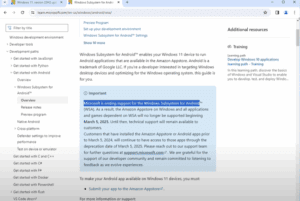
After a decade, Microsoft has ended mainstream support for Windows 10, leaving around 40 percent of Windows users behind. For context, that’s hundreds of millions of devices.
The transition is unusually painful because:
- Many PCs can’t upgrade to Windows 11 due to hardware restrictions.
- Extended security updates last only one year, and Windows Defender updates alone won’t keep systems safe.
- Windows 11 24H2 and later have drawn criticism for ads, telemetry, and instability.
This situation presents a unique opportunity for Linux distributions like Ubuntu, Fedora, Linux Mint, and Zorin OS.
With hardware requirements tightening and users frustrated by forced upgrades, Linux may finally see its mainstream moment — offering a secure, ad-free alternative for aging yet capable machines.
7. KDE’s 29th Birthday: Sustaining the Open Desktop Future
In more uplifting news, KDE — one of the most beloved desktop environments in Linux — just celebrated its 29th anniversary.
The project has launched its annual funding campaign, targeting €50 000 to sustain development, infrastructure, and paid contributors.
KDE’s Plasma desktop has evolved into a polished, modern interface that rivals (and often exceeds) macOS and Windows UX. The donations help KDE remain independent and community-driven while continuing innovations like Plasma 6, Wayland improvements, and energy-efficient optimizations.
For long-time users, it’s a chance to give back to the ecosystem that made Linux desktops beautiful again.
Official site: https://kde.org
8. Fedora 43 Delay and GNOME’s 32-bit Farewell
On the distribution side, Fedora 43 has been delayed — continuing Fedora’s tradition of polishing before release. Originally planned for October 21, 2025, the release now targets October 28 due to ten unresolved blockers, including installer bugs and input-method issues in GNOME.
Speaking of GNOME, version 49 officially drops 32-bit support in its Flatpak runtime. The reason isn’t ideological — it’s practical. GNOME no longer has the infrastructure or hardware to maintain 32-bit builds, and very few modern apps depend on them.
Developers can still maintain their own 32-bit components if they wish, but this marks another step toward a purely 64-bit Linux desktop ecosystem.
9. Mozilla’s Built-in Firefox VPN Test: Privacy or Confusion?
Mozilla is testing an integrated VPN feature inside Firefox, separate from its existing standalone Mozilla VPN app.
Selected beta users can now toggle a built-in VPN directly from the address bar. While convenient, there are concerns:
- The feature only tunnels browser traffic, not the entire system.
- It currently connects users to domestic servers by default, offering no manual location choice.
- Mozilla keeps three months of connection logs, including usage duration and bandwidth.
This raises privacy questions. Users might mistakenly believe their whole system is protected, when in fact only Firefox traffic is encrypted.
If Mozilla relaxes the logging policy and adds global server selection, this could become a genuinely useful feature — but for now, it’s more of an experiment than a full VPN replacement.
Official link: https://www.mozilla.org
10. Germany’s Open-Source Transition and California’s Privacy Push
Open-source adoption isn’t just happening among individuals — governments are joining in.
The German state of Schleswig-Holstein has successfully migrated its entire email system from Microsoft Exchange and Outlook to Open-Xchange and Thunderbird, covering 30 000 employees and 40 000 mailboxes.
They also began deploying LibreOffice, moving toward full independence from proprietary software. Despite some hiccups during migration, officials report stable performance and plan to assist other agencies with similar transitions — a remarkable proof that large-scale open-source deployments can work.
Meanwhile, across the Atlantic, California has enacted new digital privacy laws requiring:
- Social-media platforms to offer a simple, one-click account deletion with total data removal.
- Browsers to include an opt-out signal telling websites not to sell user data.
If enforced properly, these measures could inspire similar legislation worldwide — protecting users and reinforcing open-source values of transparency and control.
11. Frequently Asked Questions
Q1. When will GrapheneOS support non-Pixel phones?
The team expects the first devices with GrapheneOS pre-installed to appear in late 2026 or early 2027, depending on final hardware readiness.
Q2. Which manufacturer is partnering with GrapheneOS?
They haven’t revealed it yet, but speculation points to Nothing Technology because of its openness toward bootloader unlocking.
Q3. Will existing Pixel devices lose support?
No — Pixels will remain fully supported until their official end-of-life dates. Pixel 10 will be supported; Pixel 11 is uncertain.
Q4. How is LibrePhone different from GrapheneOS?
GrapheneOS focuses on security and practical usability; LibrePhone focuses on total software freedom, removing every proprietary firmware piece.
Q5. Is now a good time to switch from Windows to Linux?
Yes. With Windows 10 EOL and restrictive Windows 11 requirements, Linux offers a stable, secure, and privacy-respecting alternative that runs on most existing PCs.
12. Final Thoughts and Outlook
GrapheneOS expanding beyond Pixel devices is more than a hardware story — it’s a symbolic moment for digital autonomy.
For years, privacy and freedom felt mutually exclusive: fully open systems lacked polish, while commercial smartphones demanded total data surrender. This new partnership hints that balance is possible.
Coupled with FSF’s LibrePhone project, KDE’s steady growth, government migrations to open tools, and even privacy legislation, the message is clear: open-source principles are shaping mainstream technology.
From smartphones to desktops to public institutions, transparency and user control are becoming competitive advantages rather than afterthoughts.
Disclaimer:
This article is for informational purposes only. All trademarks belong to their respective owners. Features, timelines, and partnerships mentioned are based on publicly available information as of October 2025 and may change as projects evolve.
#GrapheneOS #OpenSource #LinuxNews #AndroidROM #Privacy #KDE #LibrePhone #Windows10EOL #FirefoxVPN #OpenSourceSmartphone