YouTube today is the world’s largest video-sharing platform, with over 155 million active channels. But here’s the surprising reality:
- Nearly 90% of channels never even reach 1000 subscribers.
- Only about 6% manage to monetize their videos.
- Around 0.6% receive the Silver Play Button.
- And less than 0.05% hit 1 million subscribers—that’s just one in every thousand channels.
Looking at these numbers, it’s easy to feel discouraged. You might even wonder, “Is becoming a successful YouTuber impossible for me?”
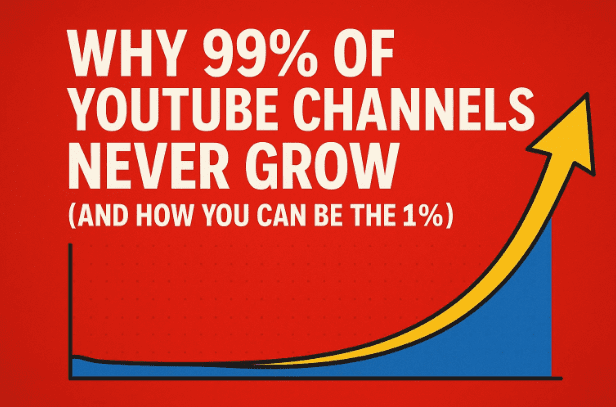
But here’s the truth: every single successful creator you see today started from zero—just like you. Their videos were treated by the algorithm just like yours. The difference is, they focused on the right strategies, ignored the wrong shortcuts, and stayed consistent when others gave up.
In this article, I’ll break down the entire journey of a YouTuber—from expectations to reality—and share the nine critical lessons that separate the top 1% from the rest.
🎬 The Journey of a YouTuber: From Expectations to Reality
Every YouTuber begins with big dreams. The thought process usually goes something like this:
- “YouTube looks easy. I just need to record, upload, and people will start watching.”
- “If one of my videos goes viral, the channel will grow automatically.”
- “I just need 4000 watch hours to get monetized. After that, it’s all money.”
But soon, reality hits. Videos don’t get views as expected. The algorithm doesn’t magically push content. Earnings remain negligible unless views are in the hundreds of thousands.
This disappointment is where most people quit. Studies and creator experiences suggest 99% of new YouTubers stop within the first year. Only 1% continue—and even they face tough challenges.
So what happens to that 1%? They start searching endlessly: “How to get more views,” “How to gain subscribers,” “How to grow fast on YouTube.” They watch tutorial after tutorial, hoping for a magic formula.
But here’s the catch: simply watching advice doesn’t grow a channel. Unless you apply what you learn, you’ll fall into a cycle of false progress—feeling like you’re improving while staying stuck in the same place.
And worse, a lot of YouTube growth advice floating around is misleading. Some creators promise “easy hacks,” like changing a setting or using a secret hashtag. Others promote unethical tricks like buying views and subscribers. These methods may give a temporary boost but destroy long-term growth.
The few creators who survive this phase and apply real advice consistently are the ones who eventually break into the top 1%.












📌 The 9 Lessons That Separate Successful YouTubers
Now that we’ve understood the typical journey, let’s break down the nine key lessons you must learn to stand out.
Each point isn’t just theory—it’s based on real-world YouTube growth, creator case studies, and practical application.
1. 🎯 Set the Right Expectations
Let’s be honest—most beginners fail because they expect overnight success. They think reaching 4000 hours of watch time or 1000 subscribers will automatically make them rich.
But the reality is different. Even after monetization, income is very small unless you consistently pull in hundreds of thousands of views. Payments are often delayed if thresholds aren’t met.
That’s why setting low, realistic expectations is important. If you expect slow growth, every small milestone will motivate you instead of disappointing you.
👉 Remember: YouTube is not a sprint. It’s a marathon. Those who last the longest usually win.
2. 💪 Don’t Quit Too Early
Here’s a fact many don’t realize: the creators who look like “overnight successes” have often been grinding for years behind the scenes.
Take the example of documentary creator Saklan Khan. His first video on his current channel went viral, bringing him 400,000+ subscribers with just nine videos. Sounds like a dream, right?
But what most people don’t know is that before this channel, he had another one where he uploaded over 500 videos. Those years of practice sharpened his skills in research, scripting, camera presence, and editing.
The lesson? Viral success is rarely random. It’s the result of countless failed attempts that taught valuable lessons.
3. 🛠 Apply What You Learn
Every YouTuber watches growth tutorials at some point. But here’s where the separation happens:
- Most people watch and then scroll on.
- The top 1% apply at least one improvement in every video they make.
Even if it’s just improving your thumbnail by 1% or writing a slightly stronger intro, that’s real progress.
Over time, these small improvements compound—and that’s how you grow.
4. 🔎 Find the Right Advice
The internet is full of YouTube “gurus,” but not all of them are genuine. Some red flags to avoid:
- Promises of overnight monetization.
- Tactics like buying subscribers, copying others’ videos, or bot traffic.
- Overemphasis on algorithm “hacks” instead of content quality.
Instead, look for creators who show real data, case studies, and long-term strategies. And even then, filter advice based on your niche. What works in tech might not work in comedy, and what works in gaming might not work in education.
👉 In short: learn from others, but adapt to your own niche.
5. 🚫 Stop Trying to Be “Unique” Too Early
This may sound strange, but beginners often fail because they try to reinvent the wheel. They want unique video ideas, unique editing, and unique thumbnails.
The problem is, you don’t have proof whether those unique ideas will work. On the other hand, copying what’s already successful in your niche gives you a roadmap.
But don’t copy blindly. Analyze top creators in your niche, note the common elements that work, and then add your own USP (Unique Selling Point). That could be your personality, your humor, your way of explaining things, or even a unique avatar or mascot.
Think of it as “stealing like an artist”—using proven methods while injecting your individuality.
6. 🏷 Define a Clear Niche
If someone asks, “What kind of videos do you make?” and you can’t answer clearly, that’s a problem.
Without a niche, your channel lacks focus. Viewers won’t know why they should subscribe, and the algorithm won’t know who to recommend your videos to.
Pick a niche where your skills, interests, and audience demand meet. It doesn’t mean you’re locked forever, but without a niche, growth is nearly impossible.
7. 📊 The 80/20 Rule for YouTube
Not all work is equal. According to the Pareto principle, 80% of results come from 20% of actions.
On YouTube, those 20% actions are:
- Choosing the right video idea.
- Crafting a strong title and thumbnail (packaging).
- Writing a powerful intro hook (first 30 seconds).
These determine whether people click your video and stay watching. Yes, editing, scripting, and research matter, but without clicks and retention, even the best video will flop.
8. 🔄 Stay Consistent
Consistency is the backbone of YouTube success. Not just because the algorithm favors regular uploads, but because your skills improve only with practice.
The more videos you make, the better your storytelling, editing, and on-camera confidence will get. Every upload is both content and practice.
Consistency doesn’t mean daily uploads—it means sticking to a schedule you can sustain for years.
9. 🔀 Don’t Be Afraid to Change Your Niche
Sometimes, the problem isn’t your effort—it’s the niche itself.
- Some niches are too competitive, making it hard to stand out.
- Others are too small, with limited audience size.
- Sometimes your current skills are better suited for a different type of content.
Switching niches isn’t failure. In fact, it gives you a fresh perspective, renewed excitement, and a chance to apply what you’ve already learned. Many successful creators found growth only after pivoting.
❓ Frequently Asked Questions (FAQs)
Q1. How long does it take to succeed on YouTube?
It varies. Some grow within months, while others take years. On average, it takes at least 2–3 years of consistent work to see meaningful results.
Q2. Do I need expensive equipment to start?
No. Many successful YouTubers started with just a smartphone. Content quality and storytelling matter more than gear in the beginning.
Q3. How many videos should I upload per week?
Upload as many as you can while maintaining quality. For most beginners, 1–2 videos per week is a realistic balance.
Q4. Can I grow without showing my face?
Yes. Animation, tutorials, screen recordings, and voice-over content can all succeed if done well.
⚖️ Final Thoughts
At the end of the day, YouTube isn’t about luck—it’s about persistence, smart strategy, and continuous learning.
Most people quit because they can’t handle the gap between expectation and reality. If you can survive that phase, apply advice consistently, and stay patient, you’ll already be ahead of 99% of creators.
And always remember: every successful YouTuber you admire once stood where you are today—uncertain, struggling, and wondering if it’s worth it. The only difference is, they didn’t quit.
So take these nine lessons, apply them step by step, and keep moving forward. Who knows? You might just be the next name in that rare 1%.
Tags
youtube growth, why youtube channels fail, youtube tips 2025, youtube niche, youtube expectations vs reality, grow youtube channel, youtube algorithm, youtube success habits, content creation tips, youtube consistency
Hashtags
#YouTubeGrowth #ContentCreators #YouTubeTips #YouTubeJourney #ContentStrategy #YouTubeSuccess