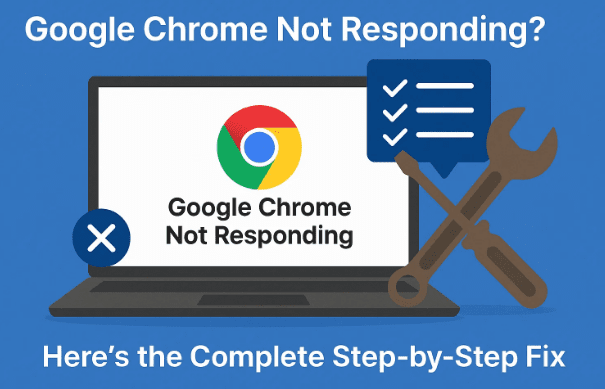
Google Chrome is one of the most popular browsers in the world, but that doesn’t mean it’s perfect. At some point, almost every user encounters the frustrating issue of Chrome not opening or becoming unresponsive. You click on it, but nothing happens—or it freezes right after launch.
If you’re facing this issue, don’t worry. In this article, we’ll cover every possible fix you can try. From simple restarts to deeper troubleshooting steps like deleting corrupted Chrome files, this guide will walk you through everything in detail.
By the time you finish, you’ll know how to restore Chrome to full working condition without missing a step.
Why Does Chrome Stop Responding?
Before we dive into fixes, let’s take a moment to understand the possible causes. Chrome may fail to open or crash due to:
- Corrupted installation or shortcut files.
- Conflicts with other software.
- Damaged user profile data stored in Chrome folders.
- Outdated Windows components.
- Temporary system glitches.
The good news? Each of these issues can be fixed using the step-by-step methods below.
Solution 1: Restart Your Computer
Let’s start with the simplest approach.
Sometimes, system processes get stuck or misbehave, causing apps like Chrome to stop working. A restart clears out temporary glitches and refreshes Windows.
- Click the Start Menu.
- Select Restart (not just Shut Down).
- Once your PC boots again, try opening Chrome.
👉 In many cases, this alone resolves the issue. If it doesn’t, don’t worry—we’ll move on to deeper fixes.
Solution 2: Fix Chrome Shortcut Issues
If restarting doesn’t help, your Chrome shortcut itself might be corrupted. The good news is that you can recreate it easily.
Here’s how:
- Locate the Chrome Installation
- Right-click your Chrome shortcut (the one on desktop or Start menu).
- Select Open file location.
- Rename the Original Shortcut
- In the opened folder, you’ll see Chrome’s shortcut file.
- Right-click → Rename.
- Add something like
ChromeOneas the new name. Press Enter.
- Create a New Shortcut
- Right-click the renamed file.
- Select Create shortcut.
- Windows will ask if you want it on the desktop → click Yes.
- Delete the Old Shortcut
- Go back to your desktop.
- Delete the original shortcut.
- Refresh the desktop (right-click → Refresh).
- Test the New Shortcut
- Double-click the newly created Chrome shortcut.
- See if Chrome opens properly now.
This process ensures you’re starting Chrome from a fresh shortcut that directly points to its correct location.









Solution 3: Perform a System Restore
If Chrome was working fine yesterday but suddenly stopped today, a System Restore might be the best solution.
System Restore rolls back your Windows configuration to an earlier date when everything was working normally.
Here’s how:
- Open the Start Menu.
- Type Control Panel → Open it.
- Look for Recovery → click it.
- Select Open System Restore.
- Click Next to view available restore points.
👉 You’ll see one or more restore points with dates. Choose a date when Chrome was working fine.
- Select your C: drive (Windows installation drive).
- Click Finish to start the restore process.
⚠️ Important Notes:
- Restoring can take anywhere from 30 minutes to 2 hours, depending on your system.
- It won’t delete personal files, but it may remove recently installed programs.
After the restore, restart your computer and check if Chrome works again.
Solution 4: Delete Corrupted Chrome Data
If Chrome still refuses to open, the problem may lie in corrupted data inside Chrome’s AppData folder.
Let’s carefully remove it:
- Open File Explorer.
- Navigate to:
C:\Users\<YourUsername>\AppData(If you don’t see AppData, you need to unhide hidden folders.) - Show Hidden Files
- Click Organize → Folder and Search Options → View tab.
- Check Show hidden files, folders, and drives.
- Click Apply → OK.
- Now open:
AppData → Local → Google → Chrome - Right-click the Chrome folder → Delete.
If the folder won’t delete because Chrome is running in the background, don’t worry—we’ll handle that in the next step.
Deleting this folder removes Chrome’s user data, which often fixes corruption issues preventing it from launching.
Solution 5: Use Task Manager to End Chrome Processes
Sometimes Chrome keeps running in the background even when it looks closed. That prevents you from deleting its data.
Here’s how to stop it:
- Right-click your Taskbar.
- Select Task Manager.
- Go to the Processes tab.
- Look for any process named Chrome.exe.
- Right-click → End Task.
Once all Chrome processes are ended, go back and delete the Chrome folder from AppData as explained earlier.
After deletion, restart your computer, then try opening Chrome again.
Additional Tips to Keep Chrome Stable
Once Chrome is fixed, you’ll want to avoid similar issues in the future. Here are some tips:
- Keep Chrome updated: Chrome updates itself, but you can check via Menu → Help → About Google Chrome.
- Clear cache regularly: Overloaded cache can slow things down.
- Avoid too many extensions: Some extensions can cause crashes.
- Check antivirus/firewall: Overprotective software may block Chrome.
- Update Windows: Outdated OS components can interfere with Chrome’s operation.
By following these tips, you reduce the chances of Chrome becoming unresponsive again.
Frequently Asked Questions (FAQs)
Q1: Will uninstalling and reinstalling Chrome also fix this issue?
Yes. If none of the above steps work, uninstalling Chrome completely and reinstalling it from the official Google Chrome website can solve the issue.
Q2: What if Chrome still won’t open after reinstalling?
In that case, the issue may be with Windows itself. Run System File Checker (sfc /scannow) or consider creating a new user profile.
Q3: Will deleting the AppData folder remove my bookmarks?
Yes, it may remove bookmarks and saved passwords. To preserve them, ensure you sync your data with your Google account before deleting.
Q4: Can malware cause Chrome to stop working?
Absolutely. Some malware targets browsers. Run a full system scan using Windows Defender or a trusted antivirus.
Q5: Why does Chrome keep running in the background even when I close it?
Because some extensions and apps allow background processes. You can disable this in Chrome settings under System → Continue running background apps when Chrome is closed.
Conclusion
Google Chrome not opening or responding is frustrating, but as you’ve seen, there are multiple ways to solve it.
We started with the simplest fix—restarting the computer—and moved to more advanced steps like shortcut recreation, system restore, and deleting corrupted Chrome data. For stubborn cases, ending background processes with Task Manager ensures a clean reset.
By following these methods step by step, you can restore Chrome and get back to browsing without interruptions.
Disclaimer
This article is intended for educational purposes. Some fixes like deleting Chrome data or restoring Windows can cause changes to your system. Always back up important files before making major changes.
Tags
chrome not opening, google chrome not responding fix, chrome shortcut problem, chrome appdata delete, chrome system restore, windows troubleshooting, fix chrome browser
Hashtags
#GoogleChrome #BrowserFix #Windows11 #Troubleshooting #TechGuide