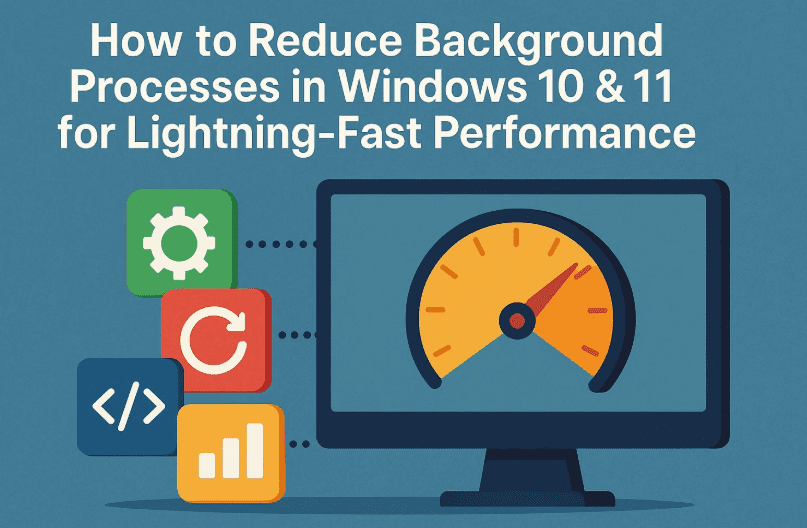
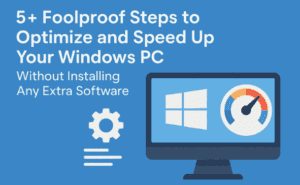
Is your Windows PC feeling sluggish even though your hardware is decent? Chances are, too many background processes are eating up your system resources. These background apps and services often run silently, slowing down your PC’s performance without you even realizing it.
In this guide, you’ll learn step-by-step methods to reduce unnecessary processes on Windows 11 or Windows 10, speeding up your computer and improving overall responsiveness. Let’s get your system running like new again.
🧪 Step 1: Check Current Background Processes
First, let’s find out how many processes are currently running:
- Press Ctrl + Shift + Esc to open Task Manager.
- Click on the Performance tab on the left.
- Scroll down and look under the Processes section.
💡 Tip: Note down the total number of running processes — we’ll compare this after cleanup!
🚫 Step 2: Disable Unnecessary Startup Apps
Startup programs launch as soon as your PC boots up, slowing down performance right from the beginning.
Here’s how to disable them:
- In Task Manager, go to the Startup Apps tab.
- Review the list for apps you don’t need at startup (like Spotify, OneDrive, or Xbox apps).
- Right-click on each one and select Disable.
- The “Status” column will update to “Disabled”.
🚀 Disabling 10 apps can cut down 20–30 processes. Take your time and be selective!
🛠️ Step 3: Disable Unused Services via Services.msc
Some services run in the background even if you don’t use the features they support.
Steps:
- Press Windows + R, type
services.msc, and hit Enter. - Scroll to these services and disable them (if not in use):
- Xbox Live Auth Manager
- Xbox Live Game Save
- Xbox Accessory Management
- BitLocker Drive Encryption Service (only if you’re not using drive encryption)
- Connected User Experiences and Telemetry
- Downloaded Maps Manager
- Parental Controls
- Wallet Service
🧹 Each disabled service reduces CPU load and system clutter.
🎨 Step 4: Optimize Visual Effects for Performance
Eye candy like animations and shadows might look nice, but they use up resources.
Steps:
- Press Windows + R, type
system.cpl, and hit Enter. - Go to the Advanced tab > Click Settings under Performance.
- Select Custom and uncheck everything except:
- Animations in taskbar
- Show thumbnails instead of icons
- Smooth edges of screen fonts
- Click Apply > OK.
🎯 You’ll instantly notice a snappier interface with fewer graphical delays.
🧰 Step 5: Clean Services with MSConfig
Dig deeper into unnecessary services that are running silently in the background.







Steps:
- Press Windows + R, type
msconfig, and hit Enter. - Go to the Services tab.
- Check Hide all Microsoft services.
- Click Disable all > Apply > OK.
⚠️ Important: Don’t disable essential services blindly. If you face issues, re-enable one by one.
🧼 Step 6: Uninstall Bloatware and Unused Apps
Windows comes with a lot of pre-installed apps that you might not need.
Here’s how to remove them:
- Press Windows + I to open Settings.
- Go to Apps > Installed Apps.
- Uninstall unused apps like Weather, Maps, Cortana, or Xbox apps.
- Go to Apps > Apps for websites, and turn off all toggles.
- Under Gaming > Xbox Game Bar, turn it Off.
🗑️ Reducing app bloat also removes their associated services and background tasks.
🔁 Step 7: Restart and Recheck Process Count
Once all changes are made, restart your PC.
- Click Start > Power > Restart.
- After reboot, open Task Manager again (Ctrl + Shift + Esc).
- Go to the Performance tab and re-check the Processes count.
🥳 Example: You might drop from 250+ processes to under 180!
💡 Step 8: Bonus Optimization Tips
To lock in your speed gains, follow these final tips:
🔧 1. Update Drivers
- Right-click Start > Device Manager
- Check for any devices with a yellow warning.
- Visit the manufacturer’s website to update graphics, audio, and network drivers.
🧹 2. Clear Disk Space
- Search Disk Cleanup
- Select C: drive
- Check boxes for Temporary Files, Recycle Bin, and Previous Windows Installations.
- Click OK.
💽 3. Defragment Your Drives
- Search for Defragment and Optimize Drives
- Select your HDD/SSD and click Optimize.
💾 Note: SSDs will be TRIMmed instead of defragmented.
❓ FAQ: Common Questions About Background Process Reduction
Q1: Is it safe to disable services in MSConfig?
A: Yes — as long as you hide Microsoft services first. Don’t disable unknown services without research.
Q2: How many background processes are normal?
A: A clean system can run on 70–120 processes. More than 200 often indicates bloat or background activity.
Q3: Can disabling Xbox services affect gaming?
A: Only if you’re actively using Xbox Game Bar or Xbox Live features. Otherwise, it’s safe to disable.
🔚 Final Thoughts
Reducing background processes in Windows is one of the most effective ways to improve speed and responsiveness — without spending money on new hardware. By following this step-by-step guide, you can reclaim system resources and enjoy a smoother computing experience on both Windows 10 and 11.
Take control of your PC’s performance today — and feel the difference immediately!
📌 Tags:
windows performance boost, reduce background processes, speed up windows 11, msconfig tweaks, task manager optimization, disable startup apps, windows services clean up
📢 Hashtags:
#WindowsTips #SpeedUpPC #Windows11 #TechHelp #BackgroundProcesses #PerformanceHack #SystemOptimization
🛡️ Disclaimer:
This guide is for informational and educational purposes only. Disabling essential services or modifying system settings improperly may result in system instability. Proceed with caution, and always create a restore point before making changes.
🔥 Let us know in the comments — How many processes did you cut down?
Stay tuned for more optimization guides and tech fixes!