Once upon a time, installing a game or app on Android felt like pure magic. No endless ads, no subscriptions, and no paywalls — just fun, creativity, and exploration. But as the Android ecosystem matured, it also became more commercialized. Ads got longer, microtransactions became normal, and subscriptions quietly replaced one-time purchases.
From that growing frustration, one app rose to fame — and infamy — almost overnight: Lucky Patcher. It promised freedom, control, and customization. But that “freedom” came at a cost — not only to developers but also to the integrity of the Android ecosystem itself.
In this article, we’ll take a deep look at how Lucky Patcher was created, how it worked, why it became so controversial, and why it eventually faded into history.
1. The Golden Era of Android Apps (2010–2012)
Let’s rewind to the early 2010s — the golden age of Android. Phones were new, the Play Store was small, and every app felt like a treasure waiting to be discovered.
Games like Fruit Ninja, Angry Birds, and Temple Run became instant hits. They were lightweight, fun, and most importantly — fair. A few banner ads here and there didn’t bother anyone. Most apps could be enjoyed completely offline, and “premium” versions were affordable one-time purchases.
But as Android’s user base exploded, so did the developers’ hunger for monetization. The simple banner ad at the bottom of your screen evolved into pop-ups, full-screen videos, and even 30-second unskippable ads. What once felt like creativity slowly turned into frustration.
2. The Rise of Ads, Microtransactions, and Subscriptions
Initially, advertising was harmless — a small way for developers to earn money. But over time, apps began to rely heavily on rewarded ads (“watch a video to continue playing”) and pop-ups that appeared after every level or action.
Soon after came microtransactions — tiny in-app purchases for coins, skins, or extra lives. What you used to unlock through skill and effort now required payment. The free-to-play model became the new business standard.
Then, around 2015–2016, came the final transformation: subscriptions. Instead of paying once, users were asked to pay monthly to access features or remove ads.
By then, the fun was gone. Android apps were no longer built for enjoyment but for constant revenue extraction.
And that’s when a single developer decided to push back.







3. Birth of Lucky Patcher: The Rebellion Begins
In the middle of this growing frustration, a programmer known online as Chelpus created something radical. His goal wasn’t money or fame — it was rebellion. He wanted to give users back the control they had lost.
That rebellion took the form of an app called Lucky Patcher, which appeared around 2012.
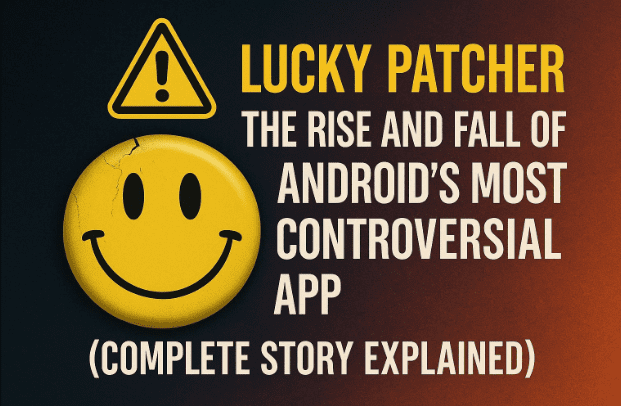
At first glance, it seemed like a harmless experiment for tech enthusiasts — an app with a bright yellow smiley icon. But under that friendly surface was a tool that could fundamentally change how apps behaved on Android devices.
Lucky Patcher allowed users to:
- Remove ads from games and applications
- Modify permissions
- Clone or back up apps
- Bypass license verification for paid apps
For millions of frustrated Android users, it felt like magic. For developers and Google, it was a full-blown nightmare.
4. How Lucky Patcher Worked (Technical Overview)
Let’s move to the most interesting part — how this tool actually functioned.
Android apps are distributed as APK files, which are packages containing all the app’s resources and code. In the early years, developers often stored license checks, payment systems, and ad scripts directly within the app’s local files, instead of relying on secure online servers.
Lucky Patcher exploited that weakness.
It would:
- Decompile or analyze the app’s binary code.
- Identify key functions (like ad display or payment verification).
- Apply a “binary patch” — a small piece of code that modified the app’s behavior.
For example, if an app had a line that said “Check if user purchased premium”, Lucky Patcher would modify it to always return “True.”
Essentially, it reprogrammed apps directly on your device — without permission from developers.
At the time, this was revolutionary — and extremely risky.
5. Simulated Purchases: The Most Dangerous Feature
Among all of Lucky Patcher’s features, one stood out as the most controversial — the ability to simulate in-app purchases.
Users could make the app believe they had just completed a payment, even though no real transaction happened. This meant you could buy coins, unlock characters, or access premium features for free.
For gamers, it felt like a dream come true. For developers — especially independent ones — it was a financial disaster.
Every “fake” purchase meant real revenue loss.
Small studios that relied on microtransactions started to collapse, while bigger companies began reinforcing their apps with stronger server-side checks.
6. Why Lucky Patcher Became a Nightmare for Developers
Between 2014 and 2018, Lucky Patcher’s popularity exploded across online forums, especially XDA Developers, Tinga, and countless Reddit and YouTube communities.
It became the go-to app for anyone with a rooted Android device. But with great power came massive consequences.
Developers started reporting:
- Unexplained drops in in-app purchase revenue
- Thousands of fake transactions
- Surge in piracy of paid apps
Indie game creators who relied on just a few thousand loyal players were hit the hardest.
To make up for the losses, many developers increased ad frequency or raised prices — ironically punishing honest users even more.
7. Google’s Counterattack and Security Updates
Eventually, Google decided to strike back.
When Play Protect launched in 2017, it immediately classified Lucky Patcher as malicious software. Users who tried installing it received bright red warnings like:
“This app is dangerous and may harm your device.”
Ironically, instead of scaring users away, the warnings made them even more curious. The phrase “forbidden tool” only increased its appeal among Android enthusiasts.
Behind the scenes, Google began tightening Android’s internal security layers — especially:
- Moving license checks to Google Play Services (server-side validation)
- Blocking root access for sensitive apps
- Preventing app modification through integrity checks
Each of these steps slowly weakened Lucky Patcher’s effectiveness.
8. Fake Clones, Malware, and Public Backlash
The rise in popularity also brought chaos. The name “Lucky Patcher” became so well-known that hundreds of fake versions flooded the internet.
Some of these clones contained spyware, adware, and even trojans disguised under the same smiley-face logo.
Because Lucky Patcher wasn’t available on Google Play (for obvious reasons), users downloaded it from random sites — many of which were dangerous.
Soon, the name itself became toxic. Even genuine versions started getting flagged as malware simply because so many fakes existed.
This marked the beginning of its downfall.
9. Game Bans and Anti-Cheat Wars
Meanwhile, online gaming companies were also taking action.
In 2016, studios like Supercell (known for Clash of Clans and Clash Royale) implemented server-side anti-cheat systems. These systems could detect any modified APKs or background apps like Lucky Patcher and immediately ban player accounts.
Games like Free Fire, PUBG Mobile, and Mobile Legends soon followed with similar policies.
Tens of thousands of players lost their accounts permanently.
Despite these warnings, many still took the risk — because the rewards felt worth it. For a while, it became a strange cat-and-mouse game between players, patchers, and developers.
10. How Lucky Patcher Lost Its Power
No tool lasts forever, and Lucky Patcher was no exception.
Its decline began when developers started shifting the core logic of their apps to secure cloud servers.
Now, even if a modified app said “Purchase successful,” the server would respond with “Invalid transaction.”
That single change — moving validation from client to server — instantly neutralized many of Lucky Patcher’s abilities.
Additionally, Android’s architecture evolved with new security layers like:
- Google Play Protect
- Play Integrity API
- Dynamic app signing and encrypted assets
Lucky Patcher, designed for a simpler time, couldn’t keep up with this complexity.
By 2020, only older offline apps could still be patched successfully — and even those came with high malware risks.
11. Modern Security: Why It No Longer Works
Today, nearly all major Android apps use server-side verification, encrypted billing systems, and obfuscated code.
This means any local patch or code manipulation becomes useless. Even if you somehow remove ads locally, the app will often crash or stop functioning.
Moreover, Google now monitors root access and developer certificates through Android’s verified boot system.
So, while the nostalgic idea of “hacking” your favorite game might sound tempting, in 2025 it’s nearly impossible — and illegal under the Digital Millennium Copyright Act (DMCA) and India’s IT Act Section 65.
12. Alternatives and the Changing App Landscape
While Lucky Patcher is practically obsolete, its legacy still influences discussions around user rights and software freedom.
Users today have legal ways to achieve some of what Lucky Patcher once offered:
- Ad-free experiences: through premium versions or YouTube Premium.
- Open-source app stores: such as F-Droid, which focus on privacy and ad-free apps.
- Subscription management tools: that track and cancel unused services.
The lesson learned from Lucky Patcher’s era is that users crave control — and developers must balance profit with respect for their audiences.
13. Frequently Asked Questions (FAQs)
Q1. Is Lucky Patcher illegal?
While the app itself is not illegal to download, using it to bypass payment systems or licenses is illegal in most countries and violates app-store terms.
Q2. Can Lucky Patcher still remove ads in 2025?
Only in some very old offline apps. Most modern apps have ads built into server requests, so the patch no longer works.
Q3. Is Lucky Patcher safe?
Not anymore. Because of fake clones, malware infections, and privacy risks, it’s unsafe to install from third-party sites.
Q4. Who created Lucky Patcher?
It was originally developed by Chelpus, an independent programmer who wanted to give users more freedom over their apps.
Q5. Why is Lucky Patcher banned from Play Store?
Because it violates Google Play policies by modifying other apps’ code and interfering with payment systems.
Q6. What’s the best legal alternative today?
Use ad-free versions, premium subscriptions, or open-source platforms like F-Droid. These are safe and respect both users and developers.
14. Final Thoughts
Lucky Patcher’s story is both fascinating and cautionary. It started as a protest against greed and manipulation but ended up becoming a symbol of piracy and exploitation.
For many Android enthusiasts, it was part of their digital childhood — a secret weapon that made them feel powerful. But technology evolves, and so does ethics.
In the end, Lucky Patcher didn’t just patch apps — it patched an era. It forced developers to strengthen their systems and reminded users that freedom without responsibility eventually leads to chaos.
Today, its smiling yellow face remains only as nostalgia — a relic of an internet that once felt freer, wilder, and far less controlled.
15. Disclaimer
This article is written purely for educational and historical understanding. It does not encourage or endorse the use of illegal or pirated software.
Modifying or patching paid apps violates Google Play policies, developer terms, and potentially national cybersecurity laws.
Always support developers by purchasing legitimate copies of software and games.
For privacy-respecting apps and ethical alternatives, visit official sources such as https://f-droid.org or Google Play Store.
Tags: Lucky Patcher history, Android security, Chelpus developer, app monetization, microtransactions, ad-blocking apps, Android piracy, software ethics, Play Protect, APK modification, Android history
Hashtags: #LuckyPatcher #AndroidApps #TechHistory #Chelpus #APKModding #AndroidSecurity #MobileGames #Microtransactions #DigitalEthics #AppMonetization