Imagine a world where a chatbot helps solve a 19-year-old triple murder case.
Sounds futuristic? It’s not.
That’s exactly what happened recently in India—where Artificial Intelligence (AI) assisted law enforcement in cracking a case that had remained unsolved for nearly two decades. This is not just a victory for technology, but also a striking signal about how fast AI is advancing—and how deeply it is impacting every aspect of our lives.
In less than three years, AI has evolved from a niche research concept into a global disruptor shaking up healthcare, education, finance, art, coding—and yes, even law enforcement.
And while it is amazing, it is also alarming.
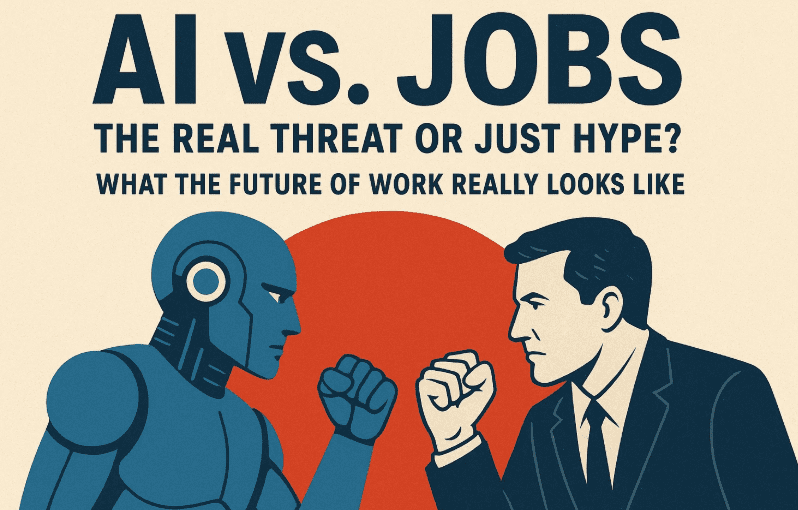
💼 The AI Shockwave: Millions of Jobs at Risk
There was a time—not long ago—when a degree in Computer Science was considered a guaranteed ticket to employment. Coding, software development, and tech were the future. Students lined up in the thousands to pursue degrees, driven by the promise of a secure and rewarding job.
But then came a historic day: November 30, 2022—the day ChatGPT 3.5 was launched by OpenAI.
A seemingly harmless chatbot set in motion a global transformation. Within months, AI tools began replacing tasks that were once considered too complex for automation.
Here’s what followed:
- Microsoft laid off 6,000 employees in May 2025, with plans to eliminate 9,000 more.
- Amazon has cut over 27,000 jobs in the past few years.
- IBM removed 8,000 HR roles, stating that AI now handles a significant part of their HR operations.
- Intel, Meta, Google—all have made similar moves.
In total, over 100,000 tech workers lost their jobs in just the first half of 2025.
Geoffrey Hinton, widely regarded as the Godfather of AI, has warned:
“Most white-collar jobs could be replaced by AI in the next few years.”








🎓 What About Students and Freshers?
This change is especially devastating for those who’ve spent years studying for stable careers in IT, engineering, and business. With every passing day, their once-promising future looks more uncertain.
In an age where AI bosses, AI teachers, AI therapists—even AI girlfriends are becoming mainstream, it raises one big question:
What is the future of human jobs in an AI-driven world?
Let’s explore this question through data, reports, expert analysis, and practical advice.
🌐 AI Is Not the First Tech Revolution — But It’s the Fastest
It’s worth noting that this isn’t the first time technology has shaken the job market.
Back in the 1970s, the computer revolution triggered similar panic. Economists warned of mass layoffs, and governments discussed universal basic income. Roles like typists, clerks, bookkeepers, and manual administrators disappeared due to automation tools like word processors and spreadsheets.
But unlike AI, the computer revolution took 30 years to reach every country and office.
That gradual pace gave workers time to retrain, adapt, and survive. AI, on the other hand, is spreading like wildfire.
- ChatGPT reached 100 million users in just 2 months
- Image, video, code, and voice generation now takes minutes instead of days
- Tools that required skilled professionals are now accessible via simple prompts
🔁 AI vs. Computers: What’s Different This Time?
Let’s break down the 3 major differences between the computer revolution and the AI revolution:
1. 🧠 AI Automates Cognitive & Creative Work
Computers replaced manual and repetitive jobs.
AI replaces thinking, writing, creating, decision-making.
- HR, marketing, legal, journalism, and customer support are being automated.
- AI can now write complex code, generate artwork, draft legal memos, and analyze medical reports.
2. 🚀 Speed of Change
Computers took decades to mature.
AI went mainstream in just 2 years.
AI-generated videos, once a dream, now look realistic enough to confuse the average viewer. AI-generated ads, paintings, and even deepfake videos are already replacing jobs in media and marketing.
3. ⚡ Infrastructure Dependency
AI requires massive infrastructure—especially energy and data centers.
To run and train advanced AI models like GPT-4 or Gemini, tech companies need:
- Huge data centers (Google, Microsoft, Meta)
- Massive amounts of power
- Rare earth materials like Neodymium, Yttrium, Lanthanum
Reports estimate:
- A 165% increase in data center power consumption by 2030
- $720 billion investment needed in electric grid capacity
- A supply chain crisis looming due to China’s dominance in rare earth elements
⚖️ The Two Sides of AI: Job Killer or Job Creator?
There are two conflicting narratives:
📉 The AI Fear (Mass Job Loss)
- A Goldman Sachs report warns that 300 million jobs could be lost to AI by 2030.
- Entry-level roles in programming, design, writing, and analysis are most vulnerable.
📈 The AI Optimism (New Job Creation)
- A McKinsey Global Institute study predicts 50 million new jobs created by AI by 2030.
- However, most of these roles require highly specialized skills in AI, data science, and cloud computing.
So far, the job loss numbers are outpacing new job creation.
📊 What the World Economic Forum’s Report Says (Future of Jobs 2025)
According to the WEF Future of Jobs Report 2025:
❌ Jobs in Decline (By 2030)
- Administrative Assistants
- Bookkeepers
- Cashiers
- Graphic Designers
- Security Guards
- Clerks & Typists
- Retail Sales Workers
✅ Jobs in Demand (By 2030)
- AI & ML Specialists
- Data Analysts
- Cybersecurity Experts
- Software Developers
- Renewable Energy Engineers
- UX/UI Designers
- Autonomous Vehicle Specialists
- Fintech Engineers
📌 Net Job Loss:
- 92 million jobs will disappear
- 78 million jobs will be created
That’s a shortfall of 14 million jobs globally, according to WEF.
🤔 So What Can You Do?
Let’s be honest. Sitting back and hoping your job stays safe won’t work anymore. To survive and thrive in the AI era, you’ll need to:
✅ Upgrade Your Skills
Learn in-demand future-proof skills like:
- AI & Machine Learning
- Data Science
- Cloud Platforms (AWS, Azure, GCP)
- Cybersecurity
- Human-Centered Design
- Critical Thinking & Creativity
✅ Embrace Lifelong Learning
No more one-degree-for-a-lifetime.
As Zerodha’s co-founder Nikhil Kamath said:
“The days of 4-year degrees guaranteeing a lifetime job are over.”
🎓 Where to Learn Future-Ready Skills?
Platforms like Scaler offer:
- Live mentorship from industry experts
- Real-world projects
- AI, ML, and data-focused learning paths
- Placement opportunities in over 900+ companies
- 0% interest EMI options for 2 years
📚 [Ask for the link to Scaler’s free AI Masterclass if you’d like it added here.]
❓ FAQ
Q: Will AI really take all jobs?
No—but it will eliminate routine jobs and replace humans in roles that are automatable. Highly creative, strategic, and human-facing jobs will survive longer.
Q: Will AI slow down due to energy or infrastructure issues?
AI’s growth may slow temporarily, but major companies like Google, Meta, and OpenAI are investing billions in infrastructure to overcome these challenges.
Q: Is it too late to prepare for the AI wave?
Absolutely not. But you must act now. Start learning, upgrading, and experimenting today—not tomorrow.
⚠️ Disclaimer
This article is based on public reports, projections, and expert opinions. AI’s impact will vary based on country, industry, and policy. Use this guide as an informational resource, not as financial or career advice.
🔖 Tags and Hashtags
Tags: AI and jobs, future of work, AI revolution, WEF job report 2025, OpenAI, ChatGPT job impact, AI job loss, future skills, AI infrastructure, AI vs computer revolution
Hashtags:
#FutureOfWork #AIRevolution #JobLoss #WorldEconomicForum #AIImpact #ScalerAcademy #MachineLearningJobs #CareerInAI #DigitalSkills #LearnAI
🎯 Final Thoughts
AI isn’t just a tool—it’s a global force transforming how we work, think, create, and live. Whether it becomes a threat or an opportunity for you depends on how prepared you are.
So don’t wait. Start learning. Start adapting.
Because in the AI era, the fast learners—not the smartest—will win.