Staying updated in digital marketing was already a full-time job—then AI poured rocket fuel on the fire. Now every week brings a fresh launch, a UI overhaul, or a policy tweak that quietly shifts how your campaigns perform. If you’ve been heads-down on client work or content, this month-end wrap is your fast lane: everything important from August in one place, with clear context, actionable steps, and FAQs.
Before we jump into the nitty-gritty, a quick word on approach: rather than just dumping headlines, we’ll first explain why a change matters, then show you how to use it (or defend against it). Think of this like your strategy brief and practical playbook rolled into one.
Table of Contents
- 🗺️ Google Ads “AI Max” adds Location of Interest targeting
- 🛡️ Cloudflare vs. Perplexity: bots, robots.txt, and the crawling gray-zone
- 🏪 Google Business Profile: Post Hub UI refresh
- 🖼️ Google Ads Demand Gen: automatic image resizing, text-to-image, and landing-page previews
- 🔍 Bing Webmaster Tools: now 24 months of data (plus new filters & trend lines)
- 🧠 Perplexity’s “we’ll buy Chrome” moment: a lesson in PR you can actually use
- 📰 Google’s Preferred Sources (U.S. & India): customize your Top Stories feed
- 🎯 Google Ads Performance Max: gender-based exclusions
- ▶️ YouTube Studio updates: 10-image posts, selective auto-dubbing, and stronger CTAs in “Promote”
- 💼 LinkedIn Ads: Thought Leader ad type to boost a member’s post
- 🌍 Google Ads Search campaigns: language targeting going away
- 🧩 Google AI Mode expands to 180 countries (+ agentic features)
- 🚨 Google Spam Update (Aug 2025): who’s at risk & what to check
- 📉 Search Console Crawl Stats dip acknowledged (Aug 28): what it likely means
- 📚 Quick comparison table: Bing Webmaster Tools vs. Google Search Console
- ❓FAQs: This month’s most common questions
- ✅ Action checklist for September
1. 🗺️ Google Ads “AI Max” adds Location of Interest
AI Max is Google Ads’ newer search-style campaign type that leans heavily on automation. Marketers have often felt it reduced control—so this month’s change is welcome. You can now target by Location of Interest (LoI): i.e., reach users based on the location they’re searching about, not only where they physically are.
Why it matters
When your product/service is tied to a destination (travel, real estate, local services, events), LoI can capture intent earlier and better than blunt geo fences. It also rebalances control vs. automation after months of “AI first” defaults.
How to use (step-by-step)
- In Google Ads, create or edit an AI Max campaign.
- Go to Locations → choose Location of interest (instead of or alongside presence).
- Add target regions (cities/states/countries) your audience is researching.
- Layer in your negatives (irrelevant regions) to avoid spillover.
- Monitor search term insights and geo reports; refine weekly in the first 30 days.
Pro tips
- Pair LoI with ad customizers (location-aware copy) and feed-driven assets.
- If CPA creeps up, test bid caps or value rules by region.
Official help: Google Ads Help (search “location targeting in campaigns”)
2. 🛡️ Cloudflare vs. Perplexity
A public spat raised big questions: Do AI crawlers have to respect robots.txt? Can they route around IP blocks? Cloudflare alleged Perplexity’s systems bypass protections; Perplexity argues it accesses pages at the user’s request (like a human would).
Why it matters
- Publishers/SEOs: Clarify your bot policy and server rules now.
- Data ethics: Expect more legal, technical, and policy friction around AI crawling.
- Attribution & consent: If AI assistants fetch your pages on demand, does robots.txt still govern? Prepare positions (and headers) accordingly.
What to do (defensive setup)
- Review and update robots.txt with explicit AI bot directives.
- Add WAF rules/rate limits for unknown user agents; log aggressively.
- Implement robots meta and HTTP headers for AI restrictions where needed.
- Maintain an allowlist for good bots to avoid collateral blocking.
Official resources: Cloudflare blog, Perplexity FAQ/Docs










3. 🏪 Google Business Profile: “Post Hub” UI
The old Post button is now a Post Hub—same functions, smoother UI.
Why it matters
Less friction = more posting. Local businesses that publish updates (offers, events, FAQs) tend to get richer panels and better engagement.
How to use (step-by-step)
- Open Google Business Profile → your location.
- Click Post Hub → choose post type (Update/Offer/Event).
- Add images, dates, links, UTM parameters.
- Preview → Publish.
- Check Performance in GBP weekly (calls, direction requests, clicks).
Official help: Google Business Profile Help
4. 🖼️ Demand Gen gets smarter: images & previews
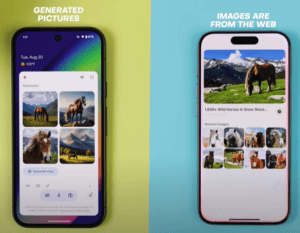
Demand Gen campaigns are picking up automatic image resizing (portrait/landscape), text-to-image generation, basic image editing, and landing page previews within the workflow.
Why it matters
You ship more creative variations with less design lift—helpful for catalog and UGC-leaning advertisers.
How to use (step-by-step)
- In Demand Gen, add assets as usual.
- Use auto resize when you lack a complete set of aspect ratios.
- Try text-to-image for gap-filling concepts; always A/B test vs. studio assets.
- Use the LP preview to validate above-the-fold quality and message match.
- Set rules to rotate out low-performers every 7–14 days.
Caution
Keep brand guidelines tight. AI-generated images can drift in tone—lock color, typography, and layout templates.
Official help: Google Ads Help → Demand Gen
5. 🔍 Bing Webmaster Tools: 24 months of data
BWT now offers 24 months of performance data, plus Country/Device filters and keyword trend lines—bringing it closer to GSC parity (and surpassing it on the time range).
Why it matters
Longer lookbacks = better seasonality analysis. Bing’s share varies by market, but the audience can be lucrative (enterprise, desktop-heavy cohorts).
How to use (step-by-step)
- Open Bing Webmaster Tools → Search Performance.
- Set date range to Last 24 months.
- Apply Country/Device filters; export cohorts separately.
- Use trend lines to flag decays/improvements that your GSC view may miss.
- Feed insights into content calendars and technical audits.
Official: Bing Webmaster Tools
6. 🧠 Perplexity’s “we’ll buy Chrome” PR lesson
Perplexity’s headline-grabbing claim about buying Google Chrome (with no realistic path) was classic earned media—low cost, global coverage.
Why it matters
As marketers, you can reverse-engineer this: announce a bold, debate-worthy vision that’s talkable, even if it’s aspirational. Use it to frame your category narrative.
A quick playbook
- Package a provocative claim that spotlights your product’s POV.
- Offer data, a founder quote, and a visual (deck/mockup).
- Seed to relevant reporters and post your stance on your own channels.
- Prepare FAQ and ethics notes to avoid backlash.
7. 📰 Google’s “Preferred Sources” (U.S. & India)
You can now curate news feeds in Google by marking preferred sources, which then surface in a “From your sources” module below Top Stories.
Why it matters
For users: less doomscroll, more relevance.
For publishers: a new micro-win that compounds return visits and direct brand recognition.
How to enable (user side)
- In Google’s news surfaces, find “Preferred sources” (availability varies).
- Add outlets you trust; Google will show more from them.
Publisher to-do
- Add “Follow/Preferred” prompts on your article/brand pages.
- Ensure your site meets News/Discover technical and policy standards.
- Track the module’s contribution in analytics via distinct UTMs.
8. 🎯 Performance Max: gender-based exclusions
Google Ads added gender exclusions for PMax. While sensitive and not always appropriate, regulated or highly targeted categories may need this control.
How to use (step-by-step)
- In your PMax campaign → Settings → Audiences.
- Open Exclusions → choose gender segments to exclude.
- Monitor brand safety; document rationale (internal policy/industry norms).
- Re-evaluate quarterly—keep bias and compliance in check.
9. ▶️ YouTube Studio: 10-image posts, selective auto-dubbing, stronger CTAs
Three notable changes:
- Community posts can include up to 10 images.
- Auto-dubbing eligible for a limited set of creators (early access).
- Promote flow inside Studio adds business-style CTAs (Book now, Contact us, Get code, etc.).
Why it matters
You can treat YouTube more like a content + funnel platform without leaving Studio.
How to use (step-by-step)
A) 10-image posts
- Studio → Content → Posts → Create.
- Upload carousel images; tell a story frame-by-frame (hook → detail → CTA).
- Schedule posts near video launches to warm up engagement.
B) Auto-dubbing (if available)
- Studio → Subtitles/Dubbing.
- Select source language → choose target language(s).
- Review timing/voice; publish as multi-audio track.
C) Promote with CTAs
- Studio → Promotions/Promote.
- Select video → choose objective → pick CTA.
- Set budget/duration → launch. (Note: This is not the full Google Ads video flow; it’s simplified.)
Official: YouTube Help / Creator Studio Help
10. 💼 LinkedIn Ads: Thought Leader ad type
Brands can now boost a member’s post (with the member’s permission) as an ad. This bridges personal credibility with brand reach.
How to use (step-by-step)
- In Campaign Manager, create Thought Leader Ad.
- Request member permission (one-click approval flow).
- Choose objective, audience, budget, and optimize for engagement or leads.
- Keep disclosures clear; don’t “ghost boost” without transparency.
Official: LinkedIn Ads Help
11. 🌍 Google Ads Search: language targeting to be removed
Google plans to shift language handling fully to AI signals—removing manual language targeting in Search campaigns.
What this means
- Less control, more reliance on Google’s classifiers.
- You must shore up ad copy variations and site language signals (hreflang, meta, on-page).
What to do now
- Audit multilingual sites: correct hreflang, canonical, and language tags.
- Create language-specific ad assets/landing pages; use robust geo/language cues.
- Monitor search terms for cross-language bleed; add negatives and value rules.
12. 🧩 Google AI Mode: 180 countries + agentic features
Google’s AI Mode is now broadly available, with early agentic behaviors (small task chains triggered by your prompt).
Implications
- Expect impression/click leaks from classic 10-blue-links SERPs.
- Content must be answer-ready and schema-complete (FAQ, HowTo, Product).
- Build brand queries and direct discovery to offset AI snapshots.
What to do
- Prioritize first-party data: email, owned audiences, branded search.
- Add/refresh schema and answer blocks in high-intent posts.
- Track AI surfaces in analytics where possible; annotate rollouts.
13. 🚨 Google Spam Update (Aug 2025)
A fresh Spam Update focuses on automated/low-quality content, spammy links, and manipulative patterns. It’s separate from core updates and can roll out over ~2 weeks.
Who’s at risk
- Thin AI content farms, spun pages, low-effort programmatic SEO.
- Sites with inorganic link bursts or paid link networks.
Self-check (quick audit)
- Crawl your site for doorways/near-duplicates.
- Run EEAT gap analysis on money pages.
- Disavow only when there’s clear, large-scale inorganic activity; otherwise focus on content quality and internal linking.
Official: Google Search Status / Ranking Updates page
14. 📉 GSC Crawl Stats dip acknowledged (Aug 28)
Google confirmed a Crawl Stats dip visible in some properties and says it’s fixed. It’s unclear whether it was reporting-only or reflected a real crawl slowdown.
What to do
- Annotate the dip; watch log files (if you have them) to verify real crawl.
- If indexing stayed stable, treat as reporting variance.
- If indexing also dipped, run a tech audit (server latency, 5xx, robots, sitemaps, internal links).
Official: Google Search Console Help / Status Dashboard
15. 📚 Quick comparison: Bing Webmaster Tools vs. Google Search Console
| Feature | Bing Webmaster Tools | Google Search Console |
|---|---|---|
| Data history | 24 months | ~16 months |
| Country/Device filters | Yes | Yes |
| Keyword trend line | Yes | Yes |
| Index coverage detail | Good | Deeper |
| URL inspection | Basic | Advanced |
| Crawl control | Good (Bingbot controls) | Limited |
| Integrated Clarity/Insights | Yes (optional) | No |
| Ecosystem share | Smaller but valuable | Largest |
Takeaway: Use both. Bing’s 24-month horizon helps spot long cycles; GSC still wins on diagnostics and ecosystem coverage.
16. ❓ FAQs
Q1: Should we switch to AI Max immediately for search?
Not blindly. Pilot it in parallel. Use Location of Interest for destination-driven demand, but keep a classic Search build running until you hit equal or better CPA/ROAS.
Q2: How do we protect our site from unwanted AI scraping?
Set clear robots.txt policies for AI agents, add meta robots/HTTP headers, and apply WAF rules. Log user agents. Balance protection with discoverability.
Q3: Is gender exclusion in PMax safe to use?
In some industries it’s appropriate or required; in others it’s sensitive or disallowed. Document the rationale, check policy, and review ethics quarterly.
Q4: With language targeting going away, will CPAs rise?
Short term, possibly. Counter with language-specific assets, cleaner hreflang, and tighter negatives. Watch search terms like a hawk for spillover.
Q5: How do we leverage Preferred Sources as a publisher?
Add follow/prefer prompts, strengthen News/Discover eligibility, and tag incoming traffic with distinct UTMs to prove value to sponsors/editors.
Q6: Did the GSC Crawl Stats dip hurt my rankings?
If impressions/positions held steady, likely a reporting wobble. If indexing dropped, investigate server/errors/internal links first.
17. ✅ Action checklist for September
- Test AI Max with Location of Interest on one campaign; set weekly optimization cadence.
- Update robots.txt + headers for AI agents; review WAF rules and logs.
- Post weekly from the GBP Post Hub (offers/events/FAQs with UTMs).
- In Demand Gen, enable auto resize and trial text-to-image variants (A/B only).
- Expand Bing reporting to 24 months; pull device/country cohorts.
- For YouTube, plan a 10-image community post cadence and test Promote CTAs.
- Spin up a Thought Leader ad on LinkedIn with a credible employee voice.
- Prepare for Search language deprecation: audit hreflang, build language-specific creatives/LPs.
- Run a spam-risk audit (thin pages, link patterns) and fix before the update fully settles.
- Annotate the GSC Crawl Stats incident; validate with logs/indexing.
18. 🧾 Disclaimer, Official Links, Tags & Hashtags
Disclaimer
Features described here may roll out gradually and can vary by region/account eligibility. Always verify availability and policy details in official documentation before implementing changes. Any references to third-party tools, services, or AI systems are for informational purposes only.
Official Links (help & docs)
- Google Ads Help (Location targeting, Demand Gen, PMax): https://support.google.com/google-ads/
- Google Business Profile Help: https://support.google.com/business/
- Bing Webmaster Tools: https://www.bing.com/webmasters/
- YouTube Help / Creator Studio: https://support.google.com/youtube/
- LinkedIn Ads Help: https://www.linkedin.com/help/lms/
- Google Search Status & Ranking Updates: https://status.search.google.com/ & https://status.search.google.com/summary
- Google Search Console Help: https://support.google.com/webmasters/
- Cloudflare Blog: https://blog.cloudflare.com/
- Perplexity (About/Docs): https://www.perplexity.ai/
Tags
Google Ads, AI Max, Location of Interest, Demand Gen, Google Business Profile, Bing Webmaster Tools, YouTube Studio, LinkedIn Ads, Performance Max, Preferred Sources, Google AI Mode, Google Spam Update, Search Console, Digital Marketing Updates, SEO News August
Hashtags
#SEO #DigitalMarketing #GoogleAds #PerformanceMax #YouTubeStudio #LinkedInAds #BingWebmasterTools #SearchConsole #ContentMarketing #AIMode #SpamUpdate