The sound of drums echoes faintly through the gaming landscape — not the beat of celebration, but the call of warning. Something is stirring deep within the gaming industry. After years of chasing trends, subscriptions, and endless microtransactions, the giants of gaming are turning their gaze backward — toward the golden age of 8-bit, 16-bit, and early 3D classics.
At first glance, this revival seems like a good thing. Retro collections, pixel remakes, and nostalgic reboots fill store shelves, and gamers worldwide are rediscovering their childhood favorites. But underneath this seemingly wholesome trend lies a darker reality — one that could reshape gaming preservation and threaten emulation as we know it.
Welcome to the new battleground between corporate nostalgia and community-driven preservation.
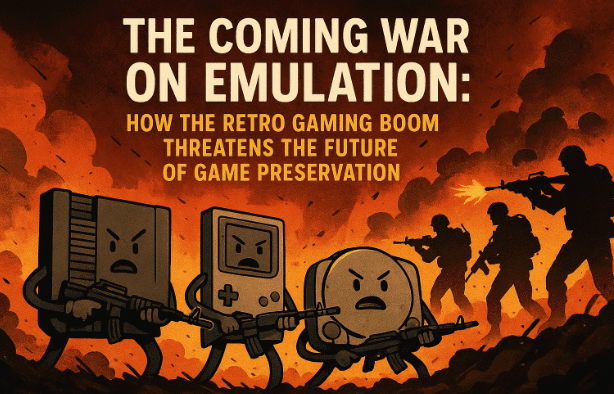
💀 1. The Collapse of Modern AAA Gaming
Let’s start with the uncomfortable truth — modern AAA gaming is falling apart.
In recent years, we’ve seen major studios shuttered, mass layoffs across Xbox, Sony, and even well-loved indie developers. Massive budgets are failing to deliver meaningful returns, and games that once promised innovation are now weighed down by bloated live-service models, microtransactions, and “season passes” that milk every cent from players.
Yet, while players are abandoning these modern blockbusters, publishers have noticed something remarkable: people are still willing to spend — just not on what they’re selling.
Across forums, social media, and digital storefronts, gamers are returning to the classics. NES cartridges, PlayStation 2 discs, GameCube gems — all are being rediscovered. The retro market is booming while modern gaming stagnates.
So far, we’ve identified the problem. Now let’s explore why this shift toward the past is not just nostalgia — it’s rebellion.
🕹️ 2. Why Retro Gaming Is Making a Comeback
Retro gaming isn’t merely a trip down memory lane — it’s a response to what gaming has lost.
Older games were simple yet challenging, story-driven without microtransactions, and designed to be complete experiences. You bought a cartridge, popped it into your console, and that was it. No day-one patches, no battle passes, no live-service downtime.
Here’s why players are going back:







- No unnecessary monetization: One price. Infinite play.
- Pure gameplay: Designed around creativity and skill, not engagement algorithms.
- Preservation of history: Many classics risk being lost forever due to delistings and DRM.
- Accessibility through emulation: Even without the original console, anyone can experience gaming’s roots.
Emulation has become the great equalizer — a bridge connecting generations of players and allowing old titles to survive when publishers abandon them. But that same bridge has now caught corporate attention.
🧠 3. Emulation: The Heart of Gaming Preservation
Emulation isn’t piracy. It’s preservation — a digital museum built by passionate fans and developers who want gaming’s legacy to remain playable and accessible.
Through emulators, we can experience Chrono Trigger, Metroid Prime, Silent Hill 2, or Tomb Raider in ways that honor their original design — often enhanced with higher resolutions, mod support, widescreen compatibility, and even online play.
Modern fan emulators like RetroArch, DuckStation, Citra, and RPCS3 don’t just copy the past — they improve it. They add achievements, controller support, and even cross-platform play that never existed in the originals.
So what’s the problem? Publishers have realized that emulation is doing what they refused to — and now they want to reclaim control.
💰 4. How Publishers Are Monetizing Nostalgia
Major companies have discovered that there’s gold in nostalgia. Instead of fixing their broken AAA systems, they’re re-releasing old favorites — remakes, remasters, and compilations — often with varying quality.
Some have been genuinely impressive:
- Resident Evil 2 & 4 Remakes (Capcom) – Respectful, faithful, modernized.
- Metroid Prime Remastered (Nintendo) – Polished and perfectly optimized.
- Tomb Raider and Silent Hill 2 Remakes – Promising returns to form.
But others? Not so much.
When Rockstar released the GTA Trilogy Remastered in 2021, it became a textbook case of corporate greed — a buggy, overpriced mess that replaced the originals on digital stores.
The move was clear: make the old versions vanish so the remaster becomes the only available option.
This is not preservation — it’s replacement. It’s designed to control how and where you can access history, and worse, it’s turning gaming heritage into yet another profit loop.
☁️ 5. From Ownership to Access: The Subscription Trap
So far, we’ve done a good job tracing how nostalgia turned corporate. But there’s a more subtle shift happening — from ownership to access.
Instead of selling you a game once, companies now rent it to you through subscription platforms:
- Nintendo Switch Online + Expansion Pack – NES, SNES, N64, and GameCube titles.
- PlayStation Plus Classics Catalog – PS1, PS2, PSP, and PS3 games.
- Xbox Game Pass Retro Collection – Includes everything from Atari 2600 to Xbox 360.
On the surface, it sounds great: one monthly payment, hundreds of games.
But here’s the catch — you don’t own anything. If the service goes down or you cancel your plan, you lose access.
Worse, games can vanish overnight when licensing agreements expire. The same corporations that delisted classics are now reintroducing them as temporary “cloud titles.”
This model isn’t just unsustainable — it’s dangerous. It normalizes the idea that your digital library can disappear at any time.
⚖️ 6. The Slow Erosion of Consumer Rights
The threat to emulation won’t come as a single ban or massive lawsuit. It’ll creep in gradually — through shifting definitions and quiet policy changes.
We’ve already seen it happen:
- Digital games now come with “licenses,” not ownership rights.
- Physical copies increasingly use “code in a box” DRM — a fake disc that just downloads the game.
- Publishers label all emulation as piracy, deliberately blurring the line to scare users.
This slow erosion mirrors how digital rights evolved over the last two decades. Once, buying a game meant owning it. Now, it means you’re renting access until the publisher decides otherwise.
Emulation threatens this control — which is why it’s becoming the next corporate target.
🧩 7. Fan Emulators vs. Official Ones: The Quality Gap
Ironically, fan emulators are superior to official corporate ones in almost every way.
Fan projects like RetroArch, Dolphin, Cemu, and PPSSPP offer:
- Enhanced resolutions and anti-aliasing
- Mod support
- Custom controls
- Save states and rewind features
- Netplay (online multiplayer)
- Achievements and leaderboard systems
Meanwhile, official emulators on subscription services often provide:
- Minimal settings
- Poor performance
- No mod support
- Limited resolutions
- No online features
This difference is not due to technical limitations — it’s due to intent. Fan developers build out of love and preservation. Corporations build out of obligation and profit.
And when fan projects outperform them, the response isn’t collaboration — it’s legal action. DMCA strikes, cease-and-desist notices, and copyright takedowns target the very people keeping gaming history alive.
🚫 8. Could Publishers Outlaw Emulators?
It’s unlikely that emulation will disappear overnight. But the risk lies in legislative redefinition.
Corporations could lobby to change what constitutes “illegal emulation.” If they convince regulators that any emulator capable of running copyrighted code — even without proprietary BIOS files — represents potential infringement, they could effectively criminalize the tools themselves.
Combine that with cloud gaming’s dominance, and you have a dangerous future:
A world where every game you “own” lives on a server you don’t control — and playing it offline becomes legally questionable.
That’s not just a threat to modders or collectors. It’s a threat to history.
🔥 9. What Gamers Can Do to Protect Emulation
So far, we’ve identified the threat. But what can we actually do about it?
Here are some practical steps:
- Support legitimate preservation projects – Organizations like the Video Game History Foundation and Archive.org’s Console Preservation efforts fight for legal protection of old software.
- Donate to emulator developers – If you use tools like Citra, Dolphin, or RetroArch, consider contributing to their Patreon or GitHub sponsors.
- Call out anti-consumer practices – When companies delist originals or lock classics behind subscriptions, make noise about it.
- Preserve your own library – Back up legally purchased ROMs and BIOS files. Digital rights only survive when individuals maintain copies.
- Educate others – Many still believe emulation = piracy. Spread awareness about its preservation role.
- Push for ownership laws – Advocate for consumer rights to keep and emulate purchased games, especially when support ends.
The emulation community has survived decades of pushback — and every attempt to silence it has only strengthened its resolve.
💬 10. Frequently Asked Questions (FAQ)
Q1. Is emulation legal?
Yes — emulation itself is legal. What’s illegal is distributing copyrighted BIOS files or ROMs you don’t own. If you dump your own games, you’re within your rights.
Q2. Why do publishers hate emulators?
Because emulators give players control. They undermine “subscription-only” ecosystems and allow people to preserve older titles without corporate oversight.
Q3. Aren’t remasters good for preservation?
They can be — if they coexist with the originals. The issue arises when remasters replace them or when access to older versions is revoked.
Q4. Could subscription retro libraries benefit players?
Yes, if handled fairly — but as of now, they’re designed around dependency, not preservation.
Q5. What’s the best way to emulate responsibly?
Only use ROMs and BIOS files you’ve legally acquired. Stick to reputable emulators like RetroArch, Dolphin, or Citra.
🏁 11. Conclusion and Final Thoughts
The retro gaming boom proves one thing — gamers still crave authentic, complete, and respectful experiences. But as publishers scramble to monetize that nostalgia, the freedom that made retro gaming magical could soon be under threat.
Emulation isn’t theft. It’s preservation. It’s the promise that no game, no matter how old or obscure, will ever be lost to time.
So long as communities continue to support open-source projects, share knowledge, and push back against anti-consumer policies, gaming’s history will remain in safe hands.
Because when corporations forget what gaming is about, it’s the players — not the publishers — who keep the legacy alive.
⚠️ Disclaimer:
This article is for educational and discussion purposes only. It does not endorse or encourage piracy. Always use emulators and game files legally and ethically.
#RetroGaming #Emulation #GamingPreservation #Nintendo #PlayStation #Xbox #GamePass #CloudGaming #TechOpinion #GamingIndustry