Silent Hill is one of those names that has defined survival horror for decades. For many fans, the franchise represents atmosphere, dread, and storytelling unlike anything else. Yet, after Silent Hill: Downpour and Homecoming in the early 2010s, the series seemed to lose its magic. Apart from the Silent Hill 2 remake and the experimental Short Message, the brand has been dormant for years.
Now, Silent Hill F is here, and it is significant not just because it’s a new entry, but because it dares to take the series in a bold new direction. With a fresh time period, a Japanese setting, and a protagonist unlike any we’ve seen before, it’s both familiar and different.
👉 Check Silent Hill F on Amazon
So, how does it hold up? Let’s dive deep into the experience.
🌫️ Setting the Stage: Silent Hill Returns
Before diving into gameplay mechanics, it’s worth highlighting why this release matters. The franchise had been in a deep sleep since 2012. Fans of survival horror have been craving something beyond remakes and remasters.
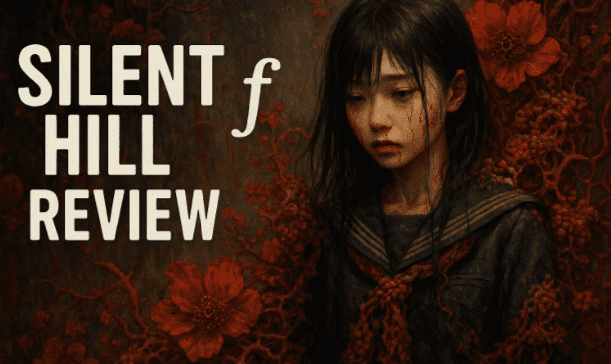
Silent Hill F takes us to 1960s Japan, into the fictional town of Ebisugaoka. Here, we follow Shimizu Hinako, a young girl whose life and community are upended by a sudden, mysterious fog. As the fog thickens, grotesque monsters appear, reality fractures, and Hinako is caught between worlds—never quite certain what is real and what is illusion.
This setting alone makes the game stand out. Instead of an American town, we’re immersed in Japanese streets, temples, shrines, and cultural details of the 1960s. Combined with eerie music (including contributions by Akira Yamaoka), it instantly feels like a Silent Hill title but with a haunting, fresh flavor.
🗡️ Combat: A Mix of Strength and Helplessness
Combat has always been divisive in Silent Hill games. Some players love the clunky, almost helpless nature—it makes survival horror scarier. Others see it as frustrating. Silent Hill F walks this fine line.
You’ll spend more time fighting than you might expect. On the positive side, combat feels deliberate, with stamina-based attacks, dodges, and even parries. A well-timed dodge or counter can make you feel like a survivor who’s adapting under pressure.
But then reality sets in—Hinako is slow, weak, and fragile. Swinging a weapon like a pipe or crowbar feels heavy and sluggish, often leaving you exposed. In confined spaces, the camera sometimes becomes a problem, making battles chaotic and clumsy.
The combat system adds another wrinkle with a sanity meter:










- Sanity powers special attacks and parries.
- If drained, sanity-based attacks instead drain your health.
- Restoring sanity requires items or prayers at shrines.
On normal difficulty, this system adds tension without being overwhelming. On higher settings, it forces careful resource management and thoughtful combat choices.
Still, by the late game, combat starts to feel repetitive. Enemy variations are limited, and some “bullet sponge” creatures take far too many hits. That sense of helplessness turns into annoyance.
🔨 Weapon Degradation and Resource Management
One design choice worth discussing is weapon degradation. Weapons break after repeated use, forcing you to either repair them with kits or replace them entirely. On paper, this sounds like an extra frustration, but in practice it adds layers to exploration.
Imagine wandering off the main path and running into enemies—do you risk breaking your only weapon for the chance of finding healing items or upgrades? Every decision feels weighted, and that tension fits well within the survival horror genre.
It won’t please everyone, but for players who enjoy high-stakes choices, it works.
🧩 Puzzles: A Classic Silent Hill Tradition
Puzzles are the heartbeat of the Silent Hill series, and Silent Hill F doesn’t forget this. There’s a wide range of puzzle types, and difficulty can even be adjusted separately from combat.
Some puzzles are clever and satisfying, forcing you to pay attention to environmental details and journal clues. Others, however, feel inconsistent—almost like the game changes its rules halfway through. This can make certain puzzles feel unfair, especially when the game locks you in a room until you solve them.
Despite these frustrations, the variety is refreshing. Unlike combat, puzzles rarely feel repetitive. Hinako’s journal, updated with notes and sketches, acts as both a hint system and a piece of narrative world-building. Reading scraps of lore, books, and diary entries scattered across the town enriches the experience, making puzzles more rewarding than irritating.
📖 Storytelling and Atmosphere
Silent Hill has always excelled at psychological horror, and F continues this legacy. The surface-level story is intentionally vague, leaving space for interpretation. However, through journals, lore notes, and environmental storytelling, the narrative deepens.
Without spoiling, the game tackles heavy subjects: bullying, discrimination, trauma, and personal regrets. This is consistent with Silent Hill’s history of addressing uncomfortable themes. For players who enjoy piecing together mysteries and debating hidden meanings, this game will satisfy.
Atmosphere is one of Silent Hill F’s strongest points:
- The fog-shrouded town is both beautiful and unsettling.
- Interiors are rich with creepy details.
- Enemy designs are grotesque and unique, with only a couple feeling generic.
- Sound design builds tension, even if it never quite reaches the legendary heights of Silent Hill 2.
Some moments are jaw-dropping. Whether it’s stumbling upon a disturbing new monster or simply gazing down an empty, foggy street, Silent Hill F delivers haunting imagery that sticks with you.
📦 Progression and Inventory
Exploration rewards you with items that can be exchanged at shrines—essentially save points—for perks like:
- Increased health
- Better stamina
- Bonuses for dodging
This system feels rewarding, but the inventory management is less refined. With too many item types serving similar purposes, it sometimes feels messy. You’ll often find yourself juggling items and making difficult choices about what to keep or trade.
It’s stressful—but maybe that’s intentional. After all, Silent Hill is about pressure and survival, not convenience.
🔁 New Game Plus: Worth a Replay?
Here’s something that surprised me—Silent Hill F has a robust New Game Plus mode. On replay, you’ll find:
- New interiors to explore
- Extra puzzles
- Additional story elements
- More items
It’s not just a harder run—it actually adds content. The downside is that by the end of the first playthrough, many players may already feel burned out from repetitive combat. That said, dedicated fans will find plenty of value in returning.
📊 Pros and Cons of Silent Hill F
So far, we’ve broken down the mechanics, story, and design. Let’s pause for a moment and highlight the strengths and weaknesses clearly.
Pros:
- Beautiful art direction and haunting Japanese setting
- Memorable enemy designs and atmosphere
- Strong storytelling with themes worth dissecting
- Puzzles are varied and rewarding
- New Game Plus adds real replay value
Cons:
- Combat becomes repetitive and clumsy in tight spaces
- Weapon degradation may frustrate some players
- Inventory management feels cluttered
- A few puzzles feel inconsistent or unfair
- Late-game enemy encounters drag on too long
❓ Frequently Asked Questions (FAQs)
Q1: Do I need to play previous Silent Hill games to enjoy this?
No. Silent Hill F is a fresh story set in Japan with new characters. Knowledge of past titles enriches your appreciation but isn’t required.
Q2: How scary is it compared to earlier games?
It depends on what scares you. The game leans heavily into atmosphere and psychological horror. Some jump scares exist, but the lingering dread and grotesque visuals are what stand out.
Q3: Is this game more action-oriented?
Yes, combat is more frequent here than in some past entries. However, it still maintains that survival horror vulnerability where you’re not a superhero—you’re a fragile human.
Q4: How long does it take to finish?
On average, 12–15 hours for the main story, longer if you explore thoroughly or replay with New Game Plus.
Q5: Does the game address sensitive topics responsibly?
The game includes depictions of abuse, discrimination, and violence. These are presented as part of the horror narrative and do not reflect the developers’ values. If you find such themes distressing, it’s best to approach with caution.
⚠️ Content Disclaimer
Silent Hill F contains depictions of gender discrimination, bullying, child abuse, torture, drug-induced hallucinations, and graphic violence. These are based on the customs and culture of 1960s Japan and do not represent the values of the developers.
If at any point you feel uncomfortable while playing, take a break or seek support from someone you trust.
📌 Final Thoughts
Silent Hill F is not perfect—but it is an important and memorable return for the franchise. It dares to try something new with its Japanese setting while preserving what makes Silent Hill unique: unsettling atmosphere, grotesque monsters, and layered storytelling.
Yes, combat can feel repetitive, and yes, some mechanics frustrate. But beneath the flaws lies a horror experience that resonates emotionally and visually. Fans who have been waiting for Silent Hill to return will find something to appreciate here, even if it isn’t a masterpiece.
If you’re a die-hard fan, you should definitely try it. Casual horror fans may want to wait for patches or price drops. But either way, Silent Hill F shows that the fog hasn’t lifted from this franchise yet—the nightmare continues, and it’s worth stepping into.
👉 Check Silent Hill F on Amazon
Tags: Silent Hill F review, Silent Hill series, survival horror games, Japanese horror, PS5 horror games, psychological horror, new Silent Hill game
Hashtags: #SilentHillF #SurvivalHorror #PS5Games #SilentHillSeries #GameReview #PsychologicalHorror