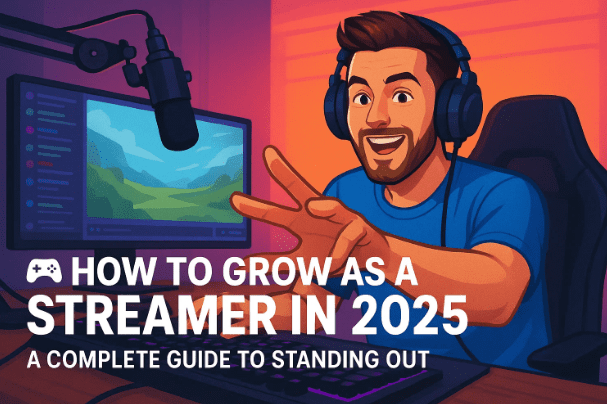
The year is 2025. Many new creators are starting their streaming journey, but most face the same silent room — hours of gameplay, zero viewers, and no chat activity. If you’ve ever sat in front of your camera feeling invisible, you’re not alone.
Streaming is more competitive than ever, and simply going live for hours won’t guarantee success. But here’s the good news: with the right strategies, tools, and mindset, you can attract viewers, build a following, and finally turn streaming into something meaningful.
In this guide, I’ll walk you through three powerful strategies every aspiring streamer must know. Along the way, we’ll dive into real-world examples, practical steps, and even some common mistakes to avoid. By the end, you’ll understand how to grow your channel without burning yourself out.
1. Why Long Streaming Hours Don’t Work Anymore
Let’s start with a tough truth: streaming for 8–12 hours straight no longer works as a growth strategy.
Ten years ago, platforms like Twitch had less competition, and just being live increased your chances of discovery. But in 2025, streaming platforms are saturated. Thousands of creators are online at the same time, making it nearly impossible for new streamers to stand out.
If you’re streaming 40 hours a week and still not gaining viewers, the problem isn’t your effort — it’s your approach. Instead of doubling down on long sessions, it’s smarter to cut your streaming time in half and dedicate that extra time to content creation outside of your live show.
💡 Key takeaway: Live streaming is for connection, not discovery. You’ll attract viewers elsewhere and then guide them to your stream.
2. Using Short-Form Content as Your Discovery Engine
Now that you’ve freed up extra time by streaming less, let’s put it to work. The biggest discovery tools right now aren’t Twitch or Kick — they’re short-form platforms:
- YouTube Shorts
- TikTok
- Instagram Reels
These platforms thrive on algorithms designed to push content to new viewers. A 30-second entertaining clip can get you thousands, even millions, of impressions — something your 3-hour VOD will rarely achieve.
How to Get Started with Short-Form Content
Instead of thinking of short-form as a separate job, consider it part of your content pipeline:
- Clip Your Streams – Every stream has potential highlights. Use clipping tools (built-in Twitch/YouTube tools or AI-powered editors like Eklipse or Crossclip).
- Edit for Attention – Add captions, zooms, or memes. The first 3 seconds must hook the viewer.
- Cross-Post Everywhere – Don’t limit yourself to one platform. Post the same clip to TikTok, Instagram, and YouTube Shorts.
👉 Over time, these platforms will act as a funnel — new viewers will discover your clips, then visit your live stream to see more.




3. Finding Your Niche (and the Power of Hyper-Niching)
So far, we’ve done a good job understanding that discovery comes from outside the stream. Now let’s move to the next step: figuring out why someone should watch you instead of the other 10,000 people playing the same game.
If your stream title just says:
“Fortnite gameplay – come chill”
…it’s unlikely to attract anyone. General gameplay is oversaturated.
The solution? Hyper-niching. This means narrowing down your content to a unique, specific angle.
Examples of Hyper-Niching
- Instead of “Fortnite gameplay”, try:
- “Winning Fortnite matches using only the weirdest weapons”
- Instead of “Minecraft chill build”, try:
- “Building cursed houses in Minecraft using only lava and glass”
- Instead of “Modern Warfare 2 stream”, try:
- “Attempting the impossible: C4-only tactical nuke challenge”
This works because specificity creates curiosity. Viewers want to see how you’ll tackle the challenge. It also makes your content easier to clip since the goal is clear and unique.
💡 Pro tip: The more your content resonates with a specific audience, the more likely they are to stick around and share it.
4. Reverse Engineering Success with “Yoink and Twist”
Not feeling creative? That’s fine. Here’s a method used by many successful creators: yoinking and twisting.
The idea is simple:
- Yoink = take inspiration from content that already works.
- Twist = put your unique spin on it.
How to Apply Yoink & Twist
- Browse popular clips or videos in your niche.
- Analyze why they work. Is it the challenge, the humor, the editing style?
- Recreate the idea with your own perspective.
For example:
- If someone gets views for “RPG Tactical Nuke Challenge in MW2,” you could do “Grenade-Only Nuke Challenge” or adapt the idea to another game entirely.
- If a Minecraft creator is known for “building a city underwater,” your twist could be “building a haunted castle in the Nether.”
You’re not copying — you’re reverse engineering success and making it your own.
5. Practical Tips for Streamers in 2025
By now, you’ve got the three pillars: short-form content, hyper-niching, and yoink & twist. Let’s expand with some additional tips to maximize your growth.
- Consistency is everything. Post clips weekly, stream on a regular schedule, and show up even if your viewer count is low.
- Engage with your community. Respond to comments on TikTok and YouTube, not just live chat.
- Use trends wisely. Trending sounds, memes, and challenges can boost your reach — but only if you adapt them to your niche.
- Invest in decent quality. You don’t need the best gear, but clear audio and clean visuals are non-negotiable.
- Track your analytics. Watch which clips perform well and double down on that style.
6. Common Mistakes Beginners Make
Many new streamers struggle because they unknowingly fall into traps. Here are the most common mistakes:
- Streaming too long without purpose. Long hours don’t equal growth.
- Being too generic. “Just chatting” or “gaming chill vibes” won’t stand out.
- Not editing clips. Raw gameplay won’t keep short-form audiences engaged.
- Inconsistent posting. One clip per month isn’t enough.
- Ignoring community feedback. Sometimes your audience tells you what works — listen to them.
7. FAQs
Q1. How often should I stream as a beginner?
Aim for 3–4 sessions per week, each 2–4 hours long. Use the remaining time for content creation.
Q2. Do I need expensive gear to start?
No. A decent USB microphone and a 1080p webcam are enough. You can upgrade as you grow.
Q3. What’s more important: Twitch or YouTube?
For discovery, YouTube is more powerful. For live community building, Twitch or Kick can work. Ideally, combine both.
Q4. How many followers do I need before brands notice me?
Micro-influencer deals start around 1,000–5,000 followers, but engagement rate matters more than raw numbers.
8. Final Thoughts
Growing as a streamer in 2025 isn’t about grinding endless hours in front of a silent screen. It’s about working smarter:
- Use short-form platforms as your discovery machine.
- Hyper-niche your content to stand out.
- Apply yoink and twist to create proven yet unique ideas.
The combination of these strategies ensures that when you do go live, you’re not just streaming to zero viewers — you’re streaming to a community that’s excited to see you.
So, don’t give up. Start small, experiment, stay consistent, and watch your channel grow.
✅ Disclaimer: This article is for educational purposes. Results may vary based on effort, niche, and consistency. Always respect platform terms of service when creating or posting content.
Tags
streaming tips 2025, twitch growth, youtube shorts streaming, content creation guide, niche strategy for streamers, grow twitch followers
Hashtags
#StreamingTips #TwitchGrowth #ContentCreation #YouTubeShorts #TikTokGaming #StreamerLife