For years, Windows users have relied on third-party installers like Ninite or WingetUI to batch-install multiple apps after a fresh system format. Now, Microsoft is officially stepping into the game with its very own built-in solution — a new feature called Multi-Apps, which lets you install several programs simultaneously right from Microsoft’s own platform.
This new capability is still in testing but it already feels like a real game-changer for technicians, IT support workers, and everyday Windows users. Imagine reinstalling Windows and, instead of manually downloading Chrome, 7-Zip, Steam, Notepad++, and others one by one, you simply tick boxes on a list — and Windows installs everything in the background automatically.
Let’s explore how Microsoft’s Multi-Apps installer works, how to access it, what makes it secure compared to third-party tools, and how you can start using it today.
1. What Is Microsoft Multi-Apps?
Before we go step by step, let’s understand what this feature really is.
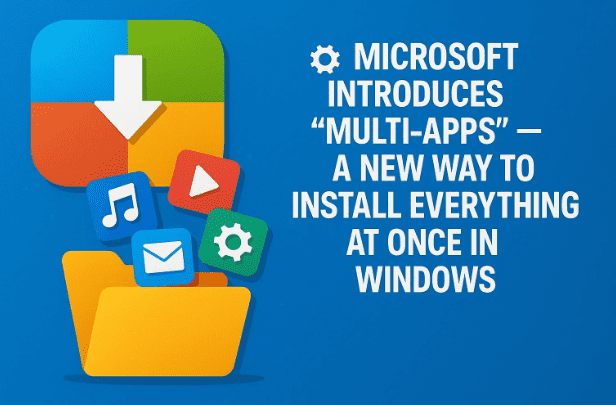
Microsoft Multi-Apps is a web-based and soon-to-be integrated Windows feature that allows users to select and install multiple applications at once. Instead of visiting each developer’s website, downloading every installer manually, and clicking through setup wizards, you simply select all desired apps and let Windows handle the rest in the background.
This functionality works directly through the Microsoft Store ecosystem, ensuring that all apps come from verified sources and remain safe for installation.
2. Why Microsoft Created This Tool
For years, tools like Ninite, Winget, and PatchMyPC have dominated this space by providing a way to batch-install or update multiple apps. Microsoft’s decision to create its own official installer makes perfect sense — it solves two problems:
- Security: Many users end up downloading installers from unsafe sites filled with bundled adware.
- Convenience: IT professionals often spend hours setting up multiple programs after formatting PCs.
By integrating this directly into Windows, Microsoft ensures safety, simplicity, and consistent performance.
So far, so good — now let’s move on to accessing this new platform.
3. How to Access the Multi-Apps Platform
At the time of writing, this feature is still experimental and not visible inside the Microsoft Store app yet.
However, you can access it through your browser by searching:




![💻 Must-Know Windows 11 Keyboard Shortcuts, Clipboard Tricks, Voice Typing & Productivity Hacks [2025 Edition]](https://dtptips.com/wp-content/uploads/2025/06/image-618-300x186.png)



“Microsoft Store multi-app installer site”
This opens a dedicated Microsoft web page introducing “Installation of multiple apps at the same time.”
When you land there, you’ll notice that the interface looks modern and minimal — divided into several categories such as Productivity, Creativity, Social Media, Entertainment, Utilities, and Personalization.
Let’s dive into these categories before we pick our apps.
4. Exploring the App Categories
Microsoft has smartly organized its app library so you can easily find what you need. Instead of scrolling endlessly, you can go straight to your preferred category.
Here’s what’s inside:
- Productivity: Office tools, PDF readers, note-taking apps, and cloud sync utilities.
- Creativity: Image editors, video tools, and sound design programs.
- Social Media: Messaging and social platforms like WhatsApp, Instagram, and TikTok.
- Entertainment: Music, streaming, and casual gaming apps.
- Utilities: Network tools, system diagnostics, performance monitors, and useful system tweaks.
- Personalization: Wallpaper managers, taskbar modifiers, and appearance tools.
Each app listed is accompanied by a small checkbox — simple, clear, and fast to use.
5. How to Select and Install Multiple Apps
Now that you’ve reached the main screen, let’s start the installation process step by step.
Step 1: Choose Your Apps
Go through each category and check the boxes next to the apps you want. For example, you might select:
- Rufus for creating bootable drives,
- Speedtest by Ookla for internet diagnostics,
- EarTrumpet for advanced audio control,
- TranslucentTB for a transparent taskbar, and
- Bing Wallpaper for dynamic backgrounds.
As you check each app, it gets added to a selection list (or “cart”) on the right side of the page.
Step 2: Review Your Selection
Once you’ve chosen your apps, the platform displays them together — allowing you to remove any by clicking the small “X” next to their names.
This preview step ensures you don’t accidentally install unwanted tools.
Step 3: Start Installation
Click “Install Selected”, and Microsoft immediately generates a tiny executable file (around 1 MB) for download.
This file acts as an installer manager — once opened, it automatically downloads and installs every app you selected, directly from the verified Microsoft Store servers.
It’s as if you’re downloading a custom setup package built just for your chosen apps.
6. What Happens During Installation
Once you open the downloaded executable:
- Windows silently launches background installations for all your selected apps.
- Some programs (like Store apps) install silently without any visible windows.
- Others may briefly open the Store interface for confirmation.
You don’t have to click “Next” or “Install” repeatedly — everything happens automatically.
You can minimize your browser and continue other work while the installer handles the rest.
Once complete, all apps appear in your Start Menu and Apps list, ready to use.
7. Examples of Apps You Can Install
To better illustrate the process, here are examples of what’s currently available:
| Category | Example Apps |
|---|---|
| Utilities | Rufus, EarTrumpet, Speedtest, PowerToys |
| Personalization | TranslucentTB, Lively Wallpaper, Bing Wallpaper |
| Productivity | Notepad++, LibreOffice, Microsoft To-Do |
| Entertainment | Spotify, Netflix, TikTok |
| Networking | Dropbox, OneDrive, Google Drive |
| System Tools | 7-Zip, WinSCP, Git for Windows |
As the platform matures, Microsoft plans to expand this list to include browsers (like Firefox or Brave) and even developer tools.
8. Security and Verification
One major difference between Microsoft’s solution and third-party batch installers is verification.
Every app listed in Multi-Apps:
- Is either published directly by Microsoft or verified developers.
- Undergoes security checks to ensure no bundled malware.
- Comes from the official Microsoft Store repository.
That means you’re not downloading from random sites — you’re pulling directly from Microsoft’s secure CDN.
This makes it ideal for system administrators, schools, and offices that require trusted deployments.
9. Testing the Feature in Action
Let’s see how it behaves in practice.
After selecting about 16 applications — including Rufus, TikTok, EarTrumpet, Speedtest, and Dropbox — the system generated the executable. When launched:
- Some apps installed instantly and appeared in the Start Menu.
- Others ran silently in the background.
- A few required store confirmations but completed quickly.
The installation speed depends on your internet connection, but it’s remarkably smooth.
For instance:
- EarTrumpet appeared immediately in the system tray, offering volume controls per app.
- TranslucentTB instantly modified the taskbar transparency.
- Bing Wallpaper began applying new wallpapers automatically.
All without needing to open each setup wizard manually.
10. Advantages Over Ninite and WingetUI
Let’s pause for a moment to compare.
| Feature | Microsoft Multi-Apps | Ninite | Winget / WingetUI |
|---|---|---|---|
| Official source | ✅ Yes (Microsoft) | ❌ No | ✅ Yes (Microsoft repository) |
| Graphical interface | ✅ Simple web UI | ✅ Minimal | ✅ GUI available |
| Background installation | ✅ Automatic | ✅ Automatic | ⚠️ Sometimes manual |
| Store integration | ✅ Native Microsoft Store | ❌ | ✅ |
| Verification | ✅ Apps are pre-verified | ⚠️ Depends | ✅ Verified packages |
While Ninite has been the go-to tool for a decade, Microsoft’s own solution brings tighter system integration, easier Store management, and native security policies — all with zero ads or third-party interference.
11. Limitations and What’s Missing
Of course, since it’s still early access, there are some restrictions.
- Limited app library: Only a few dozen programs are currently listed.
- No browsers yet: Chrome, Firefox, and Brave aren’t available as of now.
- No offline installation: It requires an active internet connection.
- No custom directory: Apps install in default system locations.
Still, considering that Microsoft will likely integrate this into the Windows 11 Microsoft Store app soon, these limitations are expected to fade over time.
12. Frequently Asked Questions
Let’s clear up some common doubts that might arise.
❓ Q1: Do I need to log into my Microsoft account?
Answer: Yes. The platform uses your Microsoft Store account to sync installations and verify app ownership.
❓ Q2: Can I use this on Windows 10?
Answer: Currently, the feature is optimized for Windows 11, but since it’s web-based, you can try it on Windows 10 as well if the Store version supports your apps.
❓ Q3: Are all apps free?
Answer: Most listed apps are free. Paid apps will show a price tag and require purchase confirmation through your Microsoft Store account.
❓ Q4: Is it safe to install many apps at once?
Answer: Yes. Installations are handled in the background by Microsoft’s Store framework, ensuring stable downloads without conflicts.
❓ Q5: Will this replace Ninite or Winget?
Answer: Not immediately. Power users may still prefer Winget’s command-line flexibility, but for everyday users, Multi-Apps offers the easiest graphical solution yet.
13. Final Thoughts
So far, we’ve seen how Microsoft’s new Multi-Apps installer redefines convenience for both technicians and casual users.
If you often reinstall Windows or manage multiple systems, this tool will save you enormous time. You no longer need to track individual websites or download suspicious EXE files — just tick your favorite apps and let Microsoft handle the rest.
With future updates, we can expect:
- A bigger app catalog (including major browsers).
- Store integration inside Windows Settings.
- One-click app reinstallation after system reset.
In short, Multi-Apps is Microsoft’s quiet revolution — turning what used to be a tedious post-format routine into a seamless, one-click process.
You can keep an eye on updates through the Microsoft Store official site, where the feature is gradually rolling out.
⚠️ Disclaimer
This article is for informational purposes only. The availability and functionality of Microsoft’s Multi-Apps feature may vary depending on your Windows build or region. Always ensure you download installers directly from official Microsoft links and verify permissions before executing files.
#Microsoft #Windows11 #MultiApps #AppInstaller #TechNews #dtptips